

-
Burr removal after cutting
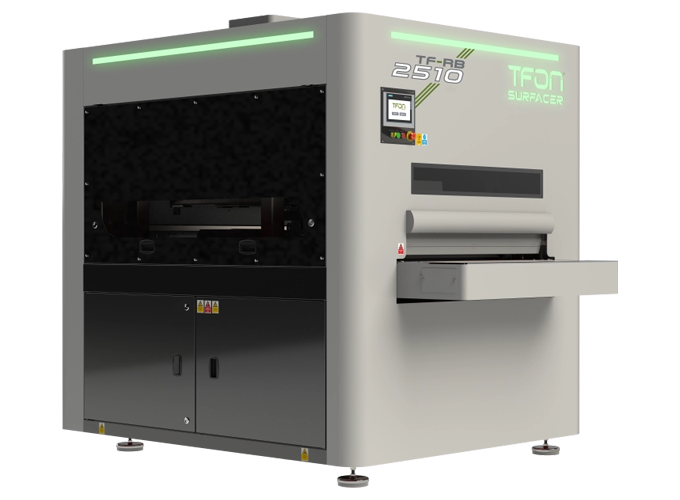
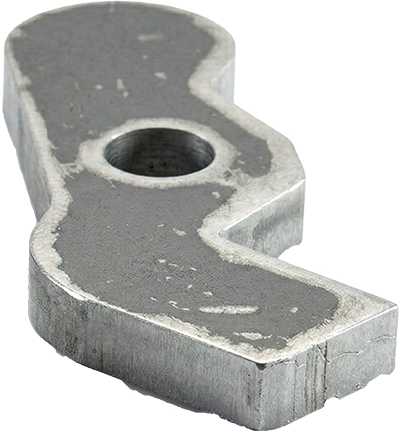
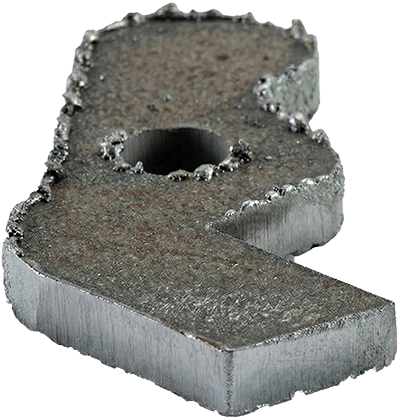
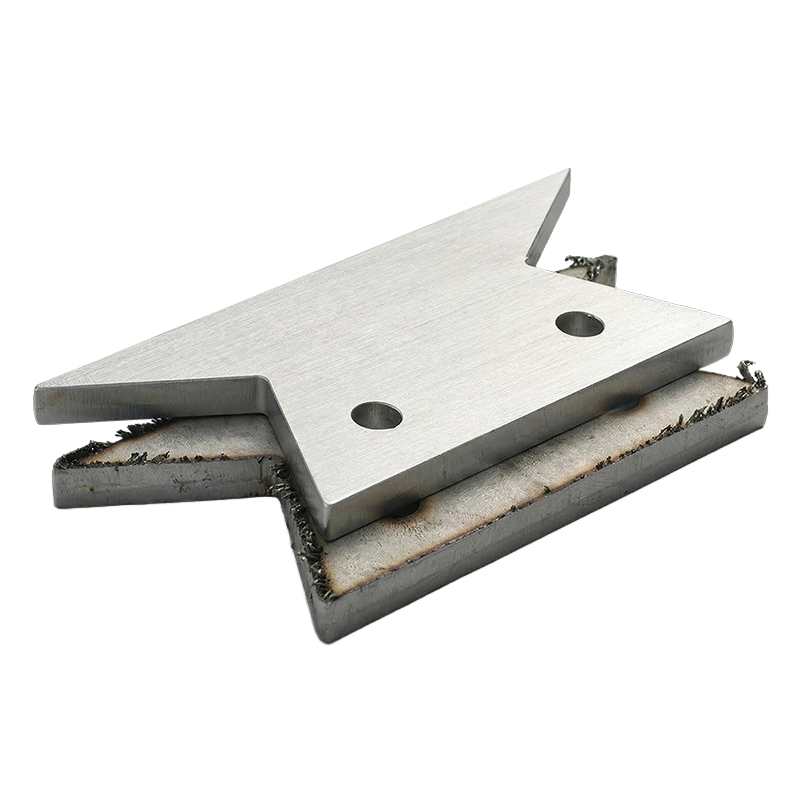
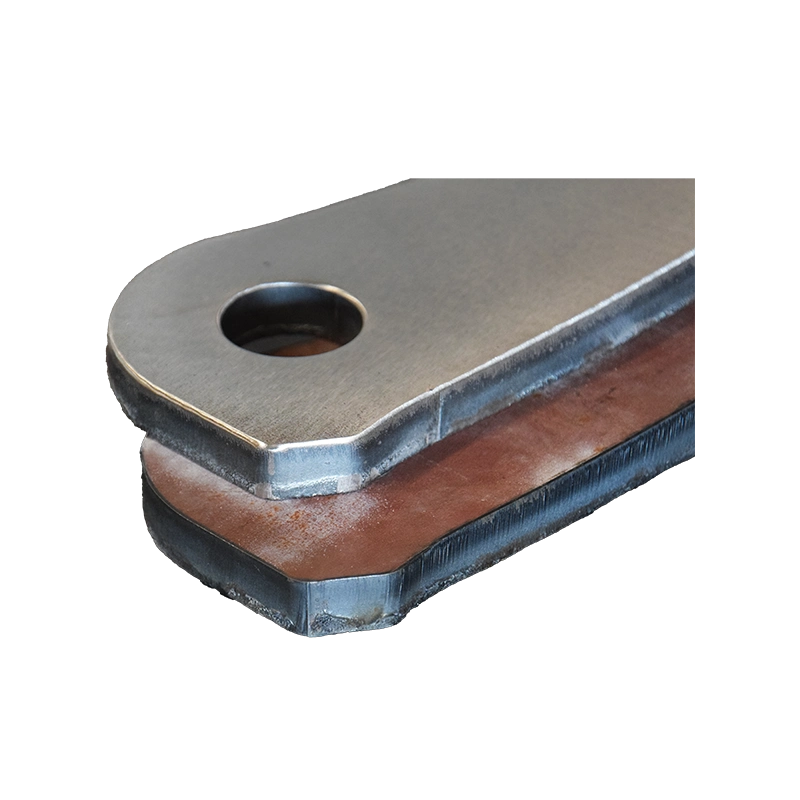
Automatically clean the burrs, dross and oxide left behind by laser, plasma, oxyfuel and punching operations. The result is repeatable from the first part to the last, so you no longer depend on how carefully an operator grinds each edge by hand.
-
Safer, rounded edges
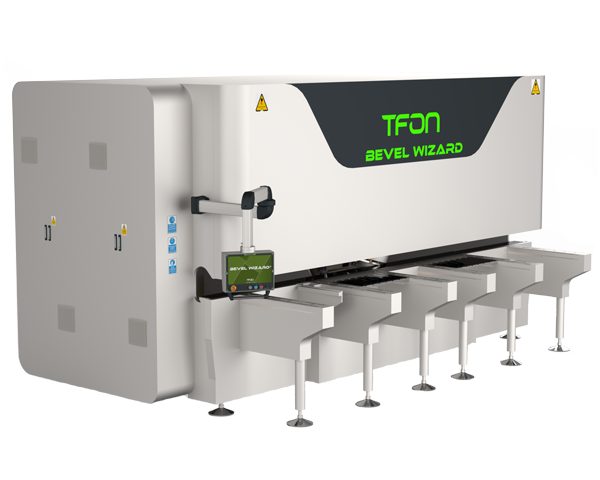
Sharp cut edges are a safety hazard and a weak point for coatings. Dedicated edge-rounding stations produce a consistent, controlled radius that makes parts safer to handle, easier to assemble and far more durable once painted or powder coated.
-
Better prep for painting & welding
Rounded, clean and oxide-free edges dramatically improve paint and powder-coat adhesion and give welders a consistent, contaminant-free surface. This reduces downstream defects, rework and warranty issues across the whole production chain.
Compact Deburring for Low Volumes & Prototypes
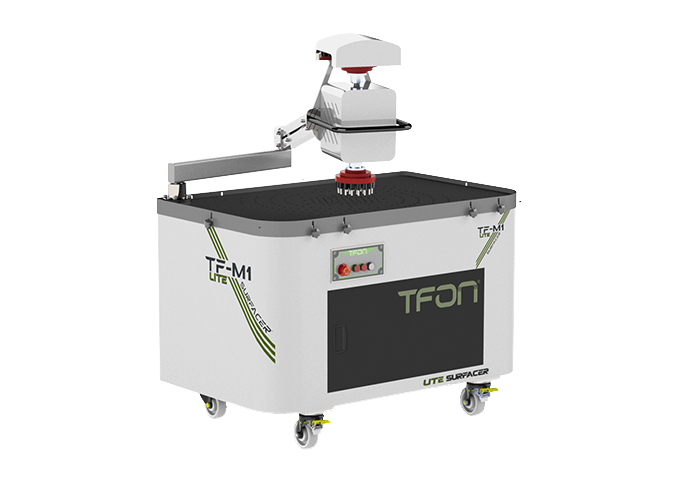
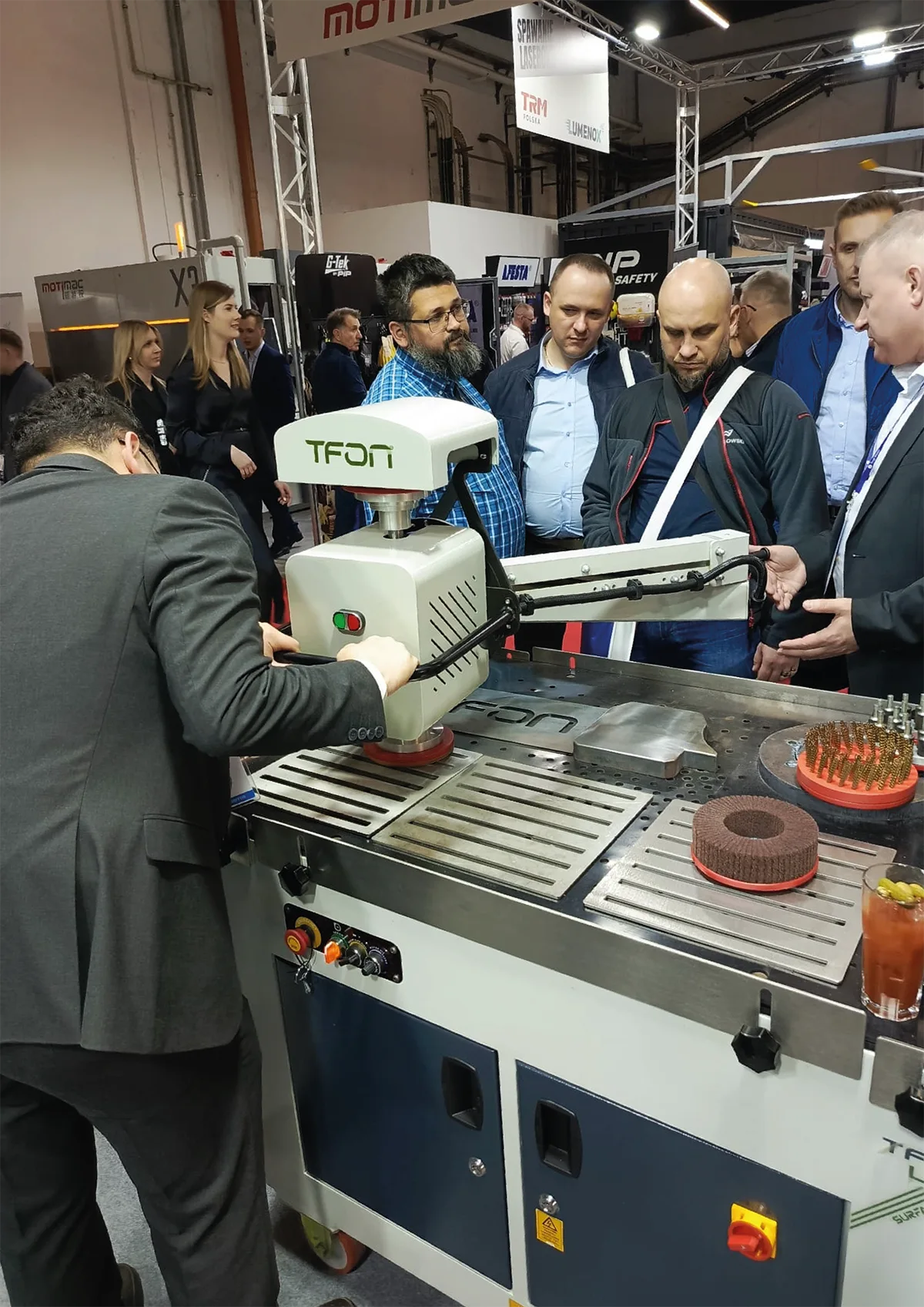
Compared with grinding every edge freehand, a manual or Lite deburring machine gives a far more uniform, repeatable result while remaining compact and affordable. Operators feed parts through and get a clean, safe edge without specialist skill.
Many fabricators start with a manual machine and move to an automatic Surfacer® as their volumes grow. The processing principle is the same, so the step up delivers the same edge quality at much higher throughput.
C-B-R-F Process Overview
Compare TFON Surfacer® process stations and their industrial applications.
| Process | What it does | Search intent |
|---|---|---|
| C — Heavy Deburring | Removes thick, heavy and tenacious burrs from flame and plasma cut plate and structural steel, tackling the hardest deburring work in a single controlled pass. | heavy deburring machine, steel plate deburring, structural steel finishing |
| B — Standard Deburring | Provides reliable, everyday burr removal for typical laser-cut and punched sheet metal edges, giving a clean, uniform result on the widest range of parts. | deburring machine, sheet metal deburring, laser cut deburring |
| R — Edge Rounding | Creates a defined, repeatable radius on cut edges for safer handling, better coating adhesion and higher assembly and finishing quality. | edge rounding machine, metal edge rounding, radius edge preparation |
| R — Oxide Removal | Strips the oxide and scale layer produced by thermal cutting so that welding and coating are applied to clean, contaminant-free base metal. | oxide removal, descaling, thermal cut surface preparation |
| F — Finishing | Refines and evens out the final surface with finishing brushes to deliver a consistent, high-quality appearance ready for the customer. | deburring finishing machine, brush finishing, surface graining |
Applications
Typical sheet metal deburring and edge preparation use cases.
-
Laser cut parts
Remove the fine burrs and thin oxide layer left along laser-cut contours and internal holes. TFON Surfacer® stations restore a clean, uniform edge on thin and medium-gauge sheet without hand finishing, keeping delicate geometries and small features intact.
-
Plasma & oxyfuel cut parts
Handle the heavier, harder burrs and dross typical of plasma and oxyfuel cutting on thicker material. Heavy deburring stations break down stubborn burrs on structural plate so that even 30–60 mm parts leave the line with a workable, safe edge.
-
Punched sheet metal
Deburr punched holes, slots and outer contours evenly. Automatic processing removes the roll-over and sharp underside burr created by punching and nibbling, so stacked or nested parts no longer scratch or catch during handling.
-
Stainless steel parts
Prepare clean, consistent edges on stainless steel for welding, food-grade equipment and visible architectural components. Correct brush and process selection preserves the surface while removing burrs and delivering a uniform, professional finish.
-
Heavy burr removal on thick plate
Use dedicated heavy-deburring stations to process the thick, tenacious burrs found on structural steel and thick plate. The machine takes on the hardest deburring work that would otherwise require aggressive, time-consuming manual grinding.
-
Edge rounding before coating
Create a controlled edge radius before painting, powder coating or galvanizing. A rounded edge holds coating far better than a sharp corner, preventing early edge corrosion and extending the service life of the finished part.
Automation & Line Integration
Recipe-controlled, servo-adjusted and line-ready deburring automation options.
-
AcTFON independent station movement
Each process station can be positioned independently, so different edge conditions — heavy burrs, rounding, finishing — are handled in the correct sequence within one pass. This flexible configuration lets a single machine cover a wide mix of parts and materials.
-
T-Servo controlled adjustment
Servo-driven positioning replaces manual hand-wheel setup with precise, repeatable and fully digital process control. Settings are exact every time, which removes guesswork and keeps results identical across shifts and operators.
-
The Eye — laser thickness measurement
An integrated laser sensor automatically measures the thickness of each incoming part and selects the correct deburring parameters. The machine adapts on the fly to mixed thicknesses without any manual re-setup between parts.
-
PartTrack recipe system
Store part-specific deburring recipes and recall them instantly for repeat orders. Once a part is dialled in, the exact same quality is reproduced months later — protecting your process know-how and eliminating repeated trial-and-error.
-
Barcode / QR triggering
Scan a barcode or QR code and the line automatically loads and runs the correct recipe for that part. This links the deburring machine directly to your production planning and removes the risk of running the wrong settings.
-
Conveyor & line integration
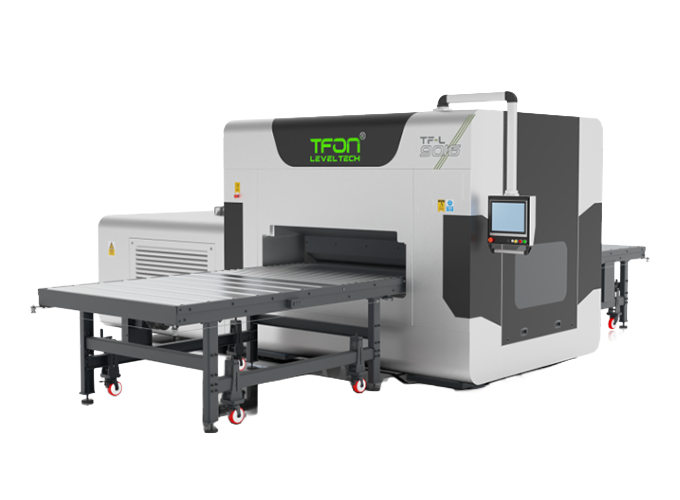
Return conveyors, side-shifting tables and motor-driven feeding systems connect the machine to the rest of your line. Parts flow in and out automatically, enabling single-operator or fully integrated, high-throughput operation.
Manual vs Automatic
| Criteria | Manual / Lite | Automatic Surfacer® |
|---|---|---|
| Best for | Low volumes, prototypes, one-off parts | Series production, mixed batches, integrated lines |
| Consistency | Depends on the operator | Recipe-controlled, identical every time |
| Throughput | Lower, operator-paced | High, continuous feeding |
| Edge rounding | Possible but variable | Defined, repeatable radius |
| Initial cost | Lower | Higher, with lower cost-per-part |
Before / After

What affects the machine price?
Configuration-based quoting depends on production requirements rather than a single list price.
- Working width — the maximum part width the machine can process (for example 350 mm up to 1100 mm and beyond) directly drives the frame size, brush and abrasive width, drive power and therefore the overall investment.
- Material thickness range — machines built to handle thin sheet behave very differently from those designed for 40–60 mm structural plate, affecting the frame, feed system and station specification.
- Number and type of process stations — each added station (heavy deburring, standard deburring, edge rounding, oxide removal, finishing) increases capability and cost, so the price scales with how much the machine must do in one pass.
- Automation level — servo adjustment, laser thickness measurement, recipe control and barcode triggering add convenience, speed and repeatability, and their inclusion is one of the biggest factors in final price.
- Conveyor and return system — return conveyors, side-shifting and motor-driven feeding reduce manual handling and enable single-operator or line operation, but add mechanical and control complexity.
- Custom production-line integration — connecting the machine to upstream cutting and downstream handling, along with any bespoke mechanical or software requirements, is quoted per project.
Frequently Asked Questions
Is a manual or automatic deburring machine better for my workshop?
What is a deburring machine?
What is the difference between deburring and edge rounding?
How does an automatic deburring machine improve quality?
What affects the price of a deburring machine?
Need help selecting the right automatic deburring configuration for your line?
Request engineering review