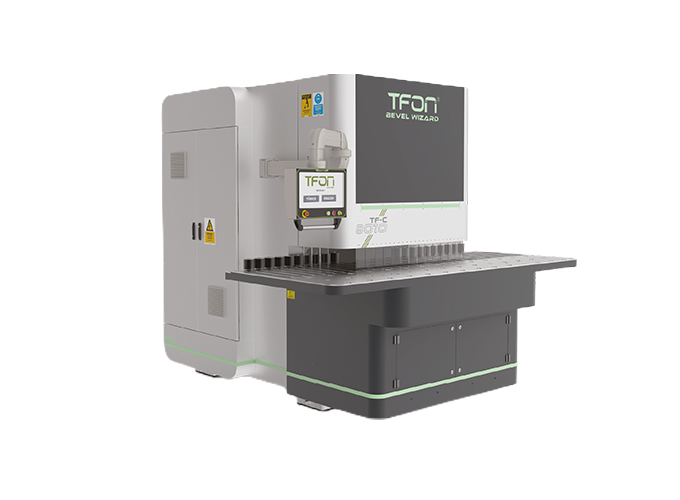
C Series
Min. - Max. Part Thickness (mm)4 – 100
Minimum Material Length (mm)400
Minimum Material Width (mm)250
Maximum Material Length (mm)12000
Maximum Material Width (mm)1250
Working Angle (°)-30 / +80
Abrasive Belt Drum Diameter (mm)Ø 400
Compare machine concepts for the bevel geometry and handling needs of your parts.
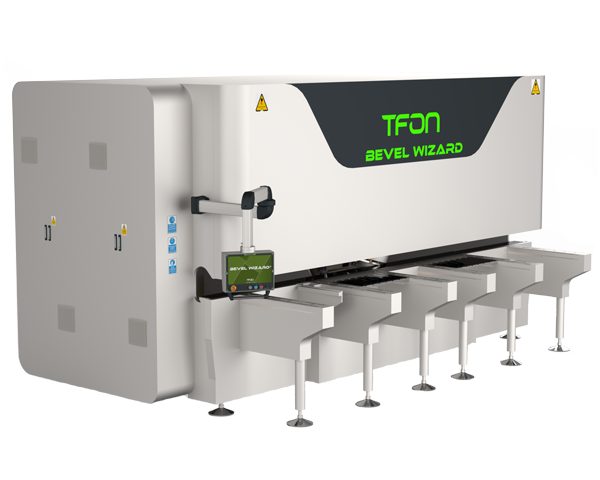
TFON is a plate beveling machine manufacturer in Konya, Türkiye. TFON Bevel Wizard® machines prepare weld bevels on the straight edges of plate and sheet from 4 to 100 mm thick. They are built for plate and sheet, not pipe: pipe ends need a pipe beveling machine, which TFON does not make.
TFON Bevel Wizard® machines prepare metal edges for welding and other fabrication requirements by producing a controlled bevel or chamfer. The correct configuration depends on the workpiece dimensions, edge geometry, material, thickness, required angle and production method.
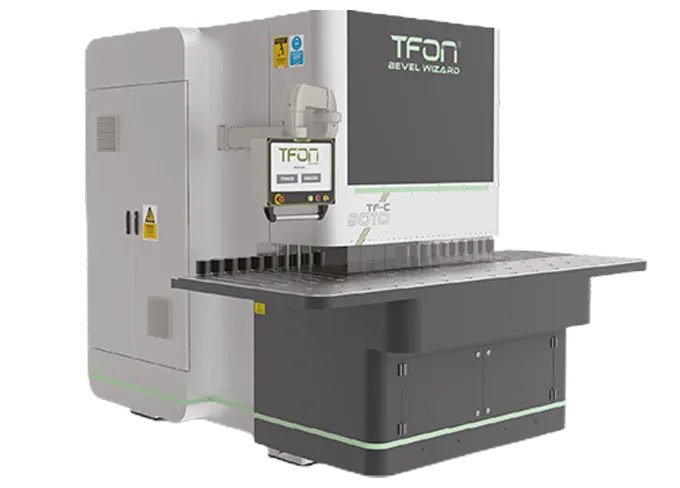
TFON offers moving-table and fixed-table concepts. In a moving-table process, the workpiece travels through the machine for continuous processing of suitable straight edges. In a fixed-table concept, the workpiece remains positioned while the processing unit moves. The final selection must be based on the actual part and verified machine data.
Deburring removes unwanted cutting material, while beveling intentionally creates a specified edge geometry. A part may require both processes at different stages.
Beveling creates the joint geometry specified for welding. The required bevel angle, root face and edge condition should follow the part drawing and welding procedure. Consistent preparation supports the welding process, while weld acceptance also depends on the welding parameters, fit-up and inspection criteria.
Part geometry and handling influence the machine concept. Review the edge length, required bevel, support and clamping against the published machine travel and processing limits. A fixed-table arrangement holds the part while the processing unit moves; suitability for a particular edge shape must be confirmed from the drawing.
For burr removal and edge treatment rather than a specified weld bevel, see deburring and edge rounding machines.
Send the part drawing, material grade, thickness, required bevel angle, root face, edge length and handling constraints. Include the welding procedure requirements where available.
Review the beveling process for weld preparation before comparing machine concepts.
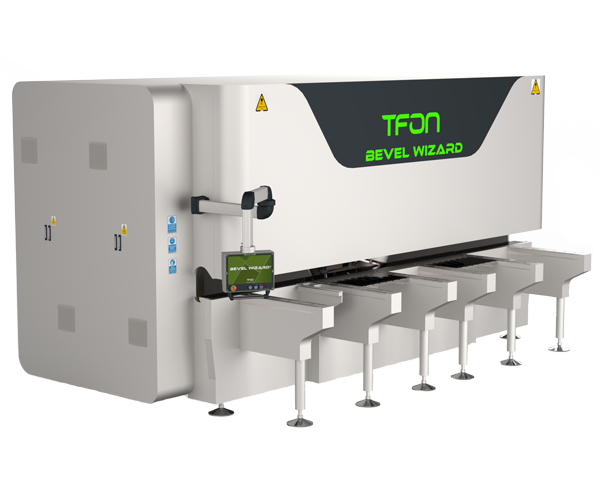
TFON designs and builds the Bevel Wizard® range at its plant in Konya, Türkiye, and supports it with installation, operator training, technical support and spare parts. The range has two machine concepts for two kinds of work:
| Model | Concept | Part length | Part width | Thickness | Working angle |
|---|---|---|---|---|---|
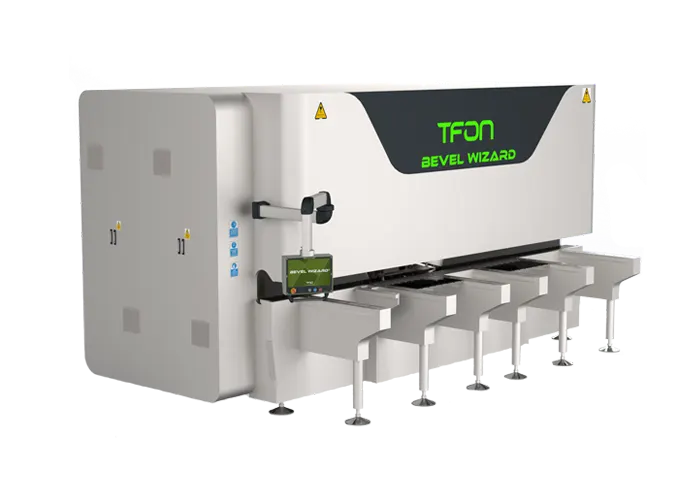
| TF-C 8010 L: plate beveling machine for plate up to 12 m | Sliding table for long straight edges | 400 to 12,000 mm | 250 to 1250 mm | 4 to 100 mm | -30° to +80° |
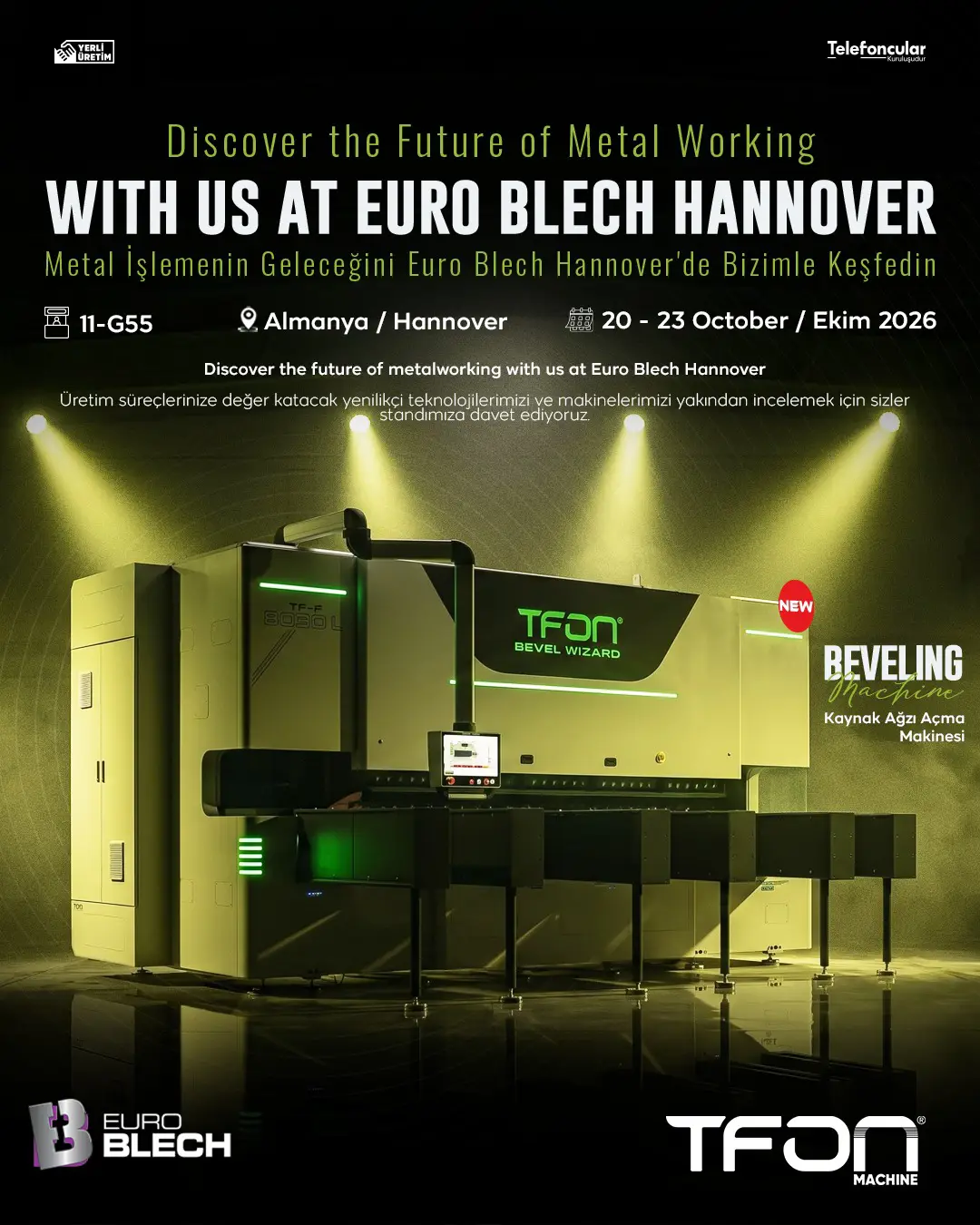
| TF-F 8030 L: plate beveling machine for parts up to 3 m | Fixed table; the abrasive unit moves | 60 to 3000 mm | 100 to 1250 mm | 4 to 100 mm | -30° to +80° |
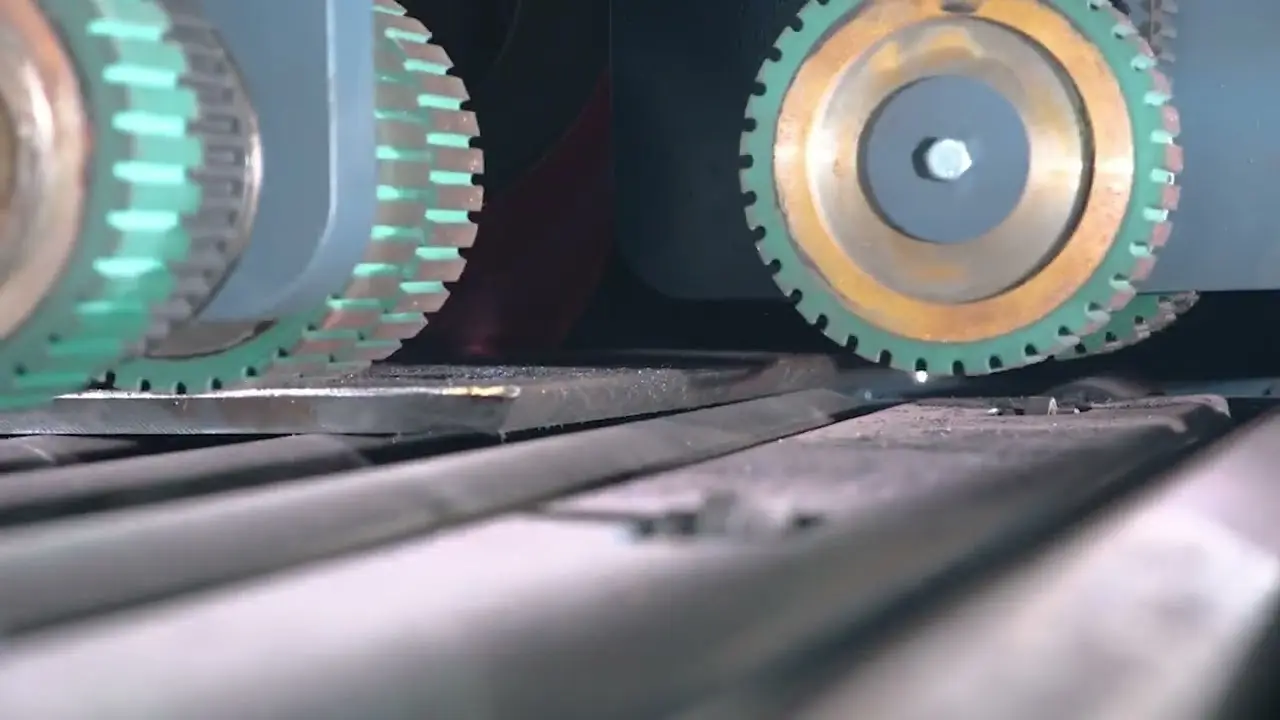
Both machines bevel with an abrasive belt running over a Ø400 mm drum at 30 m/s, with a part feed rate of 1.0 to 4.0 m/min. The TF-F 8030 L table carries parts up to 3,000 kg. Choose the TF-C 8010 L when long plates dominate the work and the TF-F 8030 L for short and mid-size cut parts that vary from job to job.
A Bevel Wizard® machine produces a straight bevel face at the angle you set within its -30° to +80° working range. The joint that bevel belongs to, and the root face left below it, come from the drawing and the welding procedure, not from the machine.
For the groove shapes that use a bevel and where each one is used, see weld bevel and groove types. For how the angle changes penetration, filler metal use and distortion, read how bevel angle affects weld quality, and for specifying and inspecting the prepared edge, see bevel weld preparation.
If you are comparing a sheet metal beveling machine with hand grinding, look at the length of edge you prepare each week: the longer the edges, the more an operator-dependent angle costs in filler metal and rework.
From the reference stated on the drawing. An angle measured from the cut edge is not the same number as an angle measured from the plate surface, so the reference must be written down.
Both come from the drawing or the welding procedure; neither can be derived from plate thickness alone. The root face is the unbeveled land left at the foot of the prepared edge and is checked at defined points along the edge, including near the ends. The root gap is the spacing between the parts when they are assembled. The machine prepares the edge; the root gap is created at assembly and defined separately in the welding procedure.
Both series work from 4 to 100 mm thickness and within a working angle range of -30° to +80°. The difference is part size: the TF-F 8030 L, with a maximum part length of 3000 mm and a minimum length of 60 mm, is designed for small and mid-size parts, while the TF-C 8010 L, with a maximum part length of 12,000 mm, is designed for long plates.
Support is required along the entire working path. The TF-C 8010 L is designed with a sliding table arrangement for long straight edges; infeed and outfeed support should be planned in the production layout.
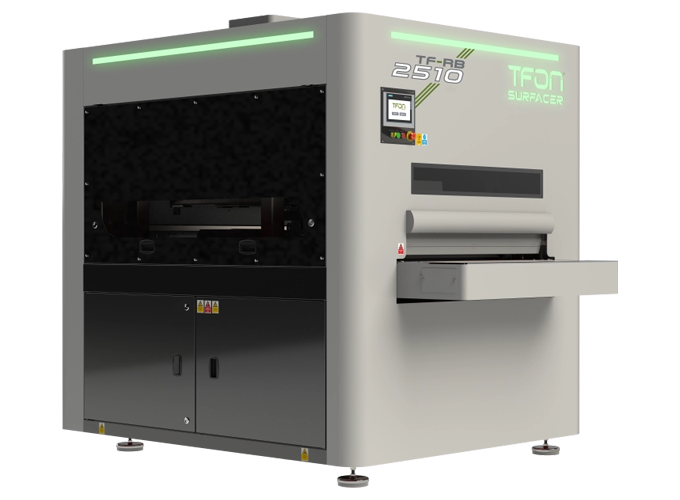
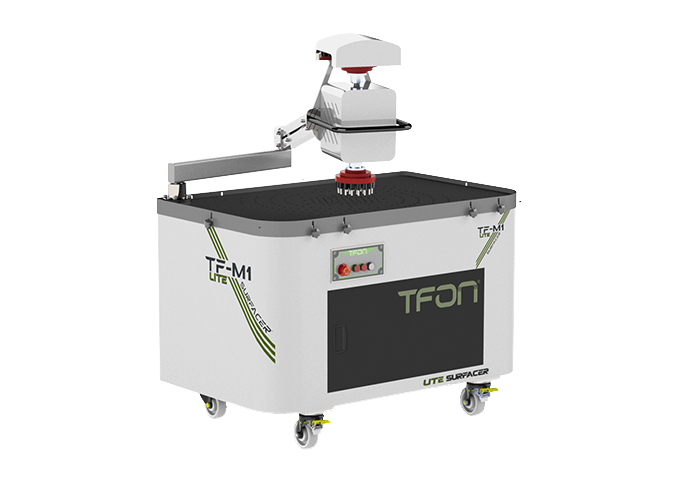
Beveling and deburring are separate operations and one does not replace the other. A beveling machine deliberately creates a surface at a defined angle on the edge; deburring removes unwanted material. At TFON, beveling is done on TFON Bevel Wizard® machines, deburring and edge rounding on TFON Surfacer® machines.
Share the material, cutting method, part dimensions and the acceptance criterion of the next operation, and we will define the suitable machine family and station sequence together.
Related process: Beveling