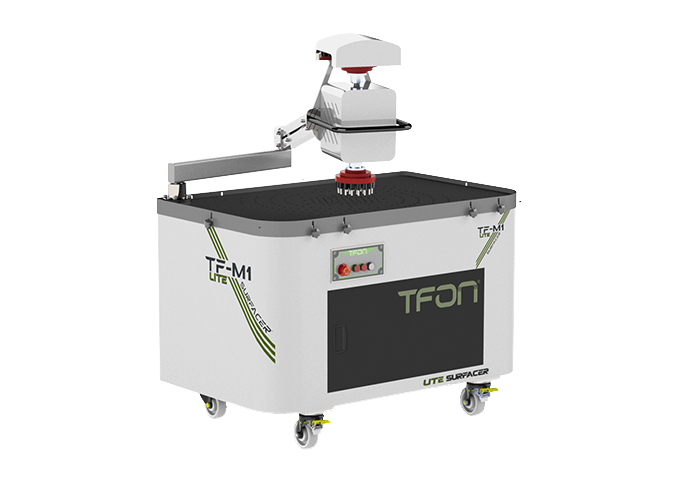


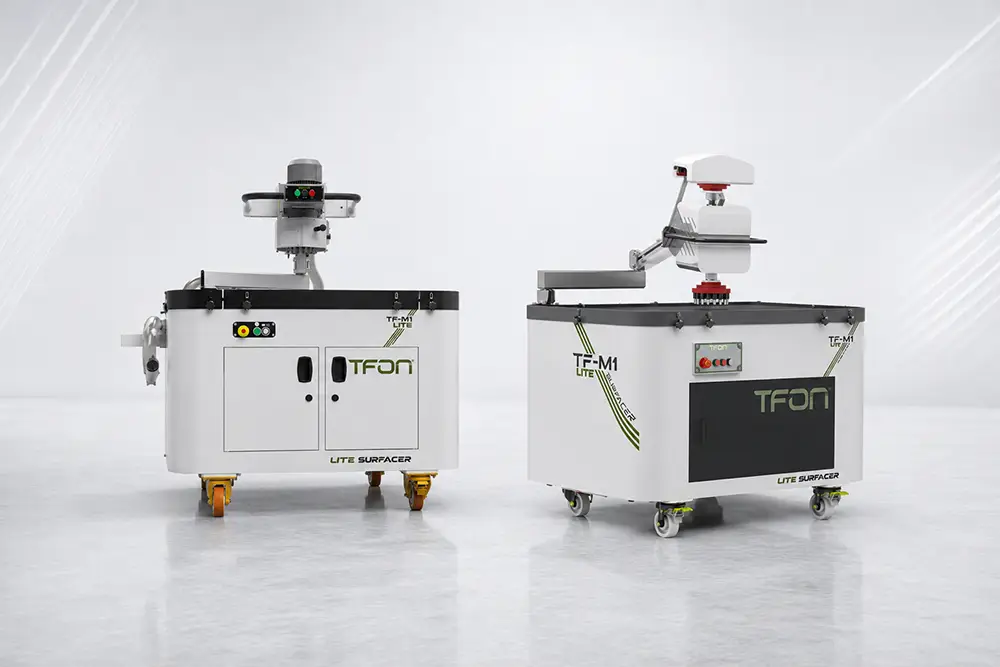
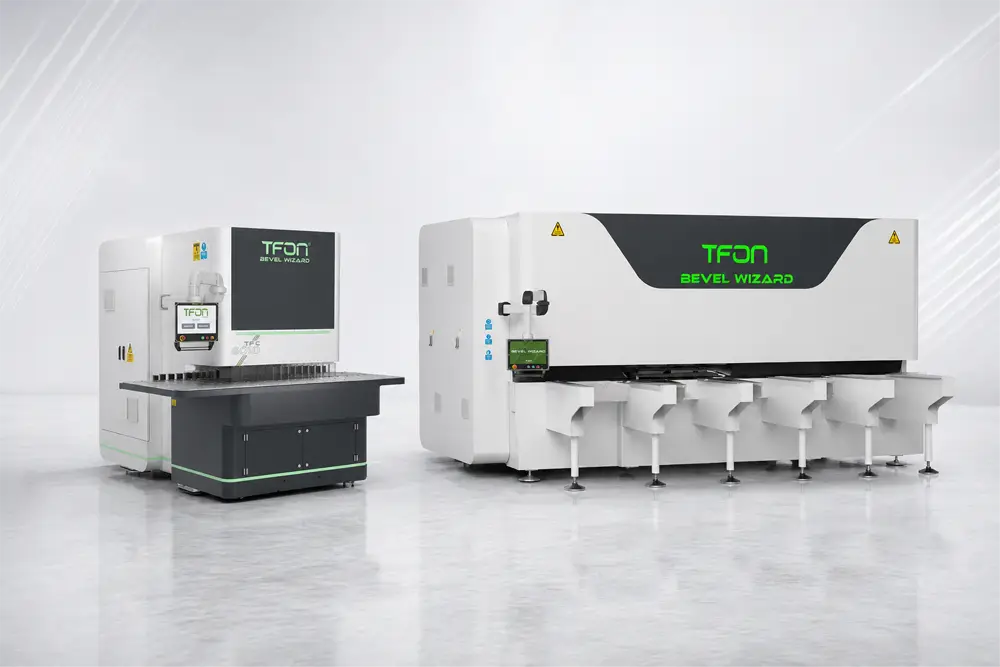
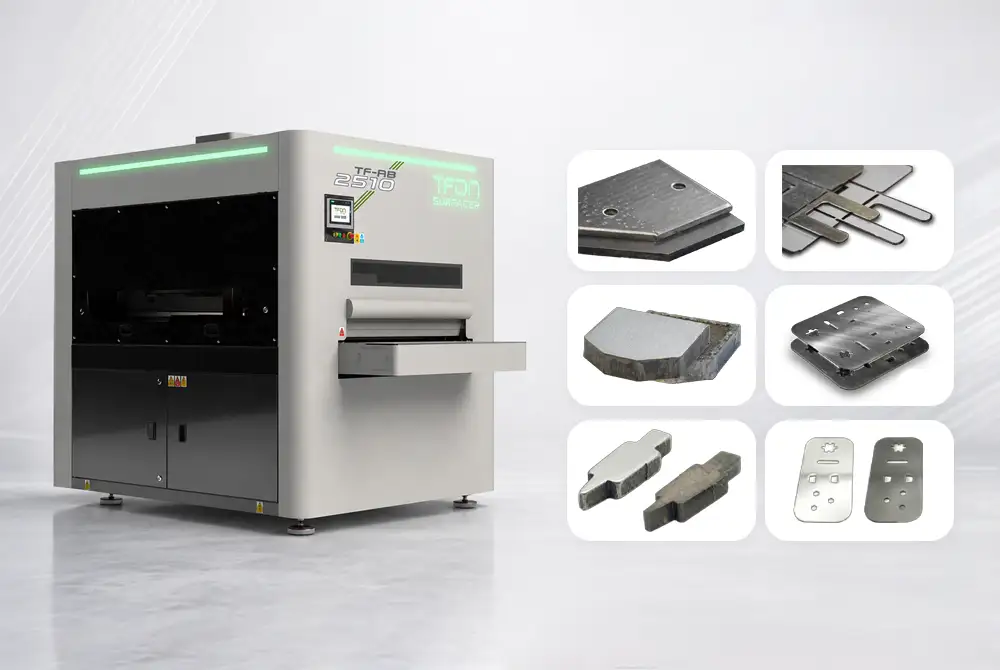
Features of TFON Automatic Deburring Machines
In modern sheet metal production, cutting is only the first step. Laser, plasma, oxyfuel and punching processes can leave burrs, sharp edges, oxide layers and surface irregularities that must be removed before a component is ready for welding, coating or assembly. When this work is carried out manually, the result often depends on the operator’s experience, available time and choice of tools. An automatic deburring machine turns this variable stage into a controlled and repeatable production process.
TFON develops systems for manufacturers that need consistent edge quality without slowing down the rest of the production line. By combining deburring, edge rounding, oxide removal and surface finishing in configurable stations, the equipment can be adapted to different materials, part thicknesses and production volumes.
Consistent Processing from One Part to the Next
One of the main reasons manufacturers invest in an automatic deburring machine is process consistency. Hand grinding may be suitable for prototypes or occasional parts, but it becomes difficult to maintain the same finish across large batches, mixed shifts or repeat orders.
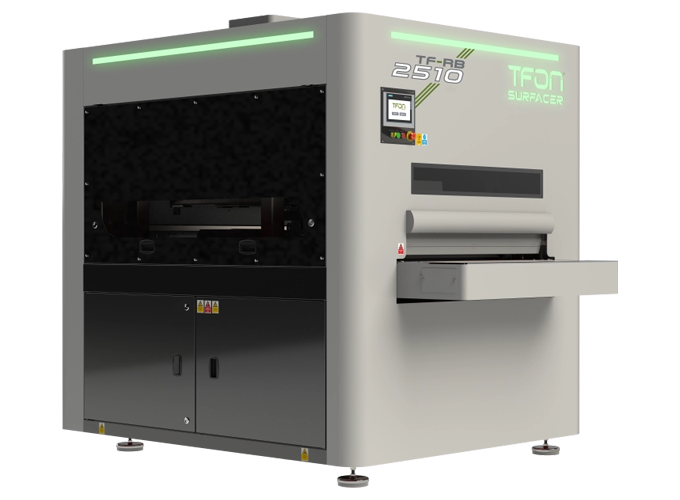
These machines use servo-controlled station positioning to make precise adjustments without relying on manual hand-wheel settings. The T-Servo system provides station movement with an accuracy of 0.1 mm, helping operators reproduce the same result across different batches. The conveyor remains at a fixed height while the processing stations move independently, which also makes the system easier to integrate into an automated production line.
Automatic laser thickness measurement further reduces setup errors. Each incoming workpiece can be measured before processing, allowing the machine to update the relevant parameters according to the actual material thickness. This is particularly useful in facilities where thin sheet, medium-gauge components and thicker plate are processed during the same shift.
The result is a more stable workflow in which product quality does not change according to the operator, shift or order quantity. Manufacturers can achieve repeatable edges while reducing the time spent checking and correcting manually finished components.
Intelligent Features That Reduce Setup Time
A productive machine should do more than remove burrs. It should also reduce preparation time, simplify operation and protect important components. TFON addresses these needs through several automation and monitoring features.
The PartTrack recipe system stores processing data for frequently produced components. Instead of entering station heights, conveyor speeds and other values for every repeat order, the operator can select the saved part and recall the established settings. Barcode and QR-based triggering can make this process even faster by loading the correct recipe directly from the part identification.
Protection systems are equally important. Intelligent overload monitoring checks motor torque for unusual resistance, while thickness error prevention can stop the machine when a workpiece does not match the value entered on the control screen. These functions help protect abrasive belts, drums and other processing components from avoidable impact damage.
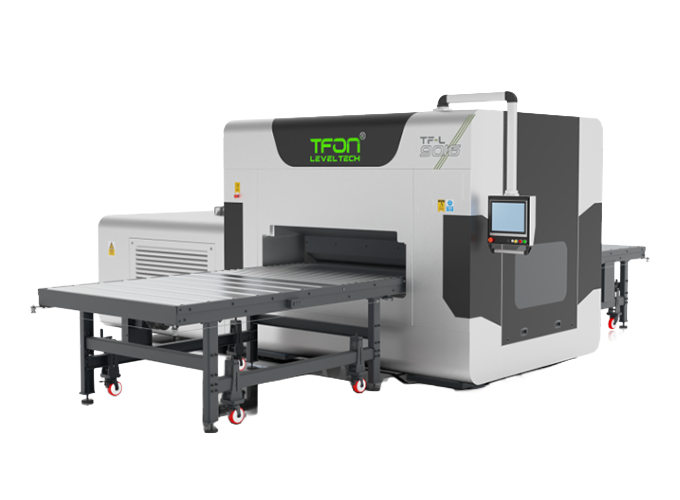
For manufacturers planning a connected production environment, an automatic deburring machine can also be combined with feeding conveyors, return systems and production tracking infrastructure. Motor-driven conveyors support synchronized material flow, while return and side-shifting systems reduce unnecessary manual handling and bring processed parts back to the operator efficiently.
Better Edges for Welding, Coating and Assembly
The value of an automatic deburring machine is visible not only at the machine outlet but throughout the following production stages. Removing burrs makes parts safer to handle, while controlled edge rounding creates a more suitable surface for painting and powder coating. Sharp corners tend to hold less coating and may become early corrosion points, whereas a consistent radius improves coverage around the edge.
Oxide removal is also important after thermal cutting. Cleaning the oxide layer gives welders and coating teams a more reliable base surface, helping reduce adhesion problems, rework and inconsistent finishing. Depending on the selected process stations, the same machine can handle standard laser-cut parts, punched components, stainless steel workpieces and heavy burrs on thicker structural plate.
TFON also offers image-processing and production-monitoring options that make operating data easier to follow. Parameters such as processing area, production efficiency and machine performance can be transferred to digital platforms or integrated with ERP and production tracking systems. This gives manufacturers a clearer view of throughput, consumable use and operational performance.
Choosing the right automatic deburring machine therefore depends on more than working width alone. Material type, thickness range, burr severity, desired edge radius, production volume and line layout should all be evaluated together. TFON configures its machines around these real production requirements, allowing manufacturers to select the stations and automation level that genuinely support their workflow.
For companies seeking safer parts, repeatable finishing and lower dependence on manual grinding, TFON provides a practical route towards a more stable, measurable and efficient deburring process.