

Parts cut by plasma or oxy-fuel may require more than one preparation step before welding, coating or assembly. Attached residue, heavy burrs, sharp edges and distortion describe different incoming conditions. A weld joint may also need a defined bevel after the relevant cleaning and positioning requirements have been addressed.
TFON reviews the complete route so that machine selection reflects both the edge condition and the way the part moves through production.
Discuss your thermal-cut parts with TFON
Record the Condition After Cutting
Photograph both faces and representative edges. Identify where residue is attached and whether the part is bowed, twisted or difficult to support. Include material grade, thickness, dimensions and part mass where known.
The cutting method is useful background, but it does not fully describe removal difficulty. Two parts with the same thickness can have different residue attachment, geometry and handling requirements.
Build the Route from the Required Result
| Incoming condition or target | Review this operation | Acceptance focus |
|---|---|---|
| Attached thermal-cut residue | Slag removal | Residue remaining and the condition after removal |
| Protruding burrs | Deburring | Required edges and allowed material removal |
| Sharp edges before handling or coating | Edge rounding | Agreed profile and inspection locations |
| Distorted part or plate | Roller leveling | Flatness in the specified support condition |
| Weld-joint edge geometry | Beveling | Angle, root face and preparation consistency |
This table identifies operations to review; it is not a mandatory sequence for every part. Incoming cleanliness, machine requirements, workholding and the final specification determine the appropriate order.
Review TFON Machine Families Together
Burr, residue and edge treatment
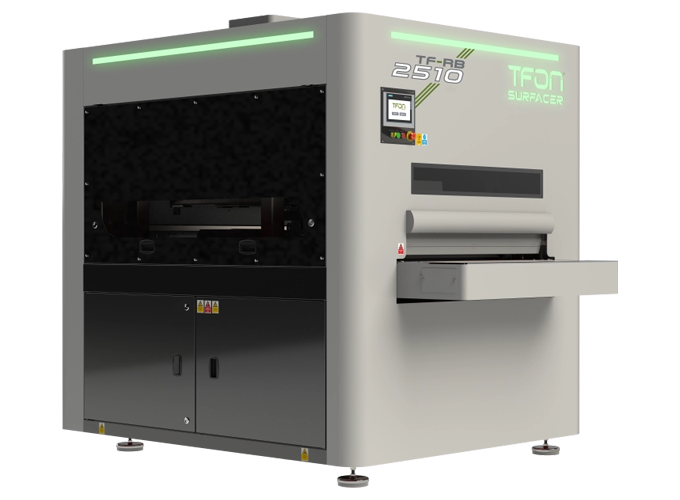
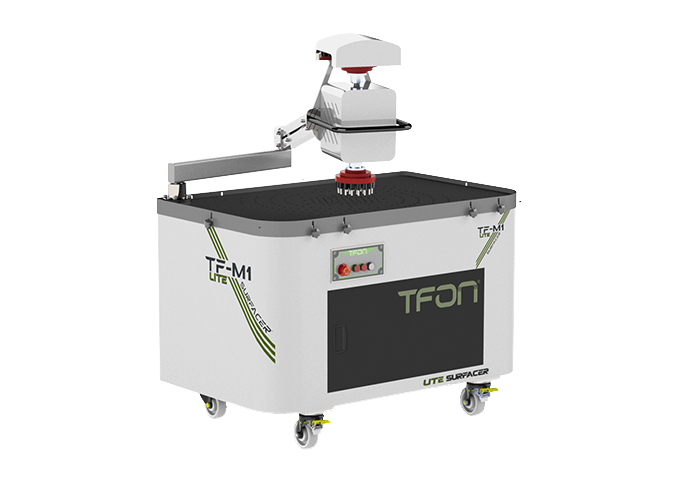
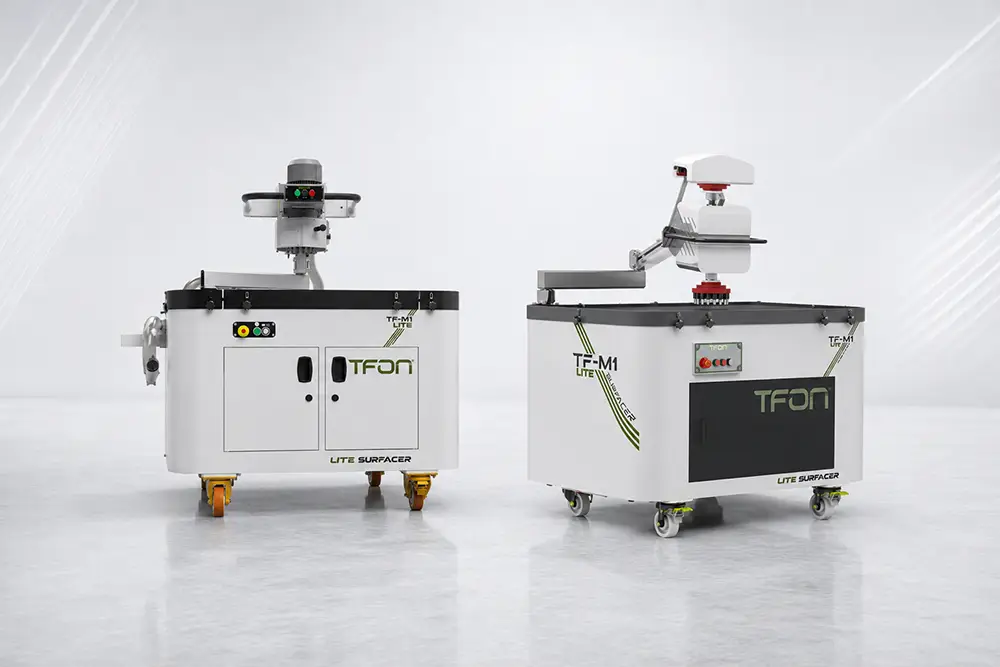
Explore TFON Surfacer machines and discuss the available heavy-deburring configurations. The selected tooling must be assessed against the incoming residue. A configuration suitable for one cut condition should not be assumed suitable for all slag or dross.
Flatness before further fabrication
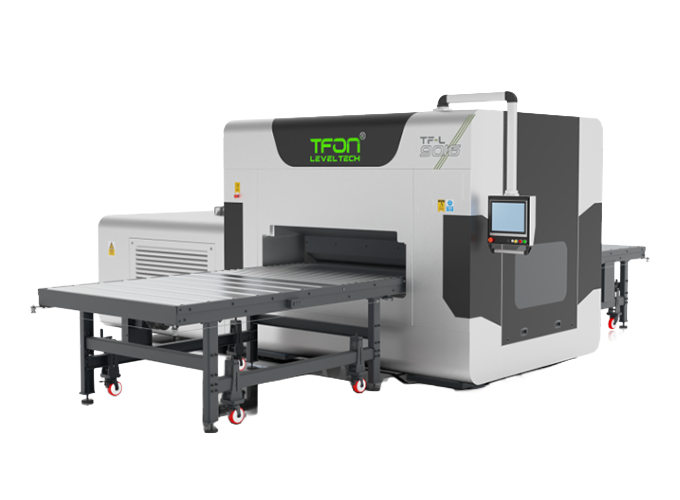
TFON Leveltech machines address mechanical leveling of suitable parts. Material strength, dimensions and geometry must be reviewed alongside the required flatness. Leveling does not eliminate the need to manage distortion introduced by later welding.
Defined weld preparation
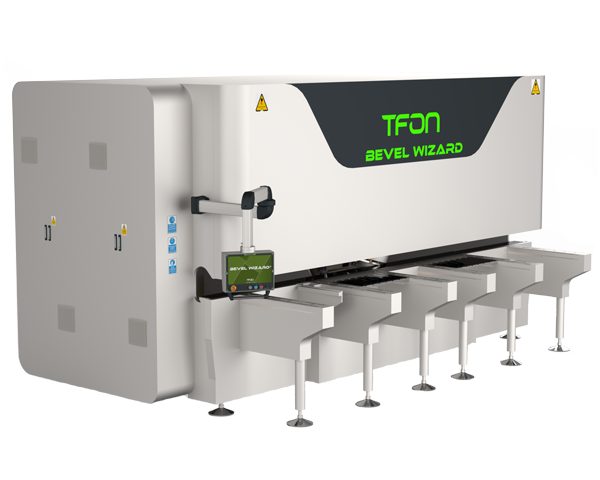
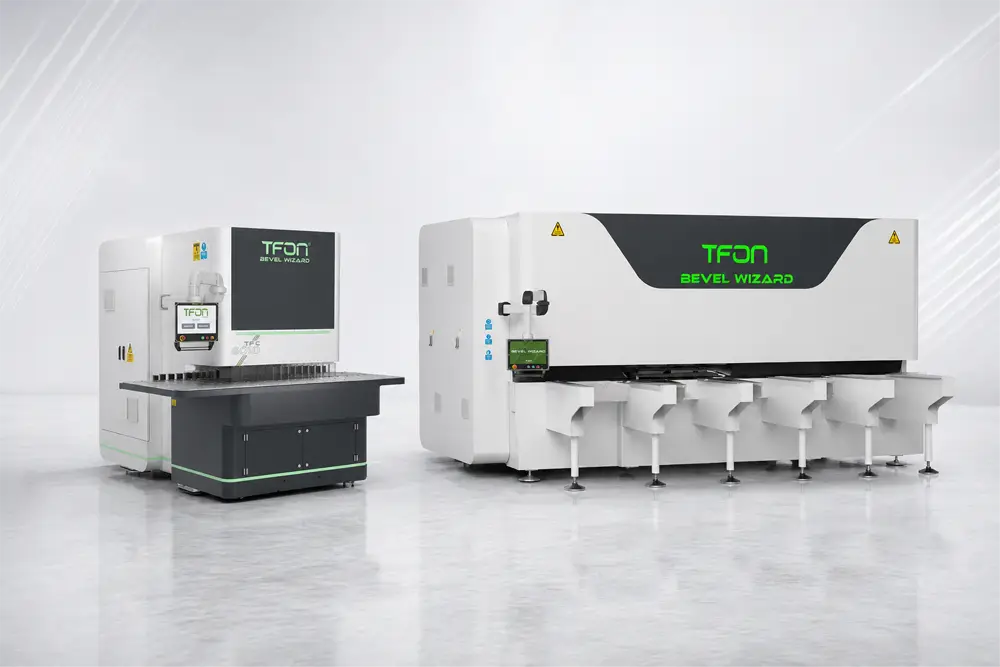
TFON Bevel Wizard machines prepare specified edge geometry for suitable applications. Select the machine concept from the drawing, edge length, support and handling constraints. Beveling and flatness correction remain separate operations.
Include Handling in the Feasibility Review
Heavy or awkward parts can make loading, positioning and turning a major part of the cycle. Explain the available lifting equipment, infeed and outfeed support, floor space and desired material flow. Integration requirements must be reviewed for the proposed machine and installation.
For repeated production, discuss the relevant automation options. Do not assume a complete robotic handling system from the presence of automatic processing controls alone.
Application Questions
Can one machine complete every preparation step?
Not necessarily. Burr and edge treatment may be combined in a suitable configuration, while leveling and bevel preparation can require separate machine families.
Can coating or weld quality be guaranteed from edge treatment alone?
No. Edge preparation supports the downstream operation, which still has its own material, procedure and inspection requirements.
What makes a useful trial batch?
Include representative residue conditions and difficult geometries as well as common parts. Supply the required edge and flatness criteria and explain the next production operation.