
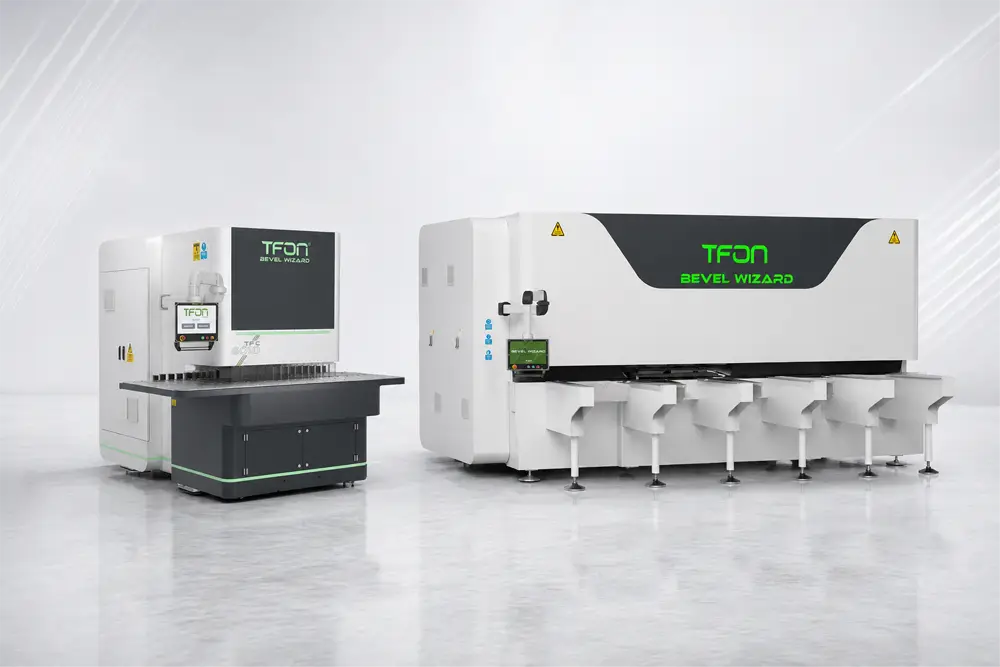
In welded fabrication, joint strength is not determined solely by the welding process, electrode, or filler wire used. The way the workpiece is prepared before welding also has a direct impact on the final quality of the joint. Particularly when joining thick sheets and plates, bevel geometry plays a critical role in penetration, filler metal consumption, heat distribution, and the mechanical strength of the welded connection. At TFON, we consider pre-weld preparation an integral part of the overall welding process.
The bevel angle refers to the geometric opening created between two metal surfaces that will be joined. This geometry allows the weld metal to reach the joint area in a controlled manner and helps achieve sufficient penetration. If the angle is too narrow, the weld metal may have difficulty reaching the root of the joint. If it is excessively wide, more filler metal, longer welding time, and greater heat input may be required. For this reason, bevel geometry should be determined according to material thickness, welding method, joint design, and production requirements.
Adequate root fusion is particularly important in structures where high mechanical strength is expected. Insufficient penetration can create discontinuities within the weld zone and prevent the joint from delivering the required performance under load. Properly prepared bevel surfaces, on the other hand, allow the weld pool to reach the joint more consistently. Maintaining the same geometry from one part to another is also important for achieving repeatable quality in serial production.
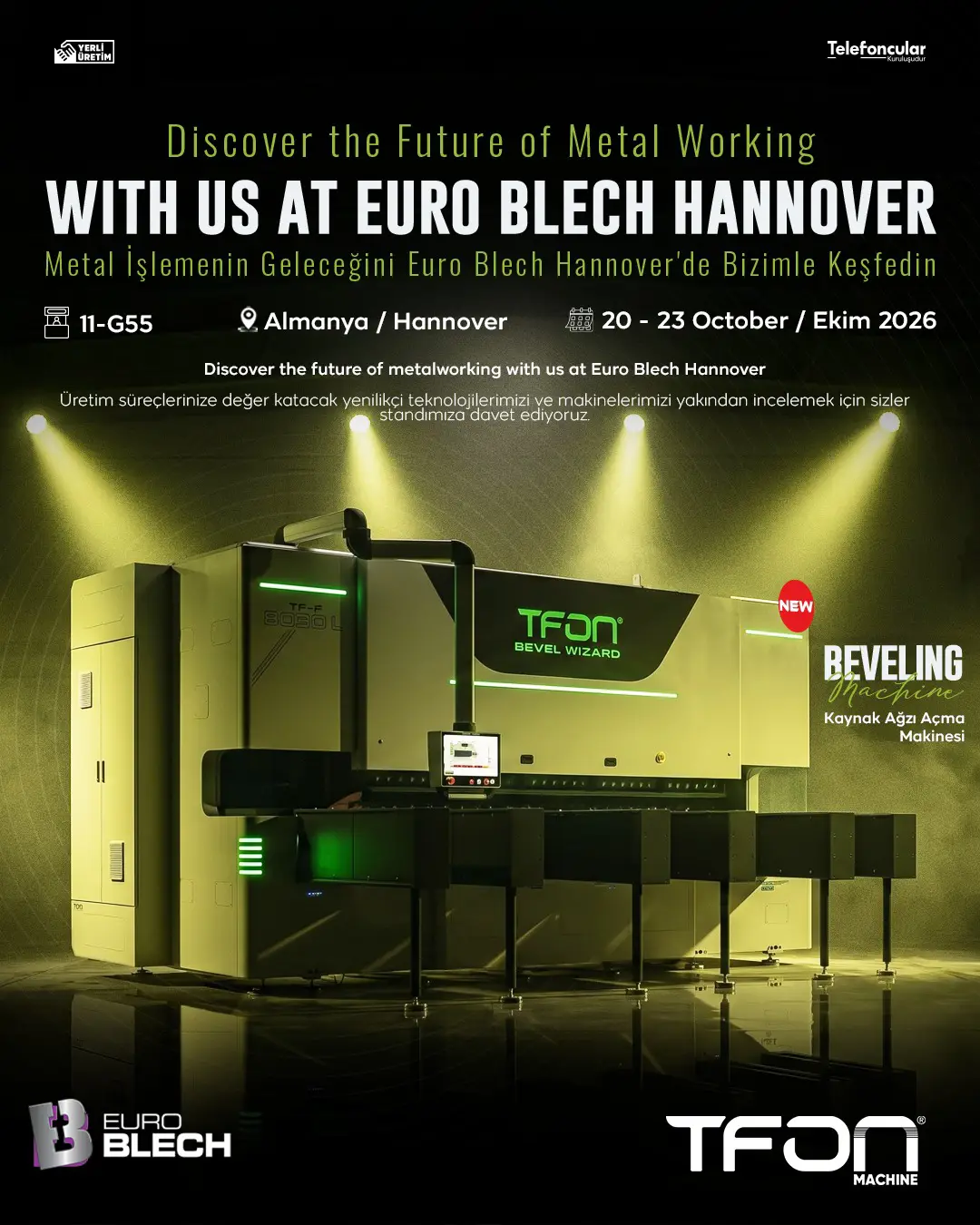
With manual grinding methods, bevel angles can vary depending on the operator. One component may be prepared close to 30 degrees while another may have a noticeably different geometry. Such variations can cause identical welding parameters to produce different results from part to part. In industrial production, the use of a beveling machine is therefore not only about reducing processing time but also about achieving repeatable edge geometry. TFON metalworking solutions are developed with a focus on controlled and standardized production processes.
How Does the Correct Bevel Geometry Affect the Production Process?
Material thickness is one of the primary factors when determining bevel angle. Thin materials can sometimes be welded without special edge preparation, whereas thicker plates generally require more controlled edge preparation to allow the weld metal to penetrate through the joint cross-section. V, X, U, and other bevel geometries may be selected depending on the technical requirements of the application. In addition to the angle itself, root face, root gap, and surface condition also influence welding performance.
A wider bevel can improve access to the joint, but it also increases the volume that needs to be filled. This generally means higher filler metal consumption and longer welding cycles. As the number of weld passes increases, the total heat input into the workpiece may also rise. In large fabricated structures where dimensional accuracy is important, this can increase the risk of thermal distortion. Selecting an appropriate bevel angle is therefore important not only for weld quality but also for production efficiency.
A bevel that is too narrow can create a different set of problems. Limited access of the welding torch or electrode to the root area may contribute to incomplete fusion or insufficient penetration. For this reason, the objective when using a beveling machine is not to create the widest possible angle, but to reproduce the specified geometry consistently along the entire edge of the workpiece.
This becomes even more critical on long plates and sheet-metal components. An angle that is correct at the beginning of the workpiece may gradually change when the edge is prepared manually over several meters. Variations along the edge can affect weld pool behavior and change the amount of filler metal required. At TFON, we consider standardized edge preparation particularly important in repetitive manufacturing environments. A beveling machine helps reduce operator-dependent variation and transforms pre-weld edge preparation into a more controlled production stage.
Surface condition is just as important as bevel geometry. Irregular grinding marks, burrs, slag, or uneven edges produced during preparation can negatively affect subsequent welding operations. A clean and uniform surface supports more controlled positioning, fit-up, and welding. In industrial applications, beveling machines help create consistent and repeatable edge geometries, supporting more controlled preparation of plates and sheet metal before welding.
The compatibility of the two mating edges during fixturing also contributes to maintaining a consistent root gap along the joint. Dimensional differences between components may otherwise result in local changes in penetration, heat distribution, and filler metal requirements.
How to Check Bevel Angle for Welding
Check the bevel before fit-up, while it can still be corrected, and measure against the reference named on the drawing or in the welding procedure. The bevel angle is taken from a plane perpendicular to the plate surface; the groove angle is the total included angle of the joint. A 30° bevel on each plate of a V-joint therefore gives a 60° groove. Reading one as the other turns a correct bevel into a rejected one.
| Feature | What to measure | Typical tool |
|---|---|---|
| Bevel angle | Angle of the bevel face from the stated reference | Bevel protractor, digital angle gauge or welding gauge |
| Root face | Height of the unbeveled land at the bottom of the edge | Caliper or welding gauge |
| Root gap | Distance between the parts after fit-up | Gap gauge or feeler gauge |
| Consistency along the edge | Angle and root face at both ends and at set intervals | The same tools, with recorded positions |
| Bevel surface | Burrs, slag, gouges and deep grinding marks | Visual inspection |
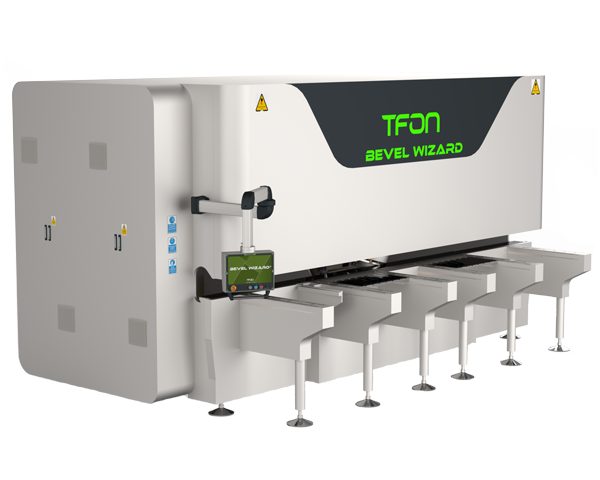
Take the tolerance from the welding procedure specification or the code the job is built to, and record the measured values with the part number. On long plate, measure near both ends and in the middle: an edge prepared by hand can start at the right angle and drift over a few meters. The groove shapes behind these angles are compared in weld bevel and groove types. On TFON plate beveling machines, the angle is set within a working range of -30° to +80° before the pass, so the check confirms the machine setting on the first part and at intervals after that.
Weld quality should therefore not be evaluated only after the welding operation has been completed. A significant portion of quality is established before the first arc is struck. Correct cutting, surface cleaning, suitable bevel geometry, and consistent edge preparation are interconnected stages of the same manufacturing process. In the TFON production approach, the purpose of pre-weld metal preparation is to deliver a workpiece to the next operation with predictable and repeatable characteristics.
A properly selected and accurately produced bevel can contribute to improved penetration, controlled filler metal consumption, optimized weld passes, and reduced risk of thermal distortion. For this reason, a beveling machine should not be viewed simply as equipment that removes material from the edge of a plate. It is a production solution used to prepare the joint geometry required for a controlled welding process.
The same bevel angle or geometry is not suitable for every application. Material type, plate thickness, welding process, joint configuration, and applicable fabrication standards should always be considered together. At TFON, we approach pre-weld preparation by evaluating these technical variables as part of the overall manufacturing strategy. When operated with appropriate parameters, a beveling machine helps reproduce the required geometry across serial production and supports a more stable, measurable, and repeatable welding process.