

Edge rounding changes a sharp cut edge into a controlled edge profile. The required result may be an edge break for handling or a defined radius specified for a later operation. Those requirements should be stated separately: an edge that feels less sharp has not necessarily met a dimensional radius requirement.
For TFON applications, the incoming burr, part geometry, tool contact and acceptance method are reviewed together before selecting a configuration.
Deburring Comes Before an Accepted Edge Profile
A protruding burr can interfere with the edge-treatment result. Assess whether deburring is required before rounding, rather than expecting an edge tool to compensate for every incoming condition.
The inspection must also distinguish outer edges from holes, slots and internal contours. Tool contact may differ around the same part, especially where narrow openings or adjacent geometry limit access.
How Tooling and Part Geometry Affect Rounding
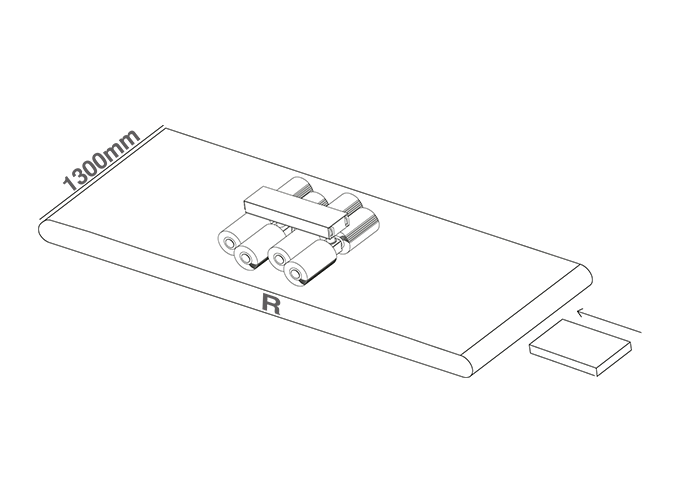
Flexible abrasive tooling contacts accessible edges as the part is processed. Tool type, abrasive condition, contact settings, part orientation and transport all affect the outcome. Changing one of these can change both the edge profile and the sheet surface.
Brush deburring and edge-treatment configurations are relevant when reviewing suitable external and internal contours. A machine name or station letter alone does not establish the radius achievable on every edge.
Visible surfaces need a separate acceptance criterion
An acceptable rounded edge does not automatically mean an acceptable surface finish. Identify the faces that remain visible and any direction or texture that must be preserved. Material removal should remain within the agreed dimensional allowance.
Define How the Edge Will Be Accepted
| Requirement | What to specify |
|---|---|
| Edge break or radius | The required profile and tolerance, where defined |
| Edges included | Outer contour, holes, slots and relevant faces |
| Inspection | Measurement method and sampling locations |
| Surface condition | Permitted marks, texture changes and visible faces |
| Downstream coating | The coating specification and edge preparation requirements |
Do not apply a single radius target to every coating system or component. The drawing and the applicable finishing requirements determine the target; sample evaluation checks whether the proposed machine and tooling can achieve it.
Review TFON Machines for Edge Treatment
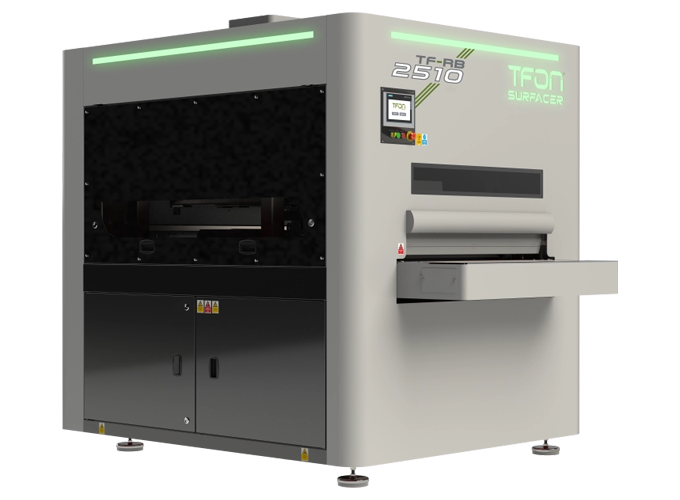
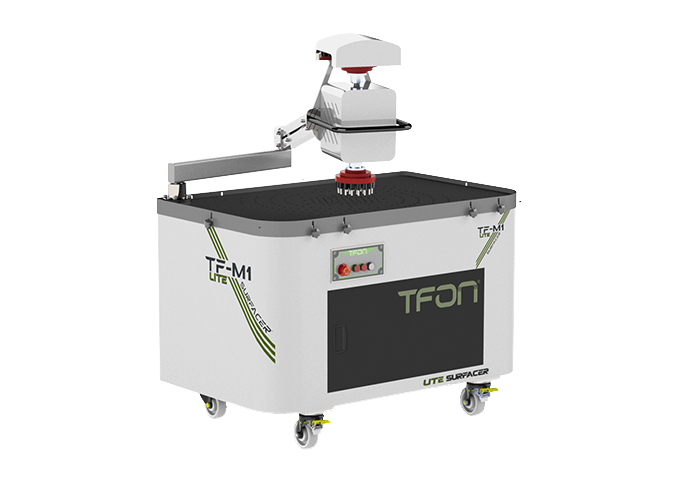
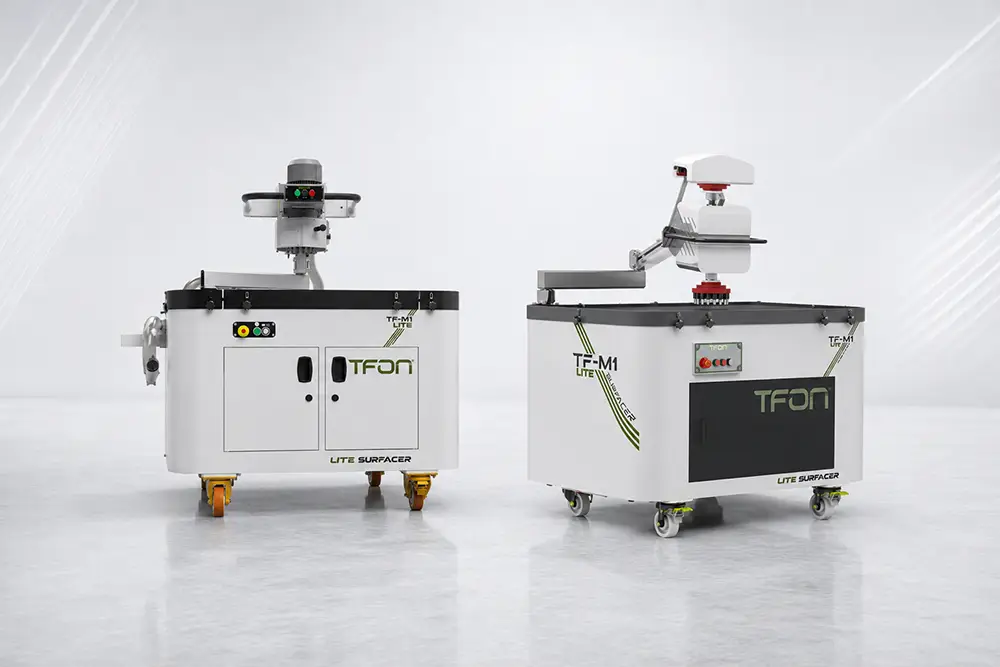
Use the TFON Surfacer range to compare machine configurations. Where the incoming parts are already burr-free, the required sequence may differ from a part that needs both strong burr reduction and rounding.
For work that needs direct operator control, explore TFON manual deburring and edge rounding machines. Review the handling method and operator instructions alongside the tool selection.
Edge Rounding Questions
Does rounding guarantee coating adhesion?
No. Edge condition is one part of coating preparation. Cleanliness, pretreatment, coating application and the coating specification also affect the result.
Can the same result be assumed on holes and outer edges?
No. Define both in the inspection plan. Tool access and part geometry may produce different contact conditions.
Can TFON confirm a required radius?
Share the drawing, material, part dimensions and inspection method with representative samples. The proposed configuration can then be reviewed against that particular requirement.