
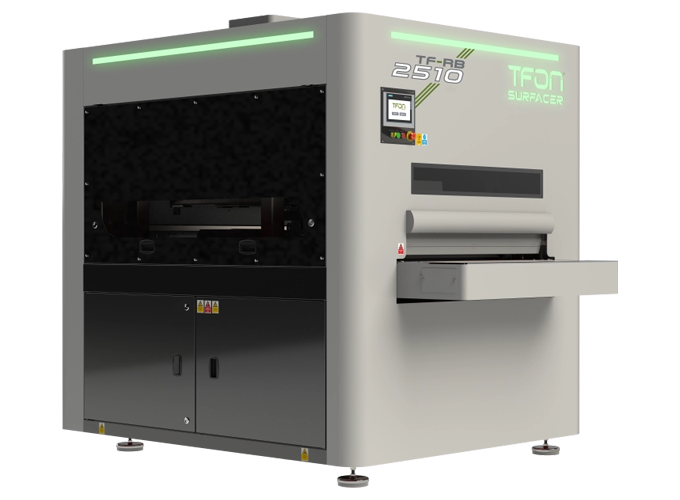
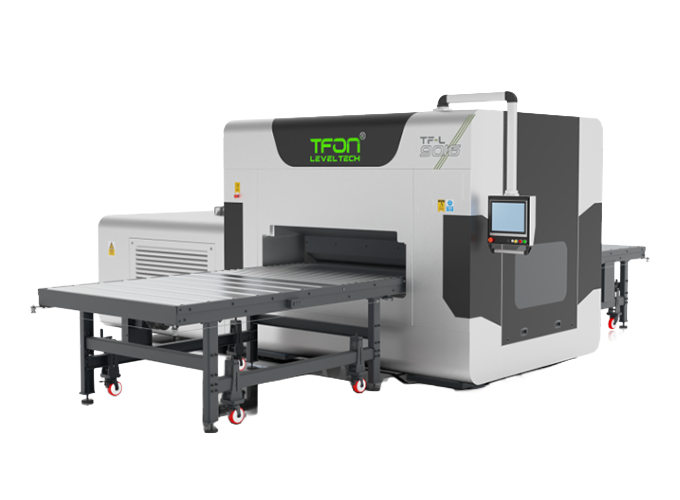
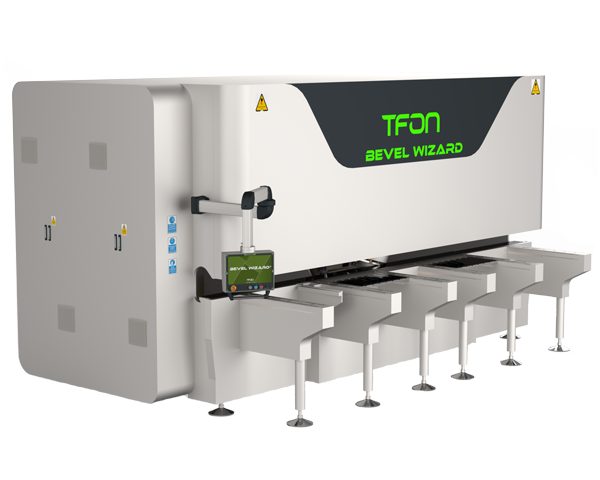

Laser cutting is one of the fundamental processes used in sheet metal manufacturing, offering high precision and fast processing speeds. However, a component is not always ready for the next production stage immediately after cutting. Depending on the material type, sheet thickness, laser parameters, and assist gas, burrs, dross, or sharp edges may remain particularly along the lower edges of the workpiece. Proper removal of these residues is important for assembly safety, surface quality, and the performance of subsequent painting or coating processes. At TFON, we consider deburring and edge rounding after laser cutting to be an integral part of the sheet metal production process.
During laser cutting, a high-energy beam melts or vaporizes the material along the cutting line. If the molten metal cannot be completely removed from the cutting zone by the assist gas, burrs or dross may form on the underside of the component. Incorrect cutting parameters, nozzle height, gas pressure, focal position, or variations in the sheet surface can also influence burr formation.
Burrs are not merely a visual issue. Hard and sharp residues left along the edge of the sheet can create occupational safety risks during handling. They can also affect dimensional fit when components need to be assembled, welded, or connected with fasteners. For this reason, edge preparation after laser cutting is an important process that directly influences the quality of the finished product.
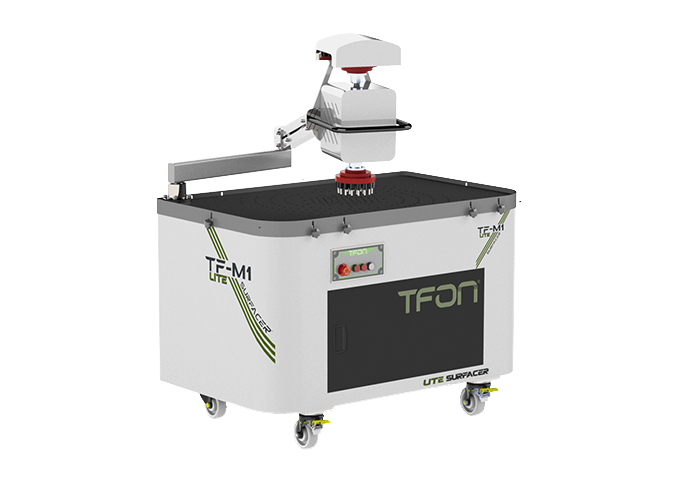
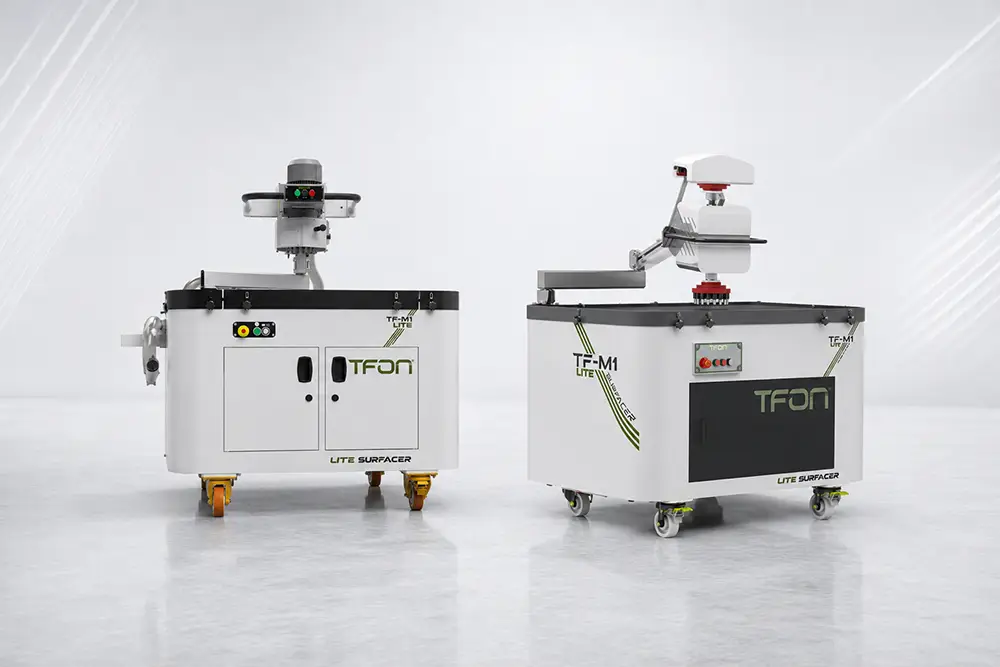
Burr removal can be performed using grinding tools, hand tools, or industrial deburring systems. In low-volume production, applications with frequently changing part geometries, or manufacturing environments where different component sizes are processed on the same line, manual systems can provide greater flexibility. The use of a manual deburring and edge rounding machine allows the operator to work selectively on the required areas of the component while also creating safer and more consistent edges.
At TFON, the objective is not limited to removing visible burrs. Rounding the sharp edges created during cutting can also improve the suitability of the component for subsequent manufacturing stages. This makes handling, assembly, welding, and surface treatment processes more controlled and predictable.
How Should Deburring and Edge Rounding Be Planned?
The geometry of the component and the required production volume should first be evaluated when selecting a deburring method after laser cutting. Automatic systems can provide high throughput for large production series, while manual solutions may be more suitable for low- and medium-volume production or parts with frequently changing geometries. A manual deburring and edge rounding machine gives the operator greater control, particularly when working with complex contours, internal openings, or specific edges that require selective processing.
During the process, removing only visible burrs may not be sufficient. Even when the burr itself has been eliminated, sharp cutting edges can still cause problems in subsequent manufacturing stages. Edge rounding creates a defined radius along these areas, helping make the component safer to handle while also improving the performance of coatings and finishing processes.
Sharp edges are especially critical in powder coating, wet painting, galvanizing, and similar surface treatment applications. Coating materials can form relatively uniform layers on flat surfaces, while film thickness may decrease significantly around very sharp corners. Rounded edges support more consistent coating distribution. For this reason, TFON treats edge preparation not simply as a mechanical cleaning operation but as a production step that also influences downstream surface treatment quality.
Deburring is equally important for parts that will subsequently be welded. Irregular metal residues along the cutting line can interfere with accurate positioning and fit-up. Variations in the contact area between two sheets can reduce the repeatability of the welding process. Using a manual deburring and edge rounding machine to prepare the edges in a controlled manner can help create cleaner and more consistent contact surfaces before welding.
The pressure applied during deburring and the type of abrasive tool used should also be selected according to the material. Excessive pressure on thin sheets can remove too much material or alter the geometry of the component. On thicker materials, insufficient processing may leave hard burrs partially attached. Different processing parameters may therefore be required for stainless steel, carbon steel, aluminum, and other materials.
It is also important to inspect not only the outer perimeter of the component but also internal cutouts and hole edges. Small openings or complex internal geometries created by laser cutting are not always easy to reach using conventional grinding methods. One of the key advantages of manual systems is that the operator can guide the processing head directly to the areas where finishing is required. TFON manual processing solutions are designed to support different geometries within the same flexible operating concept.
A high-quality deburring process should not be regarded as an occasional corrective operation after cutting. When it is integrated into the production standard, more consistent edge quality can be achieved across different components. Material type, sheet thickness, burr severity, required edge radius, and subsequent manufacturing operations should all be evaluated together.
To carry the precision provided by laser cutting into later production stages, post-cutting preparation must also be carried out in a controlled manner. A manual deburring and edge rounding machine offers a flexible edge finishing solution for manufacturing environments with varying part geometries, different batch sizes, and applications where operator control is required. At TFON, our approach to deburring and edge rounding is based on preparing the component not merely as it leaves the cutting process, but in a condition suitable for welding, assembly, coating, and final use.