

Laser-cut and punched components can reach the next operation with burrs, sharp edges or surface requirements that cutting alone has not resolved. The production challenge is to obtain an accepted part without losing critical geometry or spending excessive time on handling and repeated setup.
TFON reviews the incoming edge, material and part mix to select the relevant deburring and edge-treatment sequence.
Review your laser-cut or punched parts with TFON
Inspect More Than the Outer Contour
Laser-cut components
Record the material, cutting conditions where known and the actual burr. Check holes and cut-outs as well as the outer edge. Oxygen-assisted cutting can introduce a separate oxide-removal requirement; burr removal alone does not establish that the cut edge is clean.
Punched components
Review burr position, internal features and any formed sections that affect tool access or transport. The process must respect dimensional requirements around holes and narrow features. Parts with different incoming conditions may need separate recipes even when their overall dimensions are similar.
Choose the Output Required by Production
| Production need | Process to evaluate | Additional detail to provide |
|---|---|---|
| Remove protruding burrs | Deburring | Burr location and permitted removal |
| Reduce edge sharpness or meet a profile | Edge rounding | Edge requirement and inspection locations |
| Prepare an oxidized cut edge | Laser oxide removal | Material, assist gas and downstream treatment |
| Control visible surface appearance | Surface finishing | Approved finish and protected faces |
| Correct distortion | Leveling | Incoming shape and required flatness |
These are distinct outcomes. The required sequence should address the actual combination, not automatically add every operation to every part.
Compare TFON Processing Routes
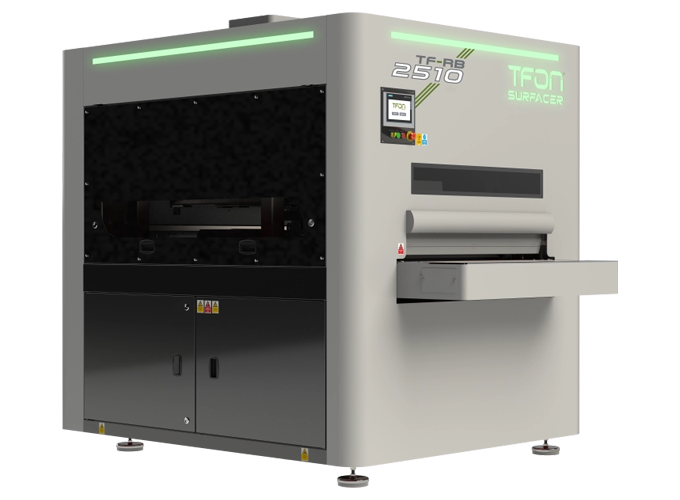
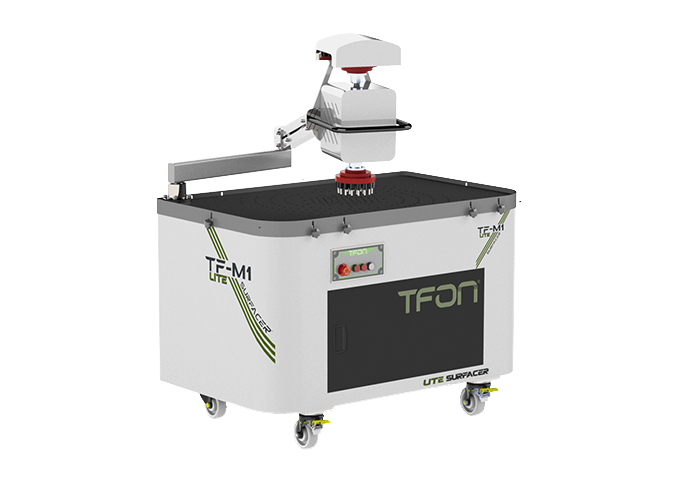
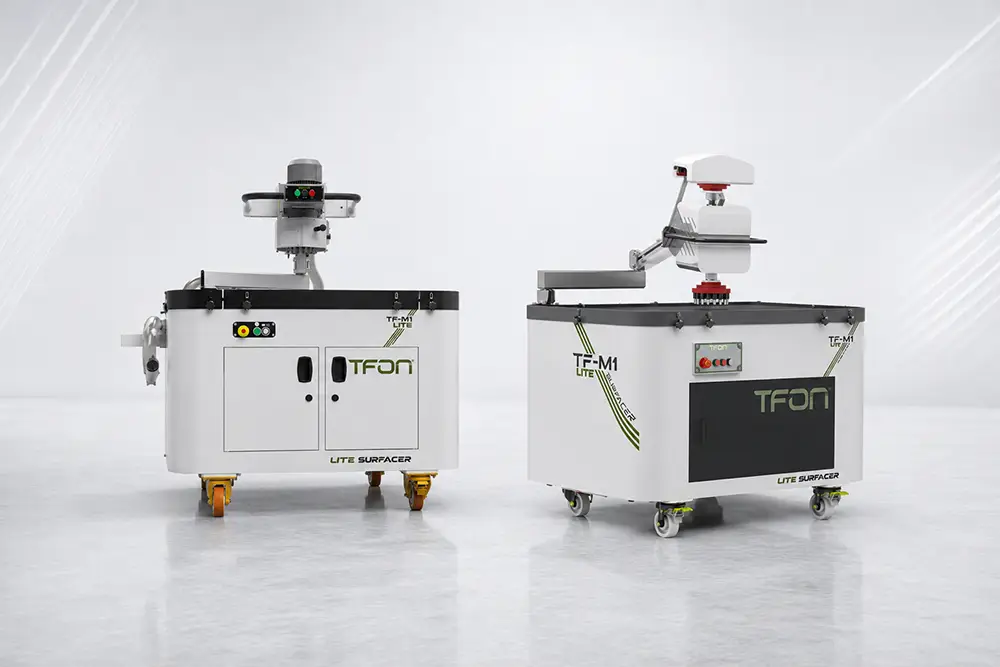
The TFON Surfacer range is the main starting point for reviewing burr, edge and surface treatment. Brush-based configurations can be relevant for suitable contours, subject to geometry and tooling access.
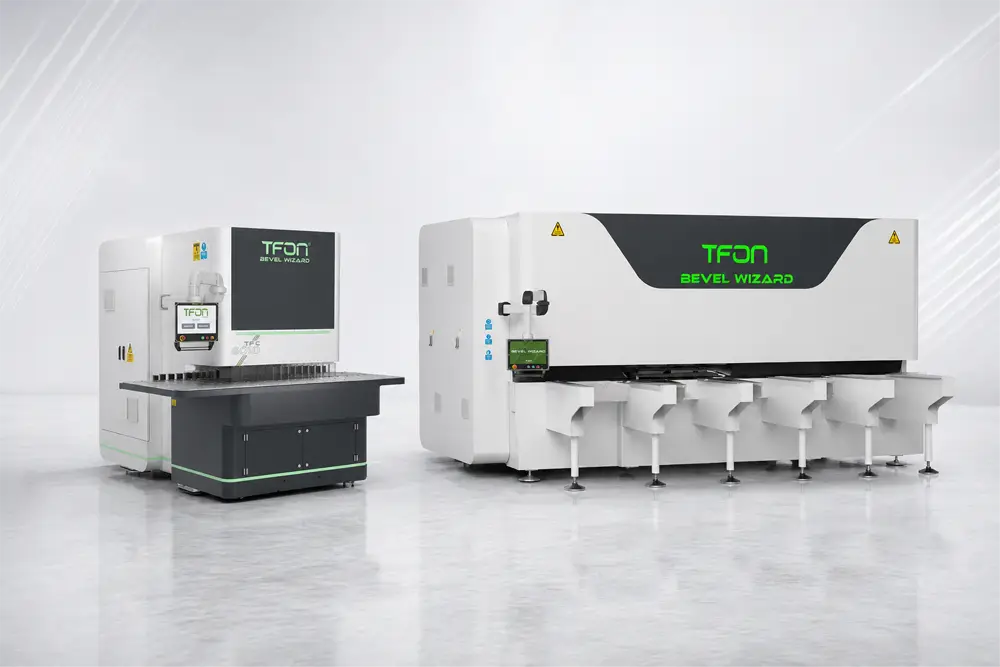
For regular batches, review automatic deburring options together with setup changes, approved recipes and material flow. For prototypes, rework and varied small quantities, compare manual deburring machines. A mixed workshop may need more than one route.
Keep Material and Surface Requirements Visible
An aluminum part with a visible face or protective film needs a different review from an uncoated structural component. Stainless steel may require dedicated consumables, cleaning procedures and control of finish direction.
Record these requirements before testing. A successful burr-removal result does not justify a surface change that the customer will reject.
Evaluate the Whole Batch Workflow
Include loading, orientation, unloading, turning where required and inspection when assessing the production route. Check a representative range of parts instead of demonstrating only the easiest geometry. The expected batch mix matters as much as the performance on one sample.
Application Questions
Do all laser-cut parts need the same station sequence?
No. Material, burr condition, oxide, geometry and the required output can change the sequence.
Can punched and laser-cut parts share a machine?
Potentially, where the selected machine, tooling and setup support both applications. Confirm the actual part mix and required changeovers with TFON.
What should be sent for a review?
Provide representative parts, drawings, material grades, dimensions, burr photographs, surface requirements and expected batch volumes.