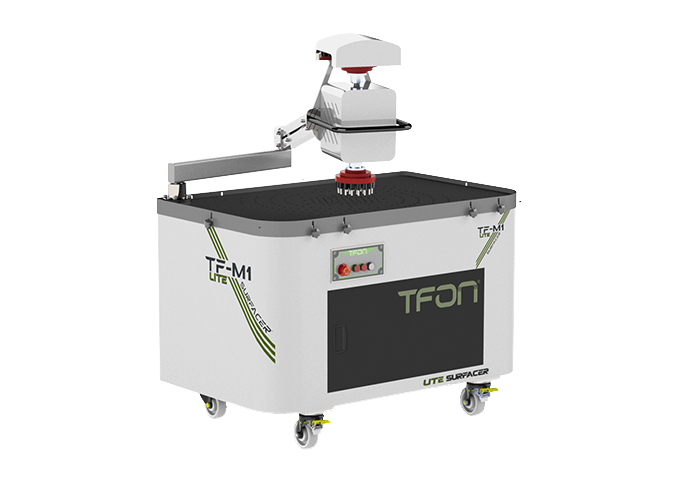



Surface finishing changes the condition or appearance of the sheet face to meet a defined requirement. That requirement may concern texture, visible marks, finish direction or preparation for a later operation. It should be agreed independently of burr removal: a deburred part can still have an unacceptable visible surface.
TFON reviews the incoming finish and the required result before proposing the processing stages and tooling for a part.
Discuss your surface finish requirement
Define the Surface That Will Be Inspected
Identify which faces remain visible after assembly and which areas are functional. A broad panel, a small bracket and a part with a pre-existing directional finish may need different acceptance criteria even when they are made from the same material.
Specify whether the task is to reduce certain marks, create a consistent texture or prepare the surface for another operation. Deep defects, coating residue or a requirement for precision stock removal may call for a different process; a finishing pass should not be assumed to correct them.
Understand the Interaction with Deburring
Abrasive stages can affect the sheet face as they work on the edge. The selected sequence must therefore account for both burr removal and the permitted surface change. Additional finishing is useful only when its output matches the agreed requirement.
Where edge rounding is also needed, inspect the edge and face separately. A good-looking surface does not establish that internal contours have received the required treatment.
Directional finishes
If grain direction matters, define the orientation of the part and the surfaces to be compared. The approved sample, viewing conditions and inspection method help prevent different interpretations of an acceptable finish.
Material-specific handling
Stainless-steel processing requires attention to tooling cleanliness and the finish requirement. Aluminum processing also needs review of alloy, handling marks and any protective film. Neither material should inherit an untested generic recipe.
Build a Practical Finish Specification
| Item | Information to provide |
|---|---|
| Incoming surface | Material condition, existing finish and relevant defects |
| Required appearance | Reference sample, finish direction and visible faces |
| Measured texture | Parameter, limit and measurement method when specified |
| Dimensional allowance | Material that may be removed and features to protect |
| Subsequent operation | Coating, assembly or direct use of the visible part |
If roughness is specified, include the measurement basis. A visual description such as “smooth” is not a substitute for a measured parameter, and one roughness value does not fully describe appearance.
Explore TFON Finishing Configurations
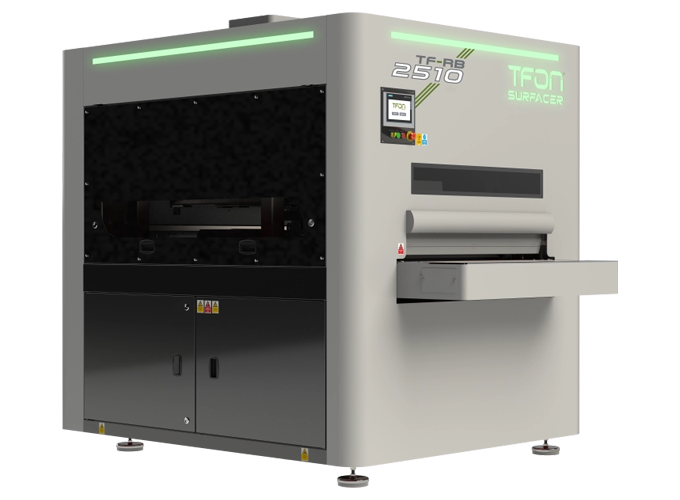
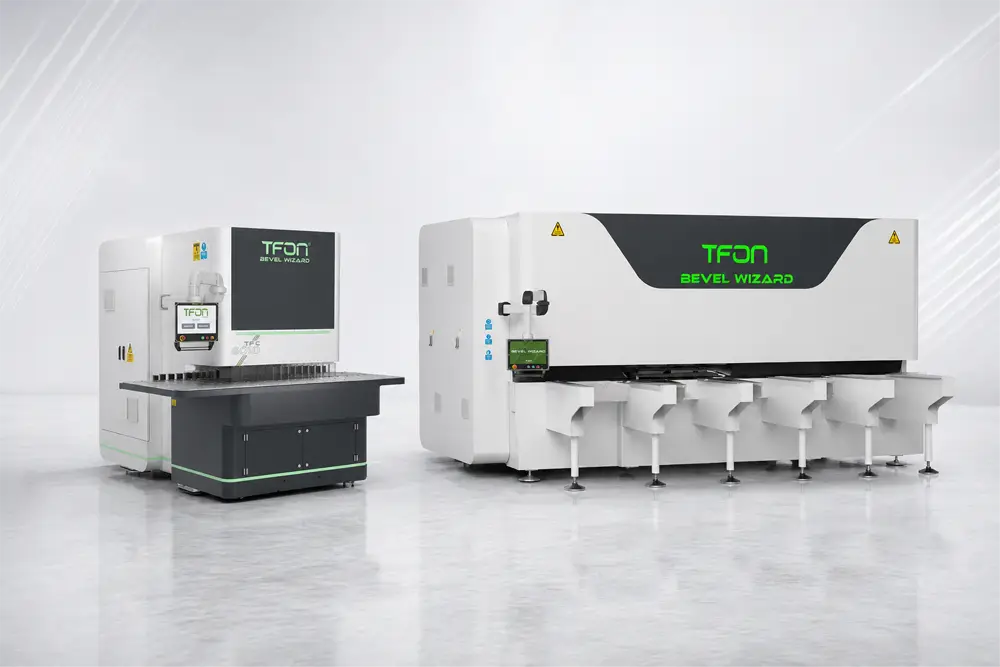
Review the TFON Surfacer machine family for the available processing sequences and discuss whether a finishing stage is appropriate. The proposed configuration should be assessed against representative surfaces and agreed acceptance criteria.
For tooling enquiries, include the machine model and process requirement when contacting TFON consumables support. An abrasive grade alone does not establish the result independently of the machine, contact conditions and incoming material.
Surface Finishing Questions
Can finishing guarantee a scratch-free face?
That depends on the incoming condition and the acceptance requirement. Define the permitted marks and evaluate representative parts instead of assuming all scratches can be removed.
Does finishing replace cleaning before coating?
No. The required cleaning and pretreatment remain part of the coating process.
Is a decorative finish the same as a precision thickness process?
No. Appearance, texture and dimensional stock removal are different requirements. State each one that applies to the component.