
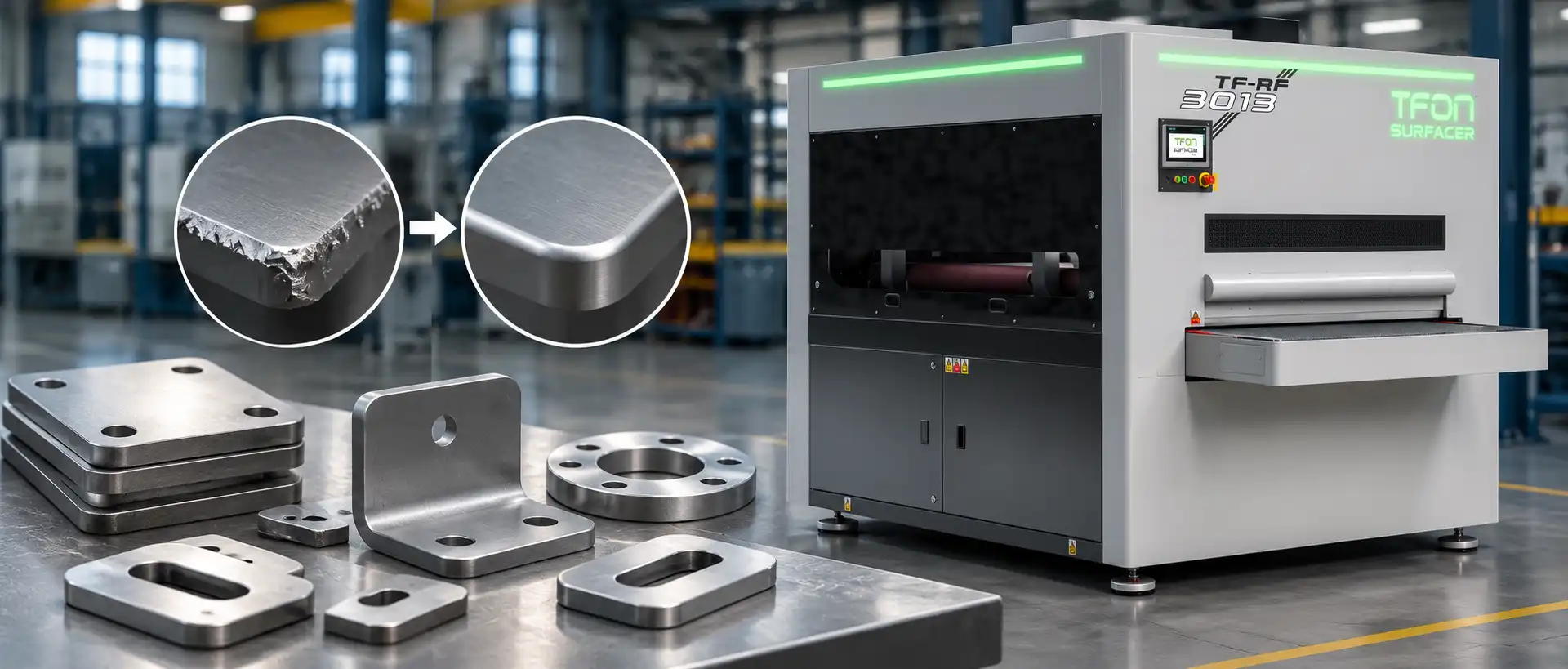
In metal manufacturing, edge and surface quality are just as important as dimensional accuracy. Processes such as laser cutting, plasma cutting, punching and machining can create burrs and sharp edges on metal parts. Removing these imperfections from small metal components requires particular precision, as their original geometry and dimensional accuracy must be preserved.
Small sheet metal components used in fasteners, electronic devices, machinery and the automotive industry undergo various surface finishing processes after manufacturing. Deburring and edge rounding play an important role in preparing these parts for assembly, improving operational safety and enhancing surface quality.
When selecting the appropriate processing method for small metal parts, several factors must be considered together, including material type, thickness, geometry and production volume. Uncontrolled processing can alter part dimensions or damage the surface during burr removal.
Why Do Burrs Form on Small Metal Parts?
During cutting, drilling or forming operations, unwanted protrusions can develop in certain areas of metal components. These protrusions, known as burrs, can vary in shape depending on the manufacturing process and the physical properties of the material.
During laser cutting, the high temperatures involved can cause molten metal to accumulate along the lower edge of the cut. In punching operations, burr formation is influenced by factors such as the clearance between the punch and die, tool wear and the applied force. Small metal protrusions can also develop at the points where cutting tools separate from the material during machining.
Burr formation on small metal parts requires particular attention around narrow channels, mounting holes and edges with complex geometries. A burr that appears insignificant relative to the overall size of a component can prevent fasteners from fitting correctly during assembly. In components manufactured to tight tolerances, it can also cause dimensional inaccuracies.
If burrs are not removed, additional manual work may be required in subsequent production stages. For this reason, the edge condition of cut parts should be inspected, and the appropriate finishing method should be selected according to the type and extent of the imperfections.
How Is Deburring Performed on Small Metal Parts?
The primary purpose of deburring is to remove unwanted metal protrusions while preserving the original dimensions and functional properties of the part. One of the most important factors in achieving precise results on small components is maintaining controlled contact between the abrasive tool and the metal surface.
For low-volume production, files, sandpaper and suitable manual deburring tools can be used. However, as production volumes increase, manually processing every part can lead to time losses and inconsistencies in edge quality. Differences in operator-applied pressure, processing time and tool wear can result in variations between individual parts.
Industrial deburring machines enable more controlled removal of burrs using abrasive belts and suitable processing tools. When selecting abrasives, factors such as material hardness, burr height and the required surface condition after processing must be taken into account.
For example, applying excessive pressure to relatively soft metals such as aluminium can leave unwanted marks on the surface. When processing stainless steel components, suitable abrasives should be selected to preserve surface quality and prevent cross-contamination caused by contact with other metals.
It is also important to avoid removing more material than necessary when processing small components. While complete burr removal is the objective, mounting holes, narrow sections and surfaces with dimensional tolerances must remain protected.
Why Is Edge Rounding Important for Small Metal Parts?
Even after deburring has removed surface protrusions, the edges of a metal component may remain sharp. Edge rounding involves carefully processing these sharp areas to achieve the required rounded edge profile.
Sharp edges can pose a risk of injury, particularly on small metal components that are handled during assembly. Properly rounded edges help reduce this risk during the handling, transportation and use of the parts.
Edge rounding is also important for painting and coating processes. Coating layers can become thinner around sharp metal corners. Properly prepared edges can contribute to more uniform coating distribution. However, coating quality also depends on surface cleanliness, the coating material used and the application conditions.
When rounding the edges of small metal components, the target radius should be determined according to the technical drawing and the intended application. Excessive edge rounding can reduce the contact area of mounting surfaces or alter critical dimensions.
Rotary brushes and suitable abrasive discs can be used to process accessible external edges as well as certain internal contours. However, the effective processing of holes, channels and narrow openings depends on tool geometry and accessibility.
The Importance of Workholding Systems When Processing Small Metal Parts
One of the main challenges in deburring and edge rounding small metal parts is keeping the workpiece securely in position during processing. Large sheet metal components have a greater contact area with the conveyor table, whereas small parts have a more limited contact surface. As a result, the force applied by abrasive tools can cause the workpiece to move.
If a part shifts during processing, its edges may be finished unevenly, and unwanted marks may appear on its surface. Therefore, the workholding system of the machine must be suitable for the dimensions and material properties of the components being processed.
Vacuum hold-down systems help secure metal parts with suitable surface geometries on the conveyor table. Magnetic systems can be used for materials that can be held magnetically. For non-magnetic materials such as aluminium, vacuum systems can provide an alternative solution.
In addition to the workholding system, conveyor speed, processing pressure and abrasive tool characteristics also affect the final part quality. Conducting tests on sample parts before starting production helps determine the appropriate operating parameters.
Particularly in facilities producing large quantities of identical components, maintaining consistent processing parameters helps reduce quality variations between production batches.
Deburring and Edge Rounding Machines for Small Metal Parts
In manufacturing facilities where small metal components are produced in high volumes, automated processing systems help reduce the need for manual operations. Performing multiple surface finishing processes on a single machine also supports a more streamlined production workflow.
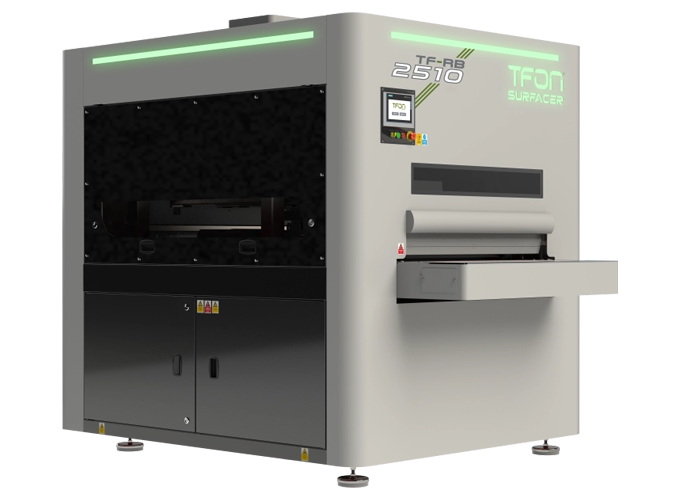
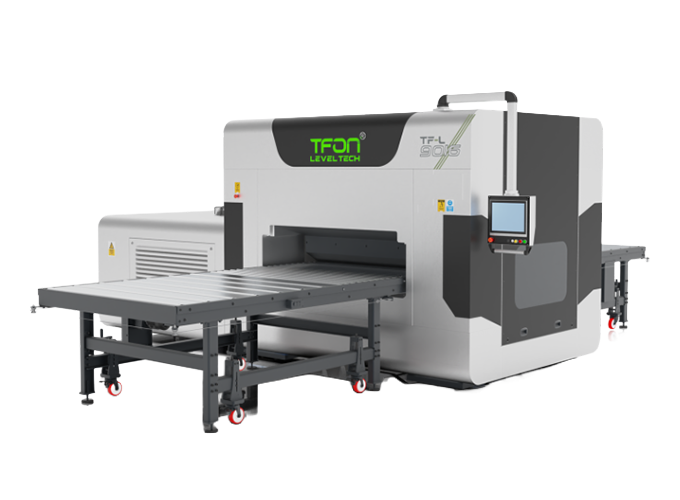
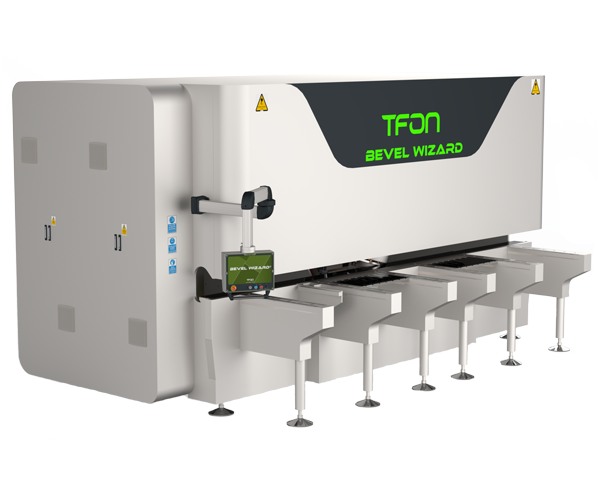
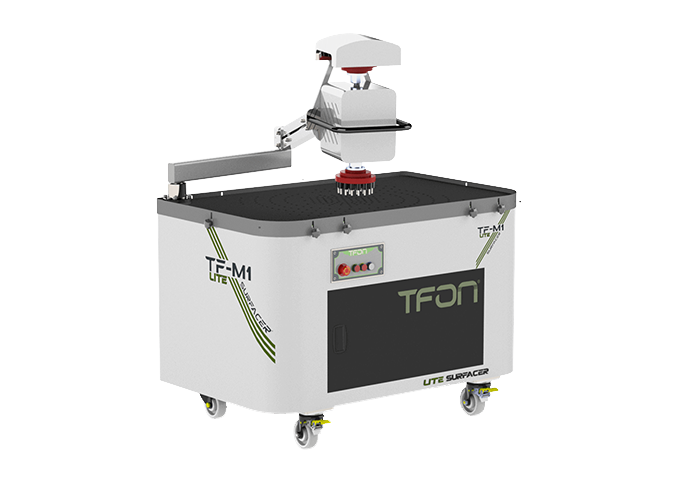
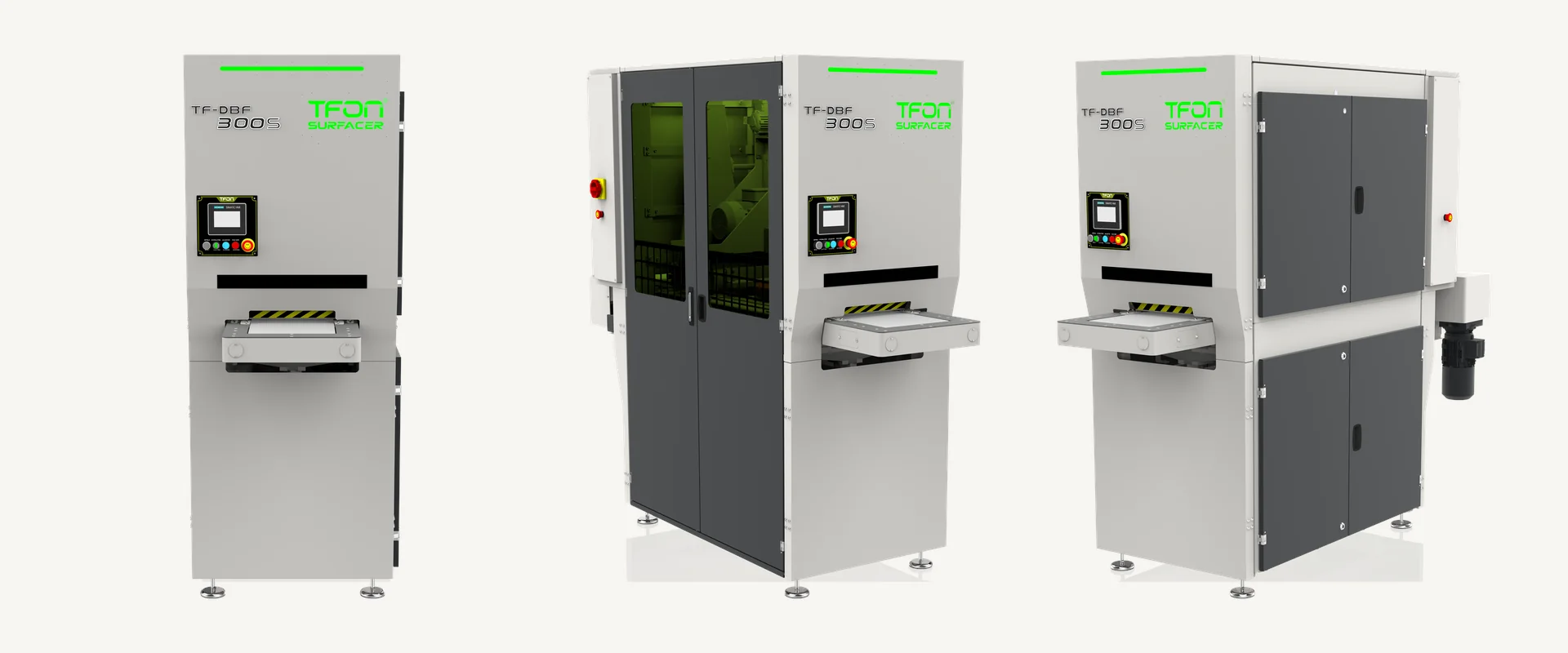
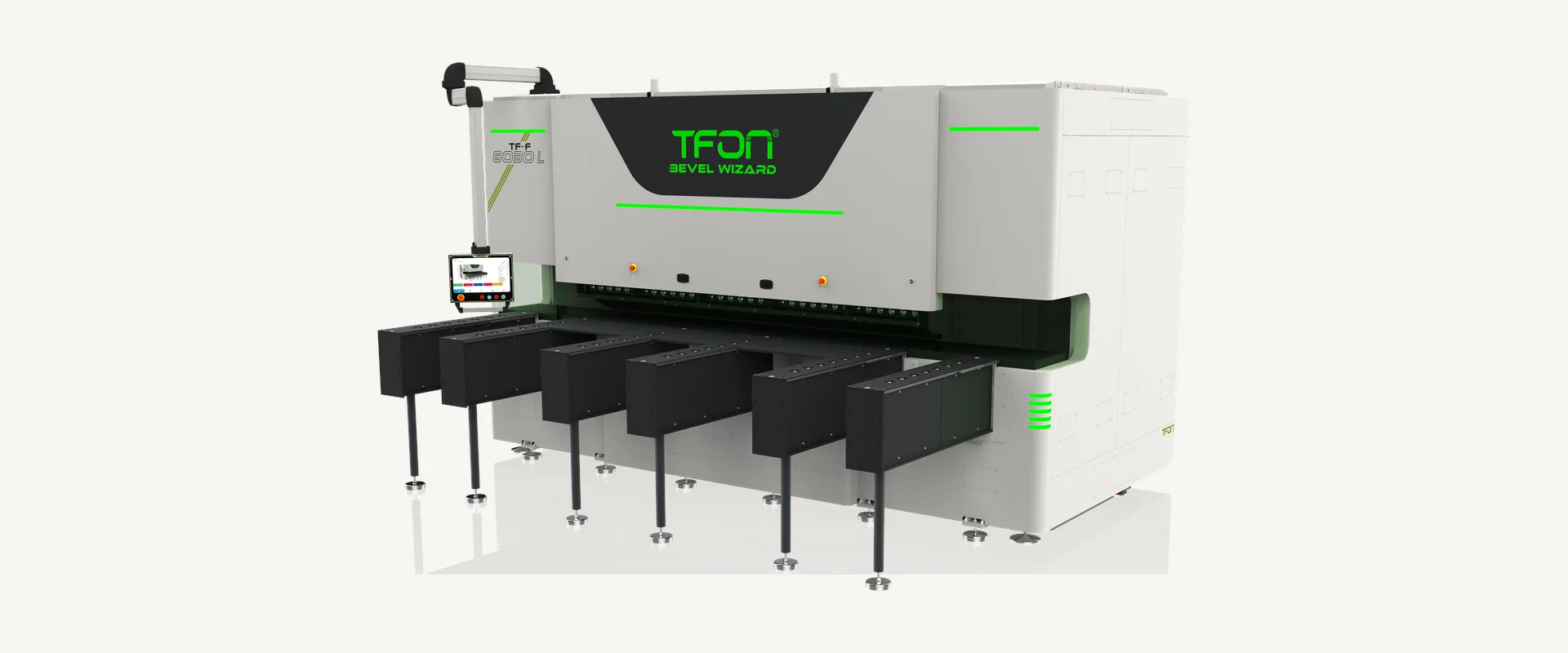
TFON, a manufacturer of sheet metal processing machines, develops deburring and edge rounding machines for different part dimensions and production requirements. Depending on the model specifications, machines in the TFON Surfacer® product range can perform deburring, edge rounding, oxide removal and satin finishing operations.
Designed for small and thin metal components, the TFON Surfacer® TF-DBF 300S features a 300 mm working width and can process parts with minimum dimensions of 20 × 20 mm. Equipped with a vacuum hold-down system, the machine can be used for deburring, edge rounding and satin finishing of steel, stainless steel and aluminium components.
When selecting a machine, it is important to consider not only production capacity but also the minimum dimensions, material properties, geometry and required edge profile of the parts to be processed. Choosing a processing system that preserves the surface quality of small metal components while meeting their dimensional requirements helps ensure greater consistency throughout subsequent production stages, from assembly to coating.