
Metal plates are widely used in various manufacturing industries, including machinery production, automotive manufacturing, steel construction, and heavy industrial applications. However, temperature fluctuations, mechanical forces, and residual stresses generated during manufacturing processes can cause metal plates to lose their original geometry. Metal plate deformation is a significant quality concern, particularly for manufacturers working with tight dimensional tolerances. Distortion, bending, and waviness can complicate assembly operations while increasing production time, additional labor requirements, and rework costs.
To effectively address metal plate deformation, it is essential to identify the underlying causes of dimensional instability. Applying suitable leveling methods based on material properties and production conditions helps maintain dimensional accuracy and improve overall manufacturing efficiency.
What Causes Deformation in Metal Plates?
One of the primary causes of metal plate deformation is uneven heating and cooling during manufacturing. In laser cutting, plasma cutting, and oxy-fuel cutting processes, certain areas of the material are exposed to extremely high temperatures while surrounding regions remain relatively cool. These temperature differences cause uneven thermal expansion and contraction, potentially resulting in permanent deformation.
Thermal stresses generated during the cutting of thick metal plates can significantly affect material flatness. Once the cutting process is completed, the redistribution of residual stresses within the material may lead to bending, warping, and other geometric irregularities. Similarly, the concentrated heat introduced during welding operations can alter the original shape of metal components.
Another common cause of deformation is the mechanical stress experienced during material production, transportation, and handling. Residual stresses from rolling operations, improper stacking conditions, and unsuitable handling methods can contribute to surface irregularities and dimensional deviations. Material thickness, alloy composition, and manufacturing tolerances also influence the extent of deformation.
These geometric imperfections can prevent components from fitting together accurately, particularly in precision welding and assembly applications. Therefore, controlling metal plate deformation is essential not only for surface quality but also for maintaining reliable and efficient production processes.
How Can Metal Plate Deformation Be Corrected?
The appropriate method for correcting metal plate deformation depends on material thickness, the severity of distortion, and specific manufacturing requirements. Conventional approaches include manual straightening, press straightening, and controlled heat straightening. However, these techniques can be time-consuming and may produce inconsistent results, especially in high-volume industrial production.
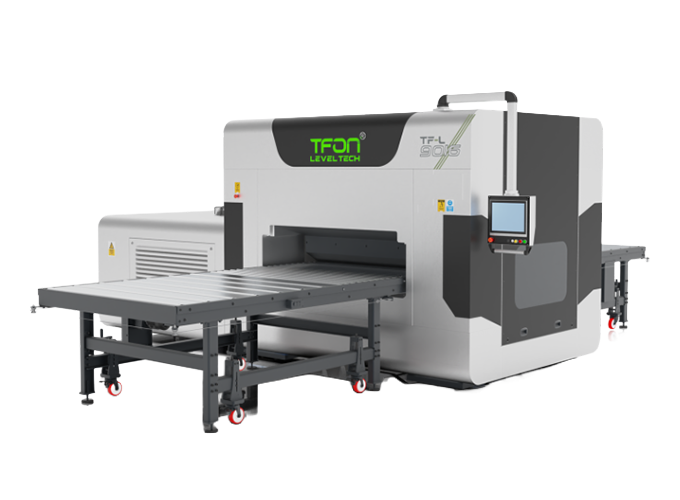
For more controlled and repeatable results, industrial manufacturers increasingly rely on roller leveling machines. These systems pass metal plates through a series of precisely positioned leveling rollers, applying controlled and repeated bending forces to the material. This process reduces bending, waviness, and geometric irregularities caused by cutting or previous manufacturing operations, producing a flatter and more uniform workpiece.
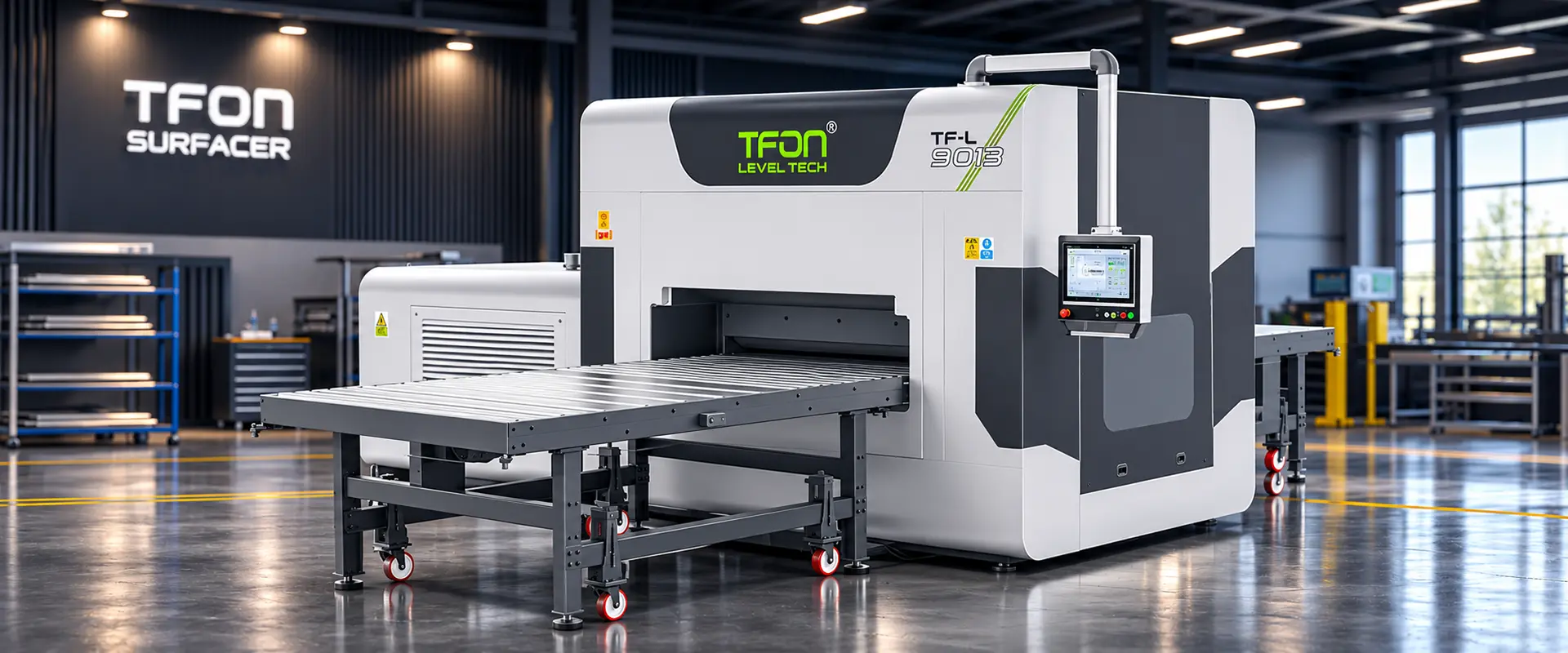
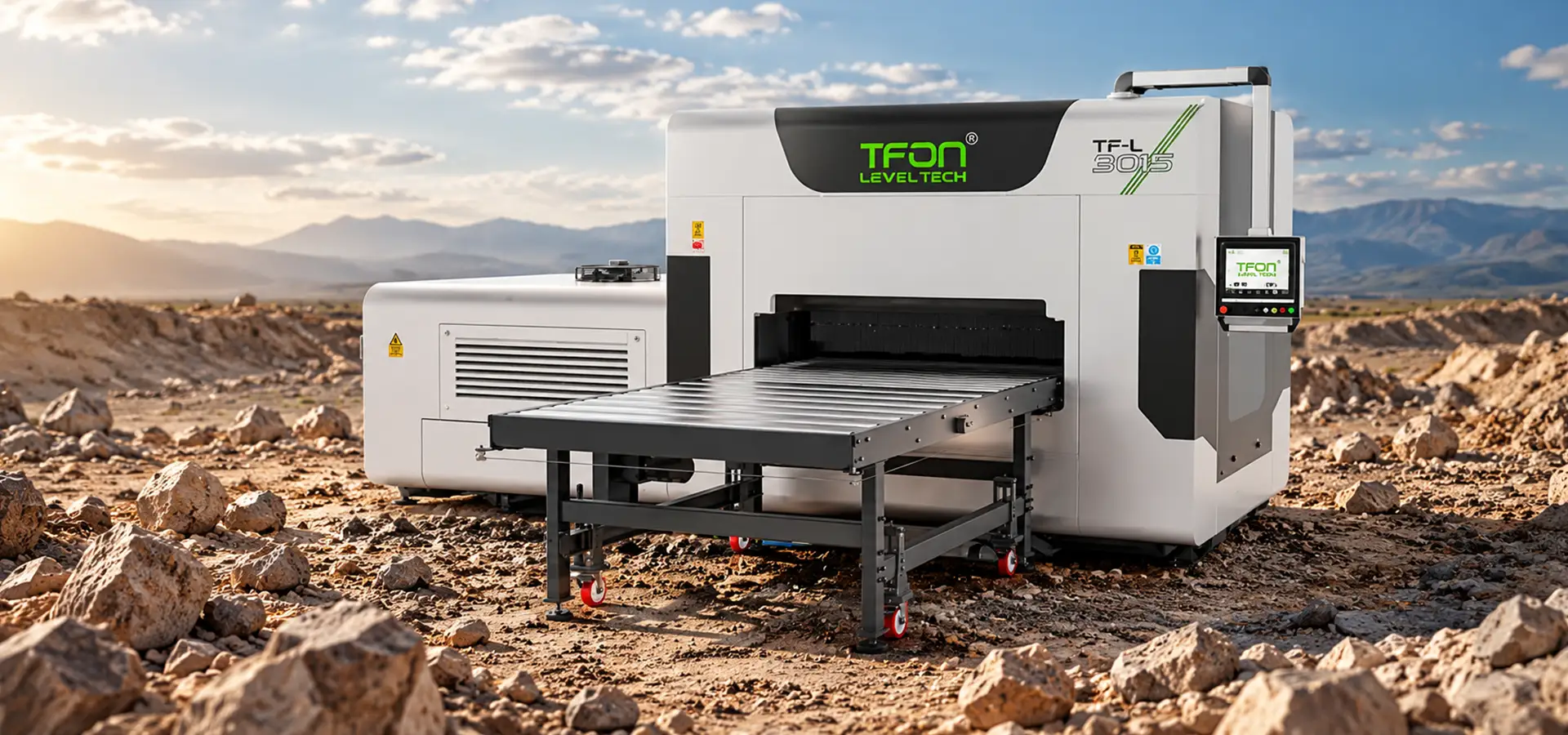
Developed by TFON, the TFON Leveltech® TF-L 9011 is an industrial plate leveling machine designed to correct deformation in metal plates. Engineered to process materials with thicknesses ranging from 1 to 30 mm, the machine offers a working width of 1100 mm. Its servo-hydraulic control system enables precise adjustment of the leveling gap, while the PC-controlled touchscreen interface allows operators to manage processing parameters efficiently.
Automatic plate leveling technologies help reduce manual intervention and support consistent results across different production batches. However, mechanical leveling does not necessarily eliminate all residual stresses within the material. Depending on the technical requirements of the application, additional thermal stress relief treatments may be necessary.
TFON leveling technologies support metalworking manufacturers in controlling geometric distortions after cutting operations. Selecting suitable equipment, optimizing processing parameters, and implementing regular quality inspections allow manufacturers to manage plate flatness tolerances more reliably.
Improved flatness contributes to greater dimensional compatibility during welding and assembly, reducing the likelihood of production errors and unnecessary rework. By integrating automatic plate leveling into the manufacturing workflow, industrial facilities can achieve more predictable processing conditions, maintain consistent component quality, and improve the overall efficiency of downstream production operations.