Deslagging and Deburring Thermally Cut Plate
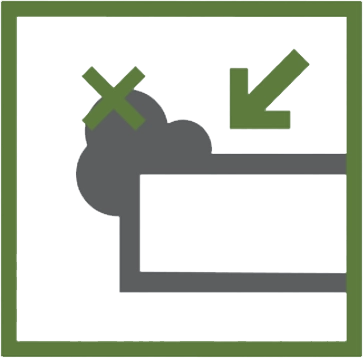
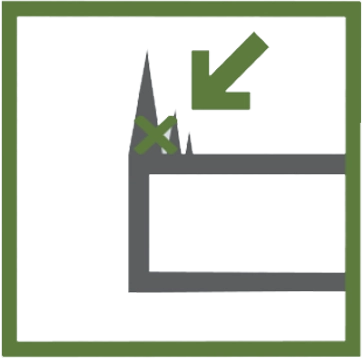
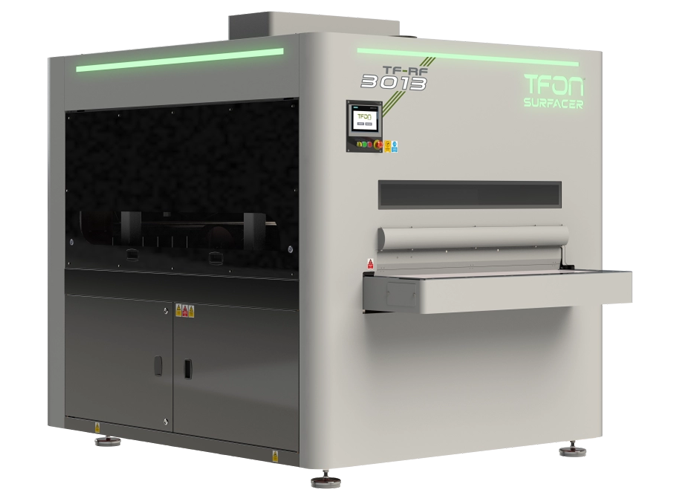
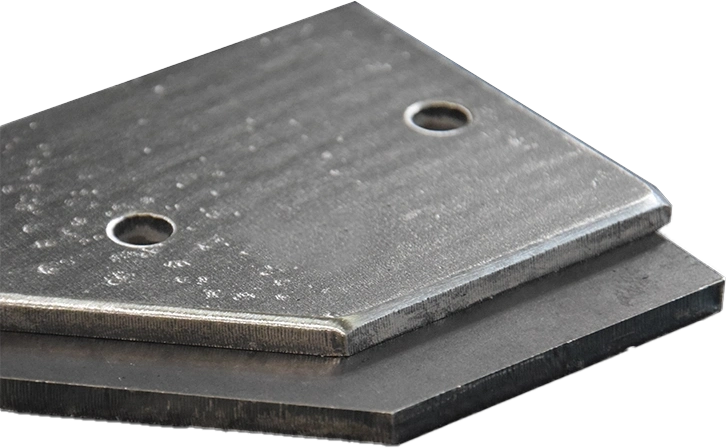
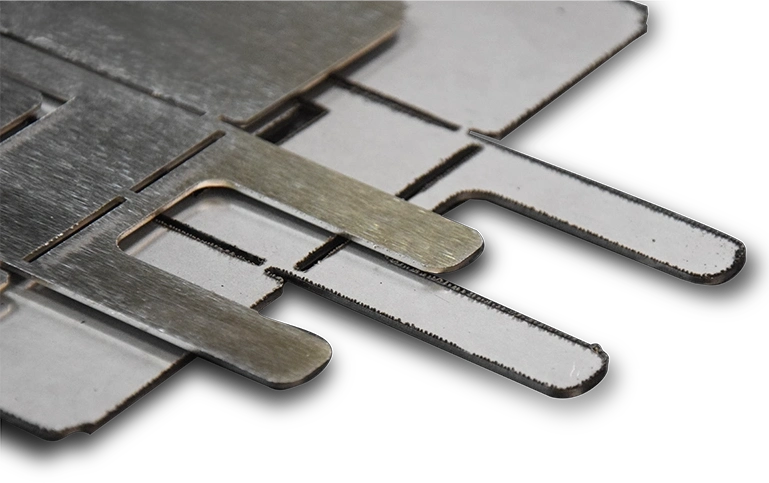
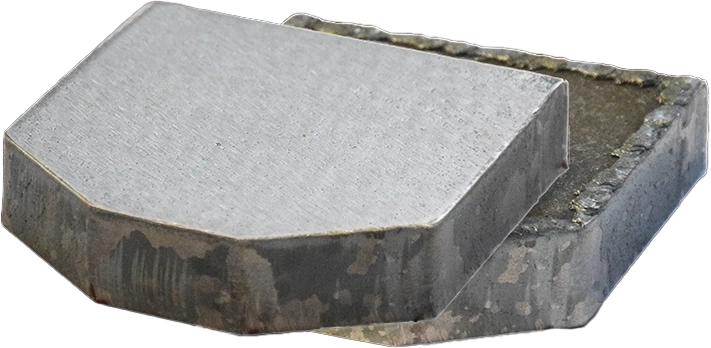
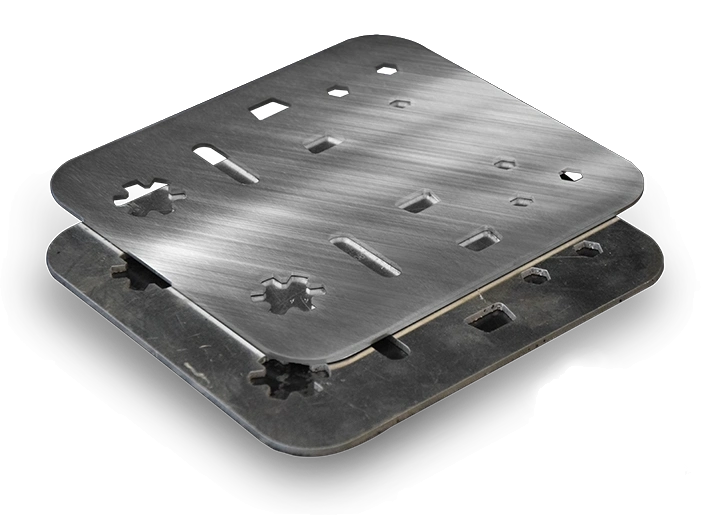
A slag removal machine is a conveyor-fed deslagging and deburring machine for thermally cut plate. Plasma and oxy-fuel cutting leave slag, also called dross, on the bottom edge: molten metal and oxide that did not clear the kerf and froze onto the part. The machine knocks that slag off, deburrs the edge and rounds it, so the part is ready for welding, bending or coating.
Slag left on a part cuts hands during handling. It keeps plates from sitting flat in fixtures and on the press brake, and it breaks loose inside levelers and conveyors further down the line. It also has to come off before coating. ISO 8501-3 requires thermally cut edges to be free of slag and loose scale even at its lowest preparation grade, P1.
Manual metal slag removal means a chipping hammer, a scraper and an angle grinder. That works for a few parts a day. Behind a production plasma or oxy-fuel table, the pile grows faster than one operator can grind it down. Grinding through hard slag also gouges the plate and burns through abrasives. Automated slag removal moves that work onto a conveyor.
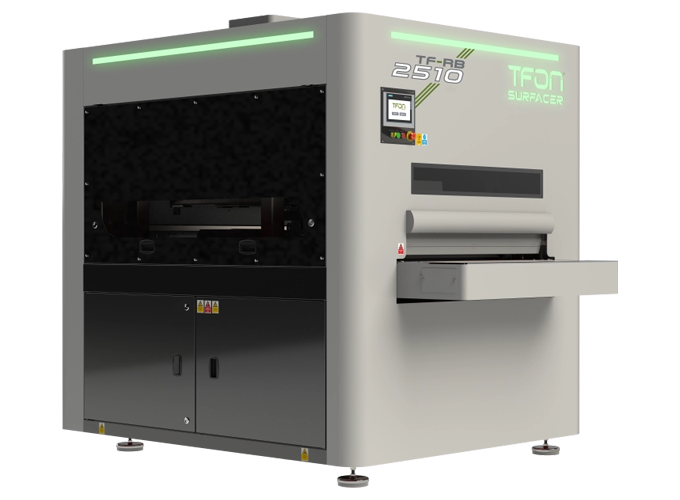
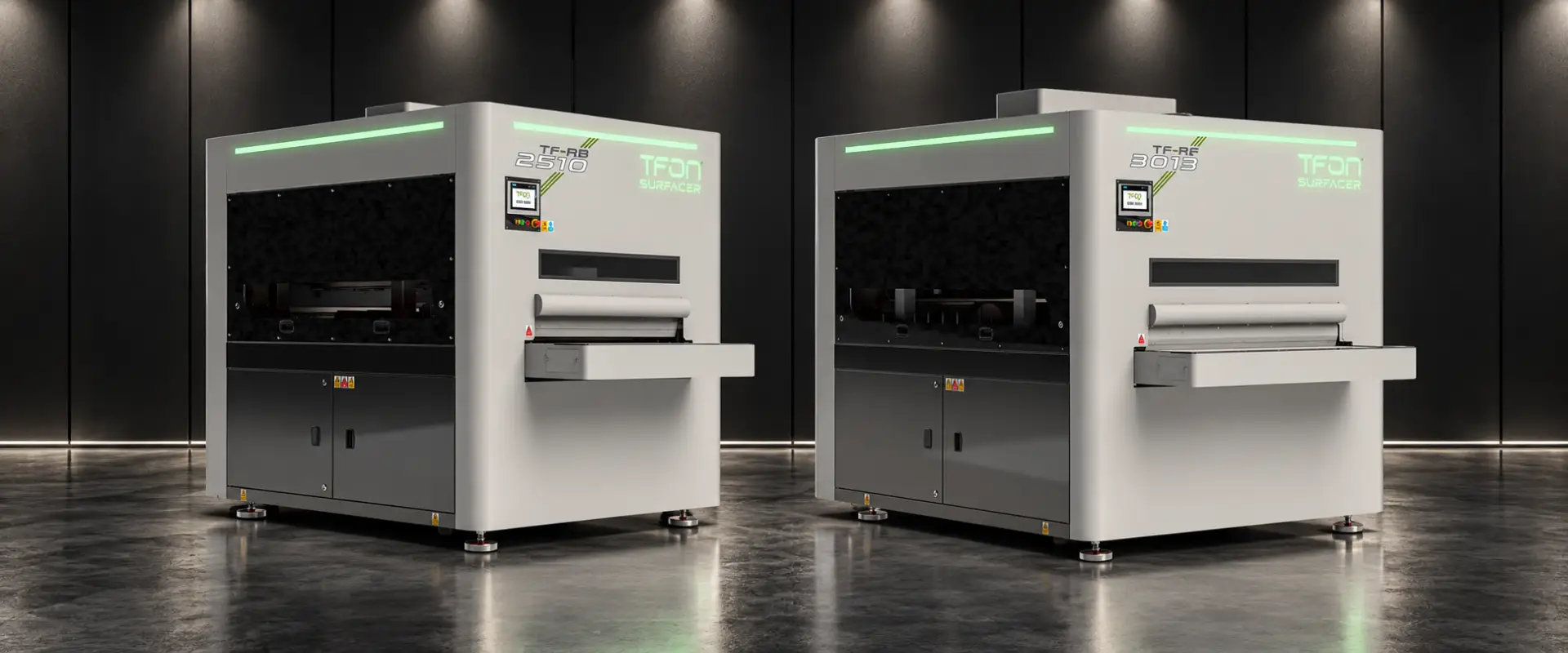
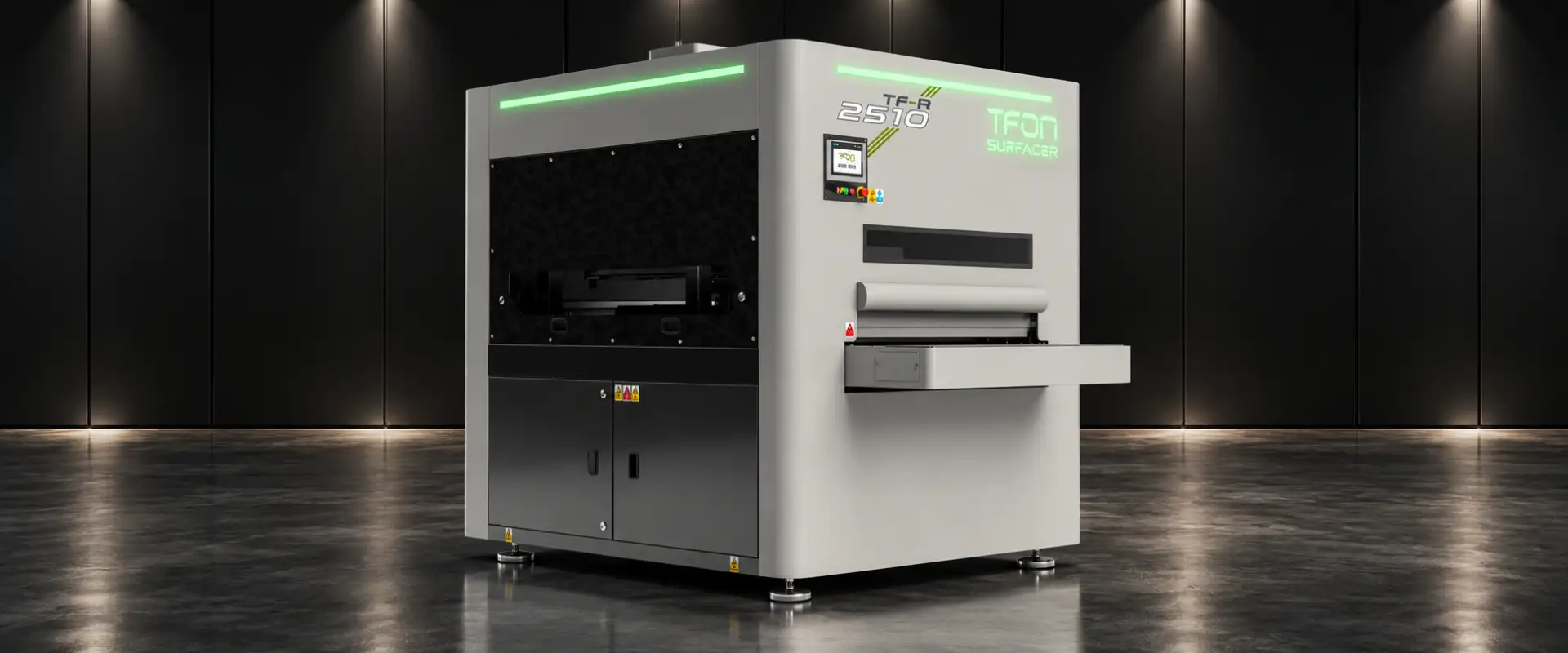
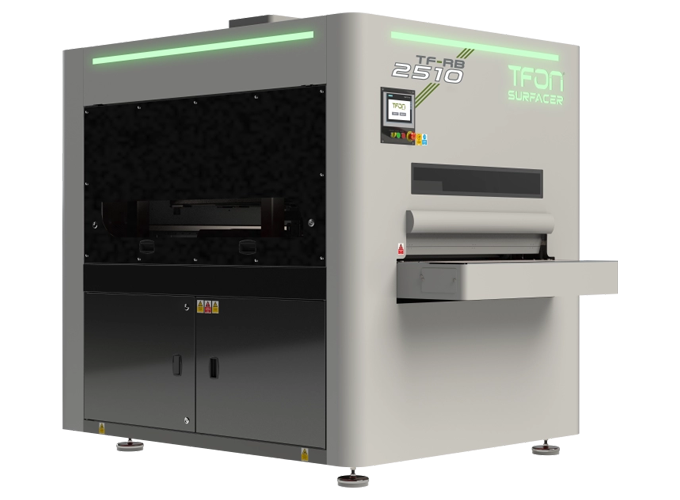
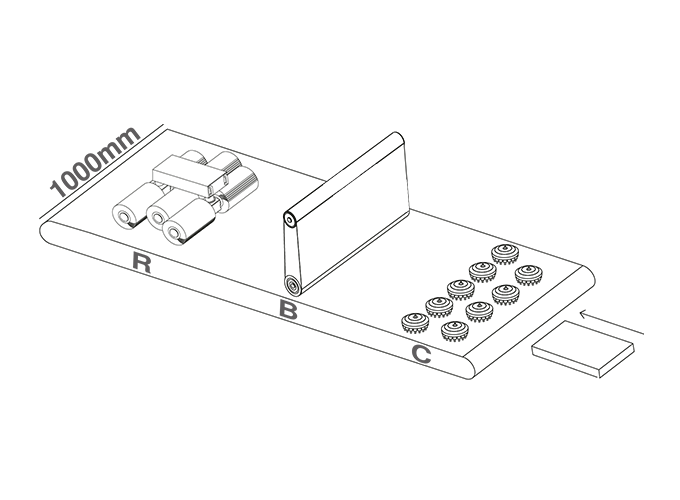
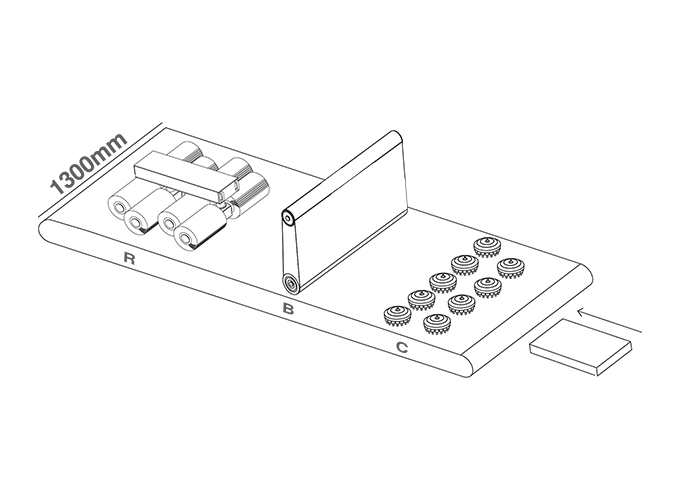
The TFON Surfacer TF-RBC works with three stations. At the C station, heavy slag removal discs with rubberized pins (Ø150 mm, 700 rpm) strike the edge and break the slag off instead of grinding it. The B station follows with a wide abrasive belt that removes the remaining burr and slag residue. The belt is 1030 x 1820 mm on the 2510 and 1330 x 1820 mm on the 3013. The R station finishes with rotating flap brushes, 6 on the 2510 and 8 on the 3013. They round the edge and reach holes and inside contours.
TF-RBC-2510 has a 1,000 mm working width and carries parts up to 500 kg. TF-RBC-3013 works up to 1,300 mm wide and 600 kg. Plate thickness goes up to 120 mm depending on the application, and conveyor speed is adjustable from 0.6 to 4.0 m/min. Magnetic and/or vacuum holding keeps the plate in place, so carbon steel, stainless steel and aluminum can run on the same machine.
The Surfacer processes one face per pass. Because slag forms on the bottom edge, you feed the plate slag side up. If the other face also needs deburring, the part is turned and run a second time. How many passes a very heavy, tightly bonded bead needs depends on the cut, so we confirm it on your parts before quoting.
A machine does not replace good cutting practice. Plasma dross from cutting too slowly forms heavy globules that chip off easily. High-speed dross from cutting too fast is a thin, hard bead that is much harder to remove. If slag suddenly gets worse, check consumables, cut speed and torch height before changing anything downstream.
Send us photos of the cut edge, the plate thickness and the cutting method. We will tell you which TF-RBC model fits your parts.
| Process |
What it does |
Typical applications |
| Manual chipping and grinding |
Chipping hammer, scraper and angle grinder remove slag part by part. Results depend on the operator. |
Prototypes, repair work, a few parts per day |
| Pin disc deslagging (C station) |
Rubberized pin discs break heavy slag off the cut edge without grinding into the plate. |
Plasma and oxy-fuel cut plate with heavy dross |
| Belt deburring (B station) |
A wide abrasive belt removes the remaining burr and slag residue and cleans up the cut line. |
Thermally cut parts after deslagging, laser cut and punched parts |
| Edge rounding and oxide removal (R station) |
Flap brushes round the edge. Oxide removal brushes clean the oxide off oxygen-cut faces. |
Parts for painting, powder coating and welding |
-
Plasma Slag Removal
Plasma cut brackets, gussets, flanges and base plates with dross along the bottom edge. Slag, burr and sharp edge come off in the same pass.
-
Oxy-Fuel Cut Heavy Plate
Thick flame-cut plate for structural steel, machine frames and heavy equipment. The TF-RBC-3013 carries parts up to 600 kg across a 1,300 mm working width.
-
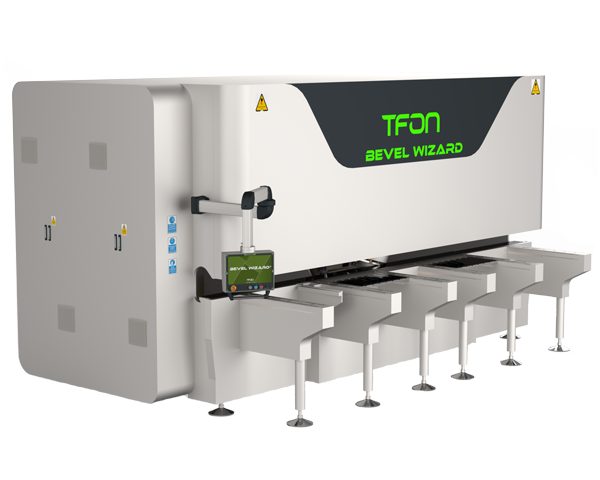
Weld Prep and Beveling
Slag and oxide on the cut edge contaminate the weld. Deslagged, deburred edges go straight to the welder or to a plate beveling machine without hand grinding.
-
Coating and Paint Prep
Primer and paint pull thin over sharp edges. Slag-free edges rounded at the R station hold a more even coating thickness before blasting, painting or powder coating.
-
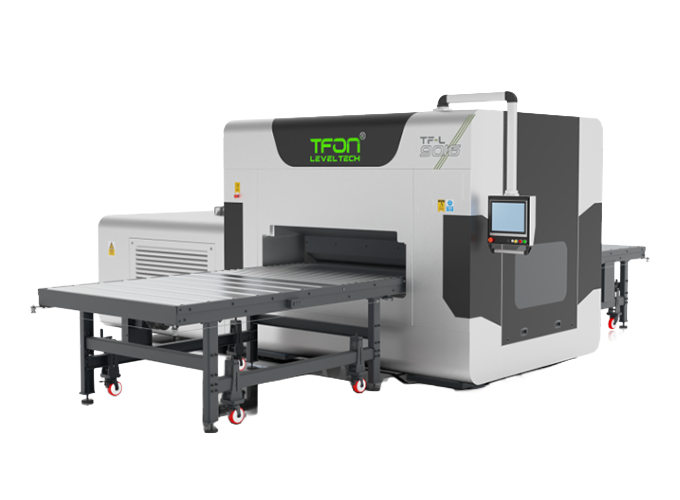
Plate Headed for Leveling
Remove slag before thick plate goes into a roller leveler, so loose residue does not mark the rolls or get pressed into the plate surface.
-
Independent Servo-Controlled Stations
The conveyor stays at a fixed height while each station moves up and down on its own servo drive. You set the C, B and R stations separately for plate thickness and slag height.
-
Recipes and Laser Thickness Measurement
Store settings per part and recall them by part name. Automatic laser thickness measurement reads the incoming plate and updates the setup.
-
Overload and Thickness Protection
Torque monitoring and a limit switch above the pressure roller stop the machine when a part is thicker than the value on the screen. Belt and contact drum stay protected.
-
Infeed, Outfeed and Return Conveyors
Optional powered infeed and outfeed conveyors and a return conveyor bring heavy parts back to the operator for turning or unloading.
- Working width: the 2510 (1,000 mm) or 3013 (1,300 mm) frame sets belt size, number of flap brushes and conveyor width.
- Part weight and thickness: heavy plate up to 500 or 600 kg drives the holding system and conveyor specification.
- Holding method: magnetic, vacuum or both, depending on whether you run only carbon steel or also stainless steel and aluminum.
- Automation: recipe system, automatic laser thickness measurement and barcode recipe selection.
- Material handling: powered infeed and outfeed conveyors, a return conveyor or a side-shifting conveyor for line layouts.
- Consumables and extraction: pin discs, belts and flap brushes are wear parts, and dust extraction is sized to material and volume.
Send photos of your cut edges and plate data. We will recommend a TF-RBC configuration.
Request a Quote