

Consumables
Deburring Discs and Brushes
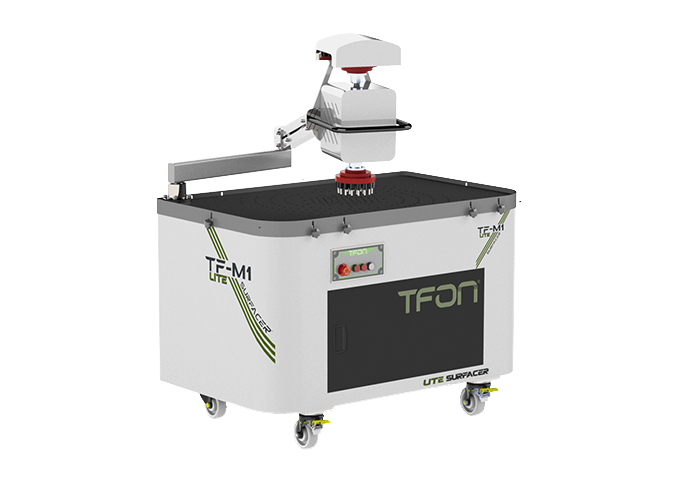
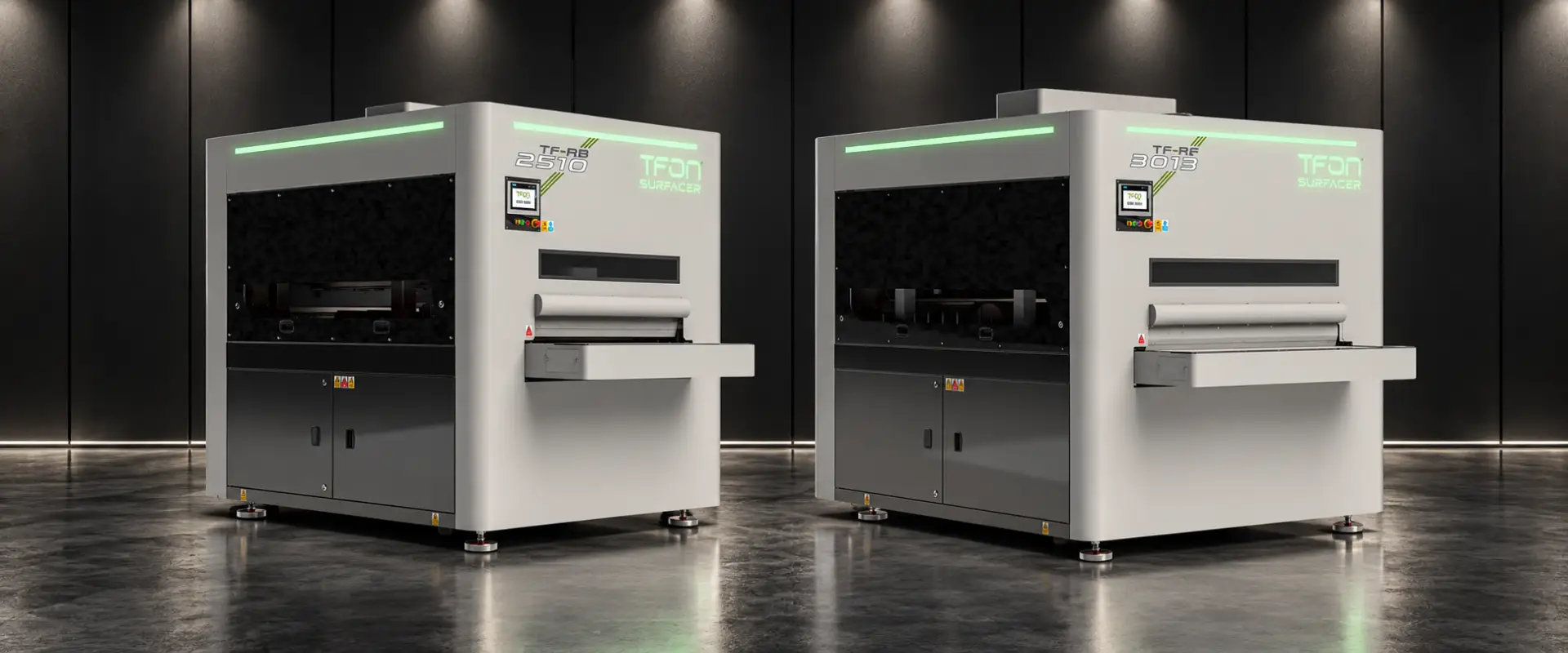
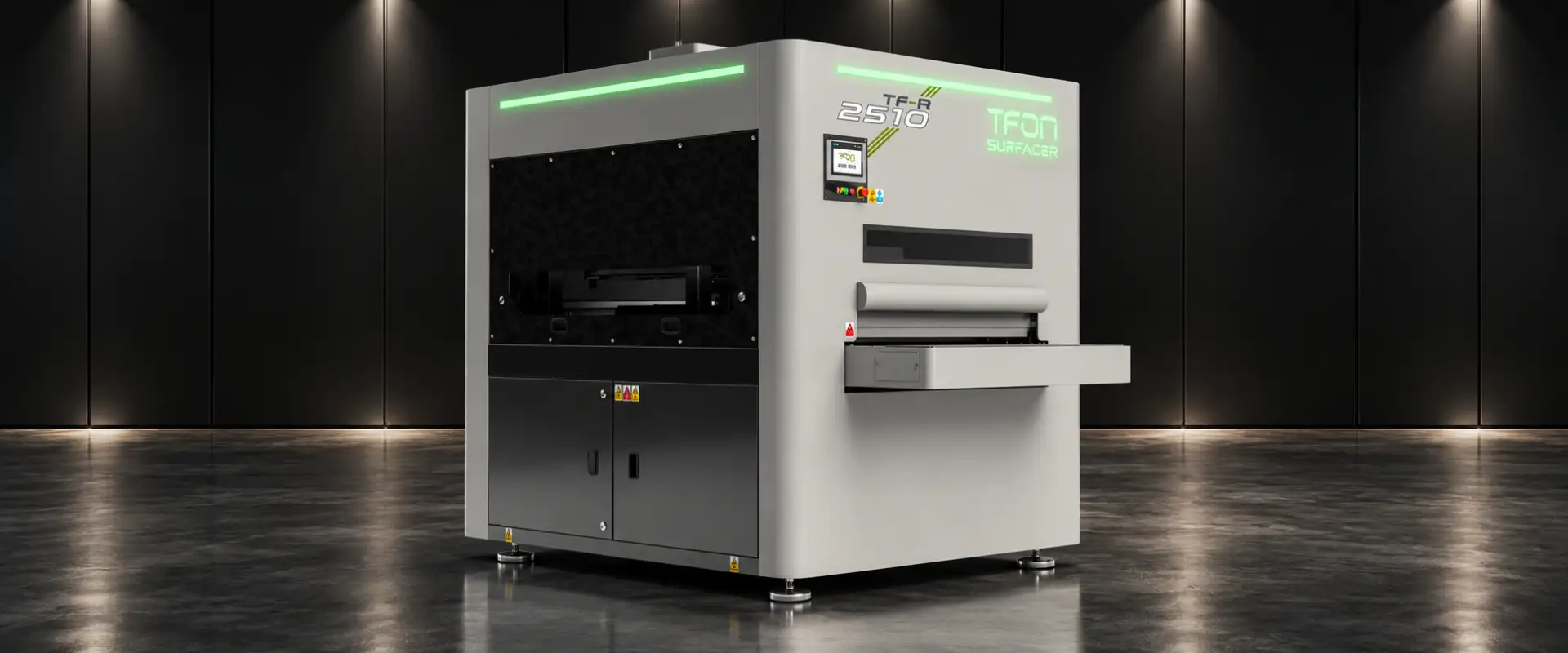
Deburring discs and oxide removal brushes are rotating consumables that remove slag, burrs and oxide from cut edges on TFON machines. Surfacer lines use the oxide removal brush and the heavy slag removal disc. On the manual Lite Surfacer, you change discs to remove heavy slag, deburr, remove oxide, round edges and finish the surface.
Used on These TFON Machines
- TFON Surfacer® TF-R-2510Edge rounding machine
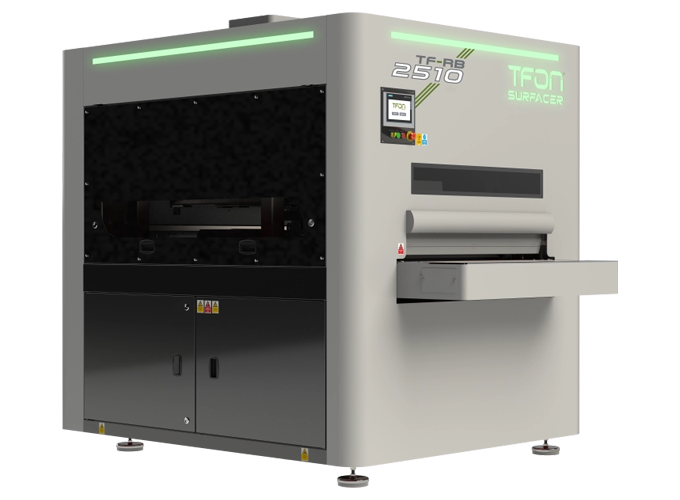
- TFON Surfacer® TF-RB-2510Deburring machine
- TFON Surfacer® TF-RBC-2510Slag removal and deburring machine
- TFON Surfacer® TF-RBF-2510Deburring and finishing machine
- TFON Surfacer® TF-RF-2510Surface finishing machine
- TFON Surfacer® TF-R-3013Edge rounding machine
- TFON Surfacer® TF-RB-3013Deburring machine
- TFON Surfacer® TF-RBC-3013Slag removal and deburring machine
- TFON Surfacer® TF-RBF-3013Deburring and finishing machine
- TFON Surfacer® TF-RF-3013Surface finishing machine
- TFON Lite Surfacer® TF-M1 LITE H1Manual deburring machine
- TFON Lite Surfacer® TF-M1 LITE H2Manual deburring machine
What Are Deburring Discs and Oxide Removal Brushes?
Discs and brushes handle the jobs a belt or flap brush cannot do alone. An oxide removal brush is a rotating brush of flexible wire that reaches down the side of the cut edge. A deburring disc is a round tool that spins on a machine head and meets the part from above. What sits on the face of the disc, pins, wire or brush, decides the job it does.
These tools share three jobs:
- Breaking slag: they crack the hard slag that plasma and oxy-fuel cutting leave under the edge. An abrasive belt heats up and wears out fast on this work.
- Removing oxide: they strip the oxide layer from the cut face of oxygen-cut carbon steel. Oxide left on the edge lets paint and powder coat flake off.
- Rounding and finishing: a disc brush rounds the edge evenly at every point, and a finishing disc gives the surface a clean look in the last step.
The cutting method largely decides which tool you need. Laser parts bring oxide and fine burrs; plasma and oxy-fuel parts bring heavy slag. Our guide on oxygen vs. nitrogen laser cutting explains where edge oxide comes from, and slag vs. dross covers how slag forms.
Types of Discs and Brushes
Our range has six products. The oxide removal brush runs on automatic Surfacer lines, four discs run on the manual Lite Surfacer, and the heavy slag removal disc appears in both machine families.
| Product | What it does | Where it runs |
|---|---|---|
| Oxide Removal Brush | Cleans oxide from the cut edge faces with a flexible wire structure | Surfacer, edge rounding (R) station |
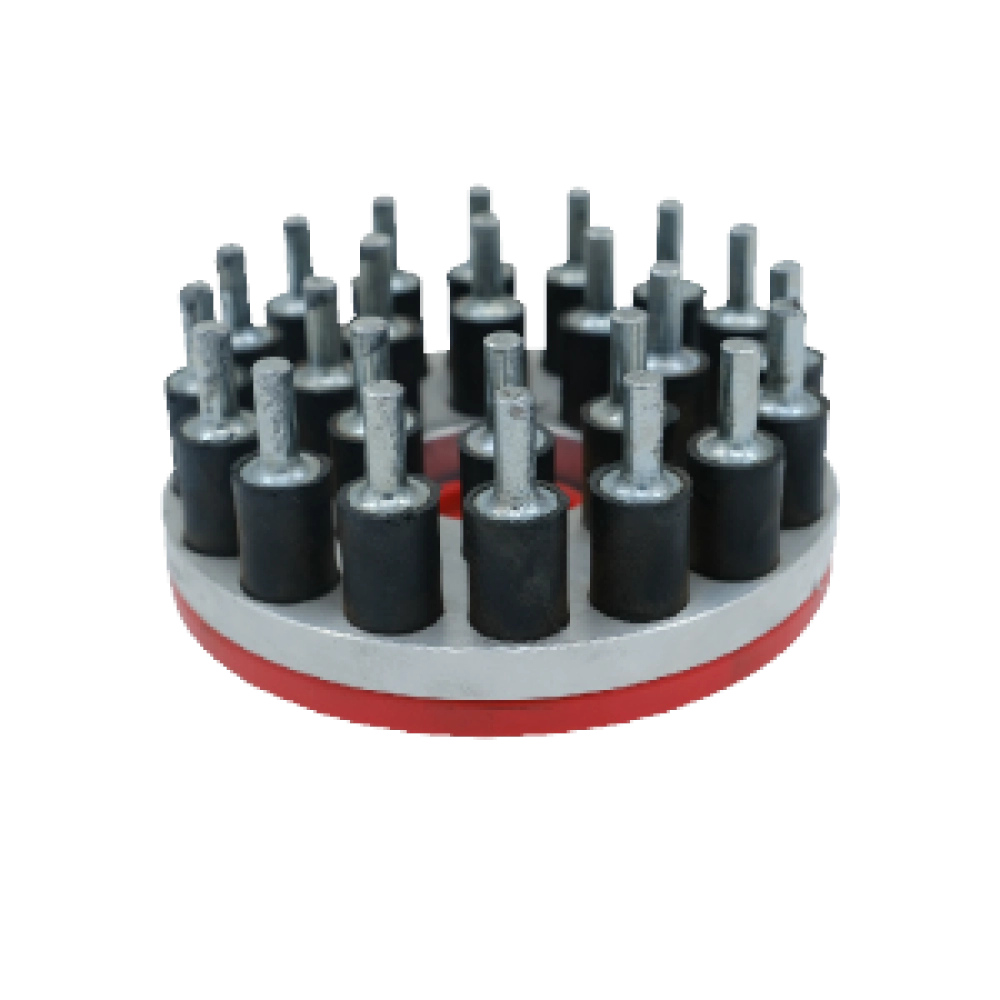
| Heavy Slag Removal Disc | Breaks thick, coarse slag with rubberized pins mounted on the disc | Surfacer TF-RBC heavy deburring (C) station; Lite Surfacer |
| Deburring Disc | Removes burrs and cleans the surface | Lite Surfacer |
| Oxide Removal Disc | Removes surface oxide with a special wire structure, no extra rework | Lite Surfacer |
| Edge Rounding Disc | Gives even edge rounding at every point with a disc brush system | Lite Surfacer |
| Finishing Disc | Gives the part a clean, even look in the final step | Lite Surfacer |
Oxide Removal Brush on the Surfacer
The oxide removal brush works in the Surfacer edge rounding station alongside the flap brushes. Its flexible wire reaches down to the cut face and strips the oxide. Typical parts are burr-free laser parts that must meet edge and oxide requirements before coating. When oxygen-cut carbon steel goes to powder coating, the brush lowers the risk of coating loss at the edge.
Heavy Slag Removal Disc
Rubberized pins on the disc strike the edge and break thick slag off. On TF-RBC models this disc sits in the heavy deburring (C) station, the first stop for the part. Once the slag is broken, the abrasive belt takes the burr and the edge rounding station finishes the edge, so the belt is not overloaded by slag.
Edge Rounding Brush or Disc?
Shops searching for an edge rounding brush usually mean one of two things. On automatic Surfacer lines, the edge rounding brush is the roll-type flap brush. On the manual Lite Surfacer, the same job is done by the edge rounding disc. Hand-held wire brushes for grinders and drills are not part of our range.
Sizes for TFON Machines
Size data for the oxide removal brush and the heavy slag removal disc is listed below. The other discs are supplied to suit the Lite Surfacer head; state your model (H1 or H2) in the order.
| Product | Size | Other data | Service life |
|---|---|---|---|
| Oxide Removal Brush | Diameter Ø300 / Ø350 mm; width 270 / 400 mm | Bore Ø74.5 mm; weight 3.1 kg | Up to 250 hours depending on use |
| Heavy Slag Removal Disc | Ø150 mm | Speed 700 rpm | Depends on slag load and use |
| Deburring Disc | To suit Lite Surfacer model | Confirmed by model | Depends on use |
| Oxide Removal Disc | To suit Lite Surfacer model | Confirmed by model | Depends on use |
| Edge Rounding Disc | To suit Lite Surfacer model | Confirmed by model | Depends on use |
| Finishing Disc | To suit Lite Surfacer model | Confirmed by model | Depends on use |
The bore is the mounting size that fits the station spindle. We confirm which diameter and width fit your machine from the model number.
Which Machine and Model?
| Product | Surfacer models | Lite Surfacer models |
|---|---|---|
| Oxide Removal Brush | TF-R, TF-RB, TF-RBC, TF-RBF, TF-RF (2510 and 3013) | None |
| Heavy Slag Removal Disc | TF-RBC-2510, TF-RBC-3013 | TF-M1 LITE H1, TF-M1 LITE H2 |
| Deburring Disc | None | TF-M1 LITE H1, TF-M1 LITE H2 |
| Oxide Removal Disc | None | TF-M1 LITE H1, TF-M1 LITE H2 |
| Edge Rounding Disc | None | TF-M1 LITE H1, TF-M1 LITE H2 |
| Finishing Disc | None | TF-M1 LITE H1, TF-M1 LITE H2 |
The Lite Surfacer is a manual deburring and edge rounding machine for work where part types change often. It holds parts 3 to 200 mm thick and up to 800 mm wide on a vacuum table. The H1 has one head, the H2 has two. See the series on our manual deburring and edge rounding machines page.
For heavy slag on an automatic line, look at the TF-RBC-2510: 1000 mm slag removal and deburring machine. For burr-free, oxygen-cut parts that need edge and oxide work, the TF-R-3013: 1300 mm edge rounding machine runs flap brushes and the oxide removal brush.
Disc Sequence on the Lite Surfacer
On the Lite Surfacer you change discs to run several operations on one part. For a plasma or oxy-fuel part, the order is:
- Heavy slag removal disc: breaks the thick slag under the edge.
- Deburring disc: removes the remaining burr and surface dirt.
- Oxide removal disc: cleans the surface if there is an oxide layer.
- Edge rounding disc: puts an even radius on the sharp edge.
- Finishing disc: gives the visible face its final texture.
Not every part needs all five steps. Laser parts often need only the deburring and edge rounding discs, plus the oxide removal disc if they were cut with oxygen. On a manual machine the result depends on the operator. If every part must match a written requirement, you need an automatic Surfacer. For machine choice by cutting method, see plasma and oxy-fuel cut parts.
Replacement and Service Life
According to TFON data, the oxide removal brush lasts up to 250 hours depending on use, thanks to its flexible wire structure. Disc life depends on slag load, part material and the pressure applied. Watch for these signs:
- Oxide removal brush: wires get shorter, lie flat or break; oxide remains on the cut face at the same setting.
- Heavy slag removal disc: pins wear down or break off; slag stays on the edge.
- Deburring and edge rounding discs: the radius gets smaller and some points of the edge are missed.
- Finishing disc: the texture turns uneven and blotchy areas appear.
Use the oxide removal brush for oxide only. Wires forced to deburr lie down quickly, and the brush fails before its time.
Do not use a wire brush or disc on stainless steel after it has run on carbon steel. Iron particles left in the wire transfer to stainless and cause rust spots. Keep a labeled set for stainless. When changing brushes and discs, isolate the machine and make sure the station has come to a full stop.
Common Mistakes
- Sending slag-covered parts straight to the belt: hard slag destroys the belt quickly. The heavy slag removal disc has to run first.
- Trying to remove edge oxide with a belt only: the belt touches the top face, not the cut face.
- Mixing up the disc order: running the finishing disc before deburring spoils the surface and wears the disc for nothing.
- Missing worn wire: short wires no longer reach the edge, oxide remains in spots and coating fails at the edge.
- Pressing too hard on the Lite Surfacer: the disc heats up, wears early and results vary from part to part.
Ordering
Send your request with the form below; the heavy slag removal, deburring, edge rounding, finishing and oxide removal discs and the oxide removal brush (listed as oxide removal wheel) are already selected. Untick what you do not need. Include your machine model (for example TF-RBC-3013 or TF-M1 LITE H2), the product name and the quantity. For the oxide removal brush, add the diameter and width of your current brush.
If you have not yet decided which machine should handle slag and oxide, start with our slag removal and laser oxide removal pages. Machine parts such as spindles or heads are spare parts rather than consumables; request them on our spare parts page. For belts, see abrasive belts.
Request Consumables
Tell us your machine model, the size and the quantity. You can change the selection and add other consumables.
Frequently Asked Questions
What kind of oxide does an oxide removal brush remove?
It removes oxide from the cut face, the side of the cut edge. Laser cutting carbon steel with oxygen leaves a dark oxide layer on that face. The flexible wire reaches down to it and cleans it off. Stainless steel and aluminum cut with nitrogen usually do not form this layer, so the brush is mostly used on carbon steel.
Do I need a heavy slag removal disc for laser-cut parts?
Usually not. The heavy slag removal disc is for thick slag stuck under the edge by plasma and oxy-fuel cutting. Laser burrs are thin and are removed with an abrasive belt or a deburring disc. If you laser cut thick plate and slag remains on the edge, send a photo of the part with the form.
Do Lite Surfacer discs fit a Surfacer line?
The deburring, oxide removal, edge rounding and finishing discs are for the Lite Surfacer TF-M1 LITE H1 and H2 only. Surfacer lines use the oxide removal brush for oxide and flap brushes for edge rounding. The heavy slag removal disc is listed for both TF-RBC and Lite Surfacer models; state your model when you order.
What is the difference between an edge rounding disc and a flap brush?
Both round edges, but on different machines. The edge rounding disc uses a disc brush system on the manual Lite Surfacer, where the result depends on the operator. The flap brush runs in the edge rounding station of the automatic Surfacer, comes in 60-400 grit and lasts up to 1,500 hours depending on use.
Can I use a wire brush on stainless steel?
Yes, but only a brush reserved for stainless. A brush that has run on carbon steel holds iron particles in its wire. Those particles transfer to the stainless surface and cause rust spots later. If you process stainless and carbon steel on the same machine, keep a separate brush and disc set for each.