
Laser cutting technology is widely used in the metalworking industry because it provides high precision, fast production, and high-quality cutting surfaces. However, after the cutting process is completed, some sheet metal parts may experience deformation, such as bending, waviness, or warping. This issue, particularly common in thin sheet metal, can negatively affect dimensional accuracy and assembly quality during subsequent manufacturing stages. Sheet metal warping after laser cutting is a problem that can be controlled through proper manufacturing methods and suitable leveling processes.
During laser cutting, intense heat is applied to specific areas of the metal surface. While the cutting area heats up rapidly, the surrounding material remains at a lower temperature. These temperature differences can cause uneven expansion and contraction as the metal cools. The resulting thermal stresses may cause the sheet metal to lose its original flatness. Additionally, the redistribution of internal stresses remaining from rolling or previous manufacturing processes can further increase deformation during cutting.
Sheet metal thickness, material properties, and cutting parameters directly influence the risk of warping. Thin sheets may be more sensitive to thermal effects than thicker plates. Incorrect laser power settings, low cutting speeds, dense cutting patterns, and improper part positioning can also contribute to deformation. Therefore, selecting appropriate cutting parameters and controlling heat accumulation are essential for reducing sheet metal warping after laser cutting.
Deformations observed after cutting are not always identical. Some components may develop slight bends along their edges, while others may experience waviness across the entire surface. Maintaining flatness can be particularly challenging for large components or parts with complex geometries. These problems may create difficulties during welding, bending, assembly, and other precision manufacturing operations, increasing the need for additional processing and rework.
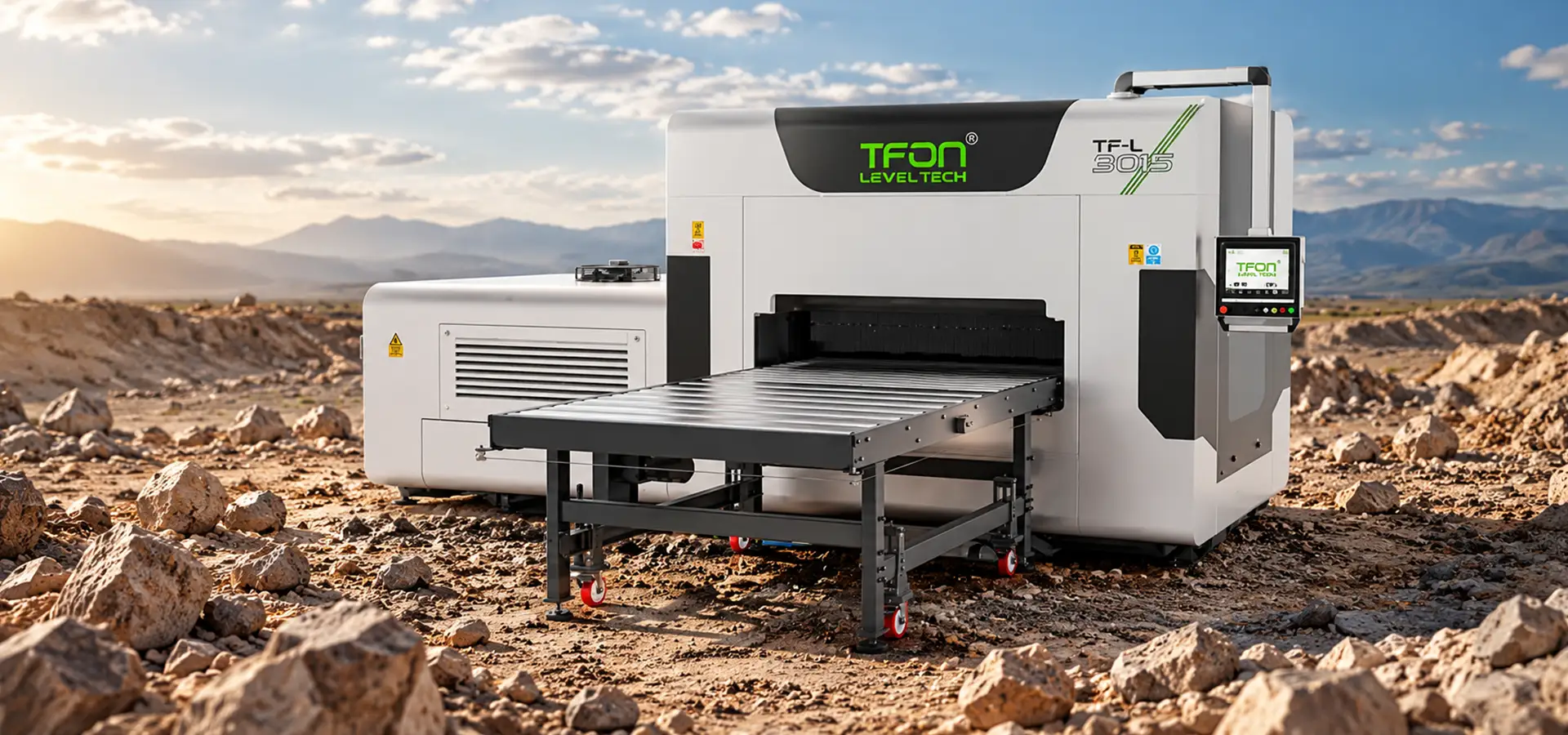
One of the methods used to correct warped sheet metal after laser cutting is mechanical leveling. In this process, metal components pass through specially arranged leveling rollers. The controlled and repeated bending movements generated by these rollers help reduce deformation and improve surface flatness. The effectiveness of the leveling process depends on material thickness, mechanical properties, component geometry, and the initial degree of deformation.
In industrial manufacturing, manual straightening methods may be suitable for small production quantities. However, maintaining consistent leveling quality in mass production can be challenging. Automated leveling systems help improve repeatability by applying controlled processing parameters. For manufacturers working with sheet metal of different thicknesses, selecting the appropriate equipment is essential for maintaining production efficiency and component quality.
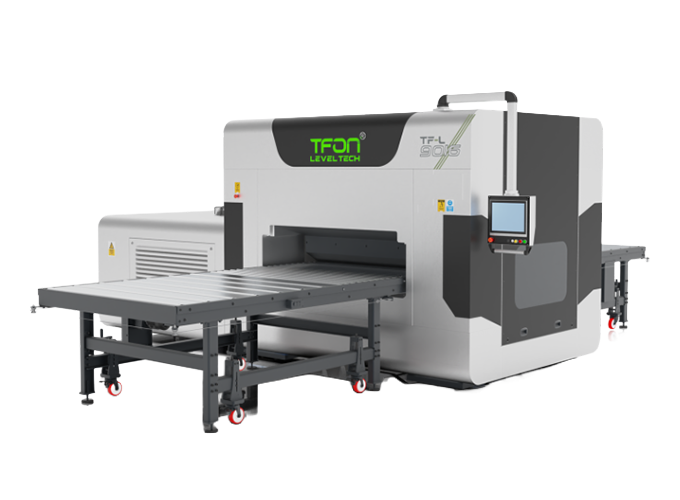
TFON offers mechanical leveling solutions for sheet metal, plates, and components affected by deformation after laser cutting through its Leveltech series, developed specifically for the metalworking industry. Available in different configurations to accommodate various material thicknesses and working widths, TFON's sheet metal leveling and stress relief machines help manufacturers reduce flatness problems during production. It is important to understand that mechanical leveling differs from thermal stress relief annealing and does not guarantee the complete elimination of all internal stresses within the material.
When selecting a leveling machine, manufacturers should consider not only sheet metal thickness but also material strength, component width, and cutting geometry. Perforated components or parts containing large openings may behave differently from solid sheets of the same thickness. Therefore, conducting sample leveling tests before starting production and comparing the resulting flatness measurements with the tolerances specified in technical drawings can be beneficial.
To minimize sheet metal warping after laser cutting, manufacturers should select suitable materials, optimize cutting parameters, and ensure that components are properly supported throughout production. After cutting, appropriate measurements should be performed to determine whether leveling is required. Industrial leveling solutions developed by TFON help manufacturers manage these processes with greater control. With the right equipment and suitable processing parameters, sheet metal flatness can be improved, assembly problems can be reduced, and more consistent quality standards can be achieved throughout manufacturing operations.