
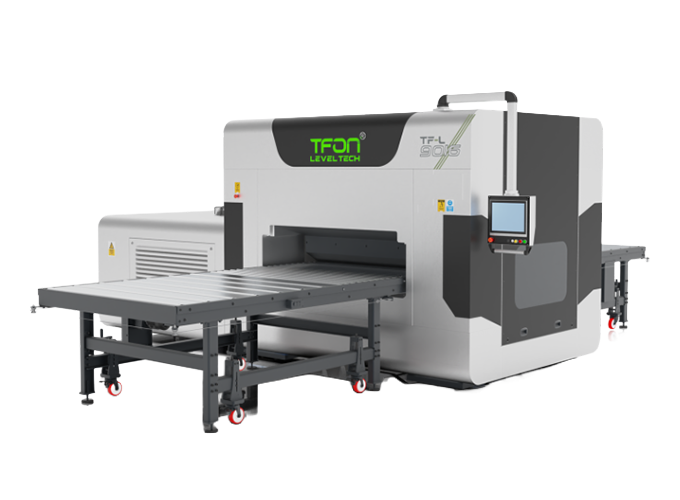
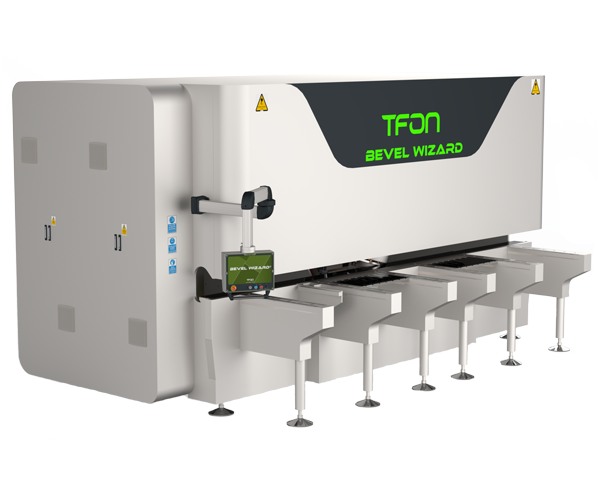
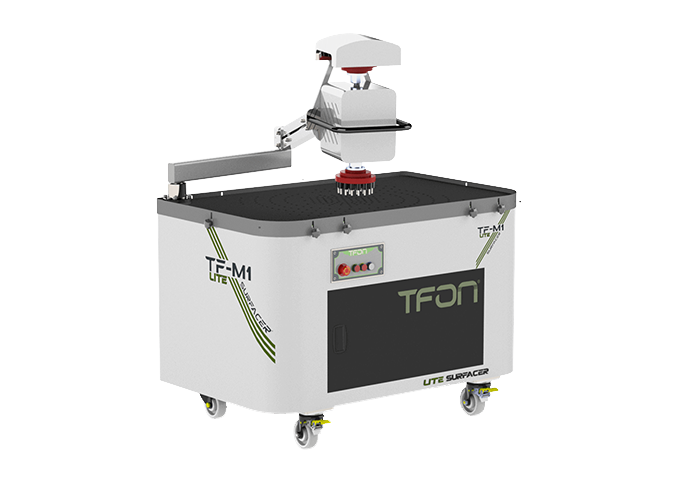
In the metalworking industry, laser cutting, plasma cutting, and punching processes enable the precise production of components with various geometries. However, once cutting is completed, burrs, sharp edges, and surface irregularities may remain on the workpieces. These imperfections affect not only the appearance of the finished parts but also assembly operations, workplace safety, and the quality of subsequent painting or coating processes. Automatic deburring machines are designed to eliminate these issues through a controlled and consistent finishing process. Achieving repeatable results is particularly important in high-volume manufacturing, where maintaining uniform product quality is essential.
Working Principle of Automatic Deburring Machines
Automatic deburring machines operate by transporting metal workpieces through different processing stations using a conveyor system. Before processing begins, the material type, thickness, dimensions, and edge characteristics are evaluated. Parameters such as conveyor speed, abrasive pressure, and processing station positions are then adjusted according to the workpiece requirements. Depending on the machine configuration and material properties, vacuum or magnetic holding systems can be used to secure the parts during processing.
In the first stage, an abrasive belt removes burrs and excess material generated during cutting. The objective is to eliminate unwanted projections while preserving the dimensional accuracy of the workpiece. A subsequent brush station rounds sharp edges in a controlled manner, producing a more consistent edge profile. Depending on the component geometry, both external contours and accessible internal edges can be processed.
Processing intensity varies according to the material being handled. Excessive pressure on thin sheet metal may cause surface marks, while insufficient contact on thicker components with heavy burrs may result in incomplete deburring. Therefore, abrasive type, grit size, conveyor speed, and station settings must be considered together. Appropriate dust extraction systems also help control metal particles and abrasive dust generated during operation.
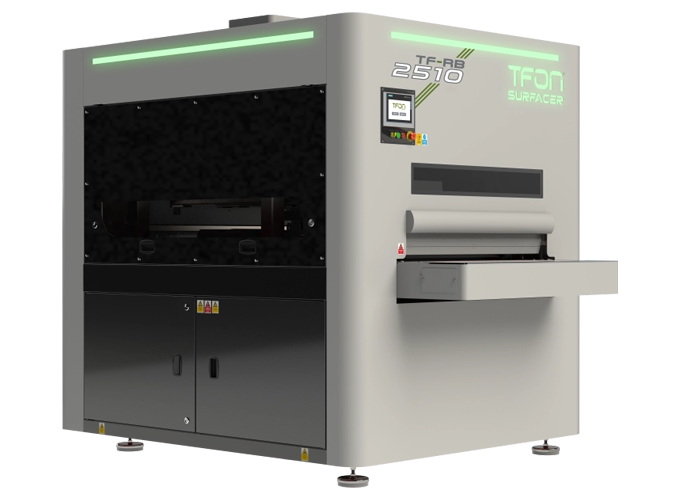
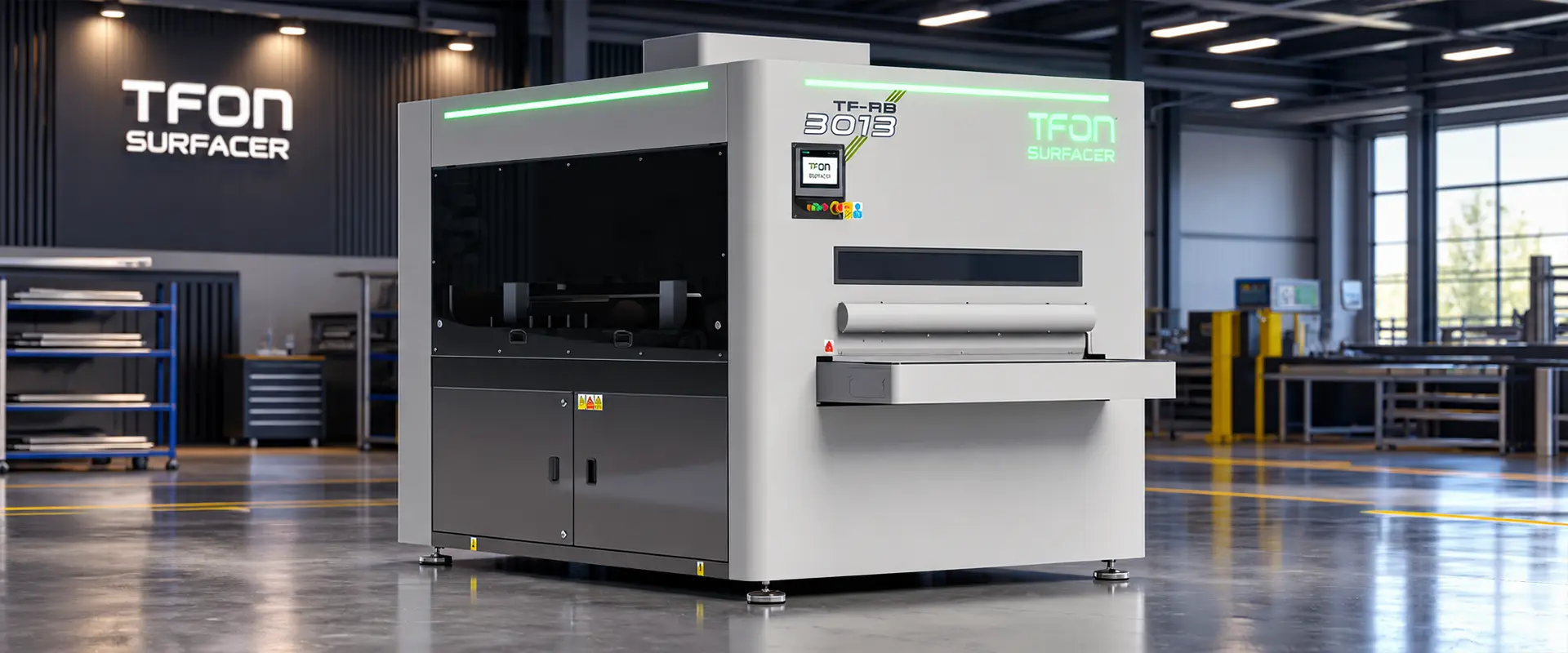
The TFON Surfacer® TF-RB-3013, developed by TFON, combines deburring and edge rounding operations within a single machine. With a working width of 1300 mm, the system is designed to process steel, aluminum, and stainless steel components. Its abrasive belt station removes burrs, while the following brush station produces a controlled edge profile. Both operations can be completed in a single pass, although additional processing may be required when the underside of a workpiece also needs finishing.
Efficiency and Quality in Automatic Deburring Processes
In manual deburring operations, the final result may vary depending on operator experience, equipment condition, and processing time. Automatic deburring machines reduce this variability by applying predefined processing parameters consistently. In production environments where identical components are manufactured in large quantities, this improves process planning and supports more predictable manufacturing workflows.
Another important consideration is the condition of the workpiece before it enters the next production stage. Removing cutting residues before welding, eliminating sharp edges before assembly, and preparing edge profiles before painting serve different manufacturing requirements. When configuring automatic deburring machines, manufacturers must consider not only surface appearance but also downstream operations and dimensional tolerances.
Advanced systems may include touchscreen controls, automatic thickness measurement, and stored processing recipes. For example, the TFON Surfacer® TF-RB-3013 incorporates automatic material thickness detection and a recipe storage system, simplifying machine setup when switching between different workpieces. Integrated overload protection also helps reduce the risk of equipment damage caused by unexpected thickness variations.
Proper edge rounding after deburring supports surface preparation for painting and coating applications. Eliminating sharp edges also contributes to safer handling during transportation and assembly. However, the achievable finish depends on material hardness, burr formation, component geometry, and abrasive condition. Sample processing and inspection are therefore essential before beginning full-scale production.
Regular inspection of abrasive belts and edge rounding brushes is equally important for maintaining consistent results. Worn consumables may produce different finishes even when the same machine settings are maintained. Preventive maintenance, sample inspections, and processing data records help manufacturers preserve quality standards over time.
TFON automatic deburring machines make post-cutting surface preparation a more controlled and integrated part of metal manufacturing. With suitable processing stations and carefully selected operating parameters, deburring, edge rounding, and quality inspection can be managed with greater consistency, efficiency, and process reliability.