

Knowledge Base
Complete vs Partial Joint Penetration Welds
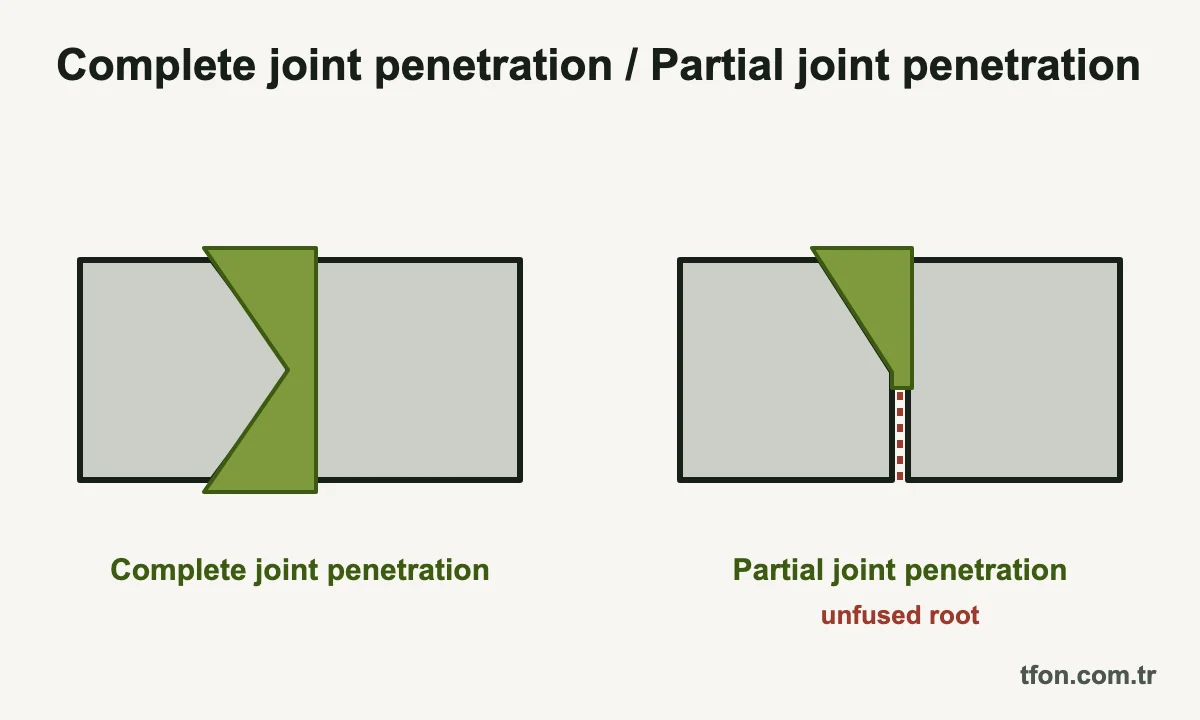
A complete joint penetration (CJP) weld is a groove weld whose weld metal extends through the full thickness of the joint. A partial joint penetration (PJP) weld stops short by design and leaves an unfused root land. With matching filler metal, CJP develops the full strength of the thinner part; PJP saves weld metal where the load allows.
TFON Machines for This Job
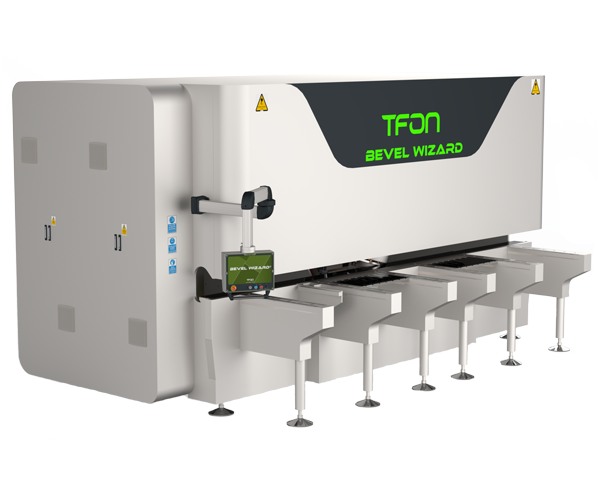
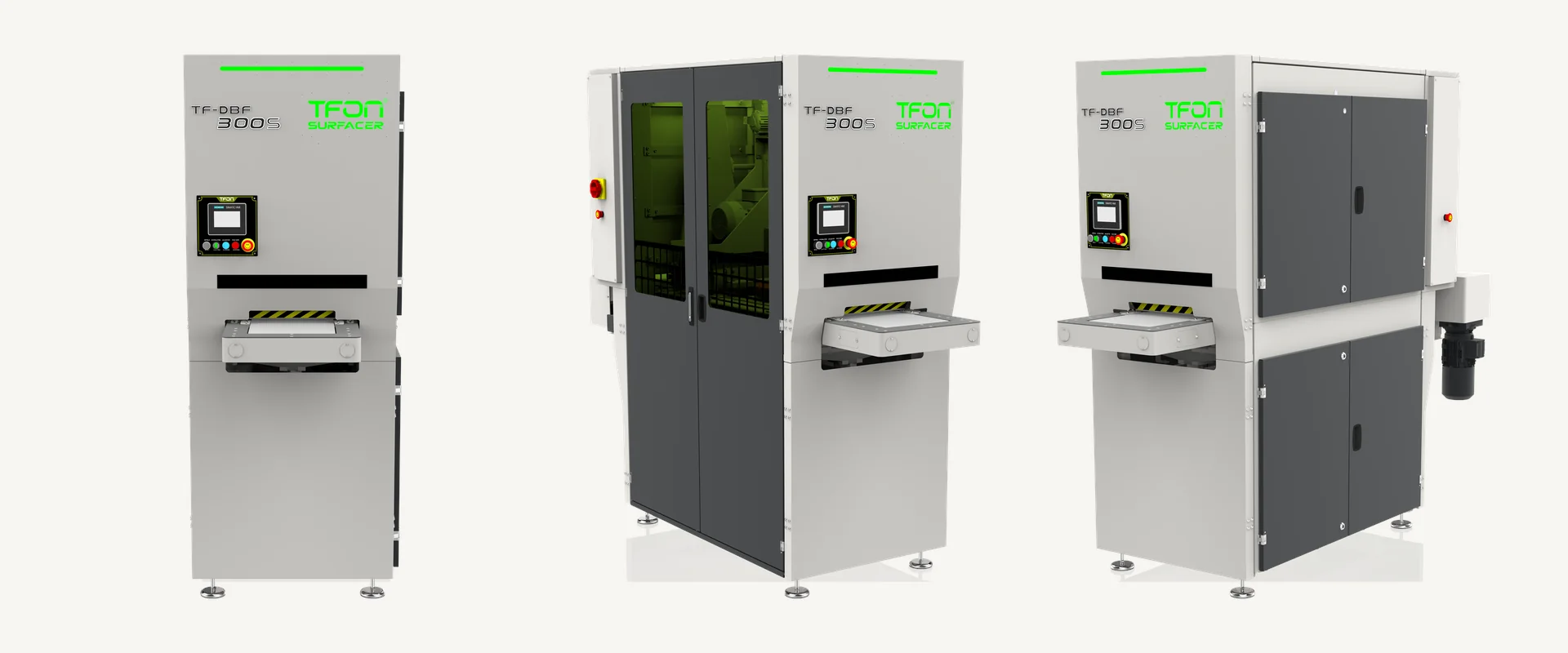
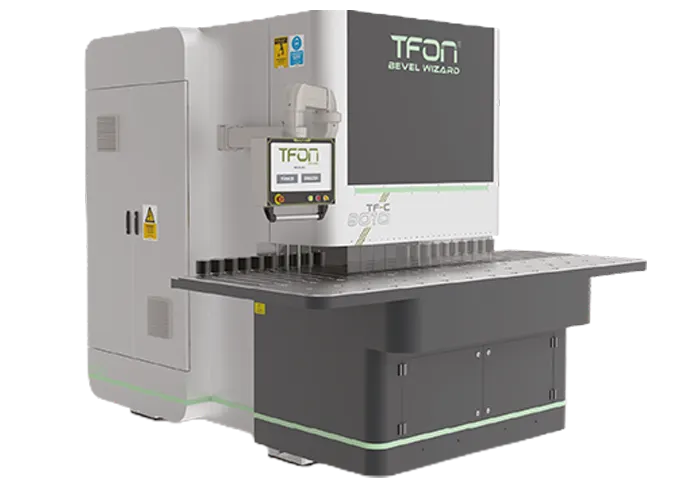
- TFON Bevel Wizard® TF-C 8010 L Plate beveling machine for 4 to 100 mm plate, parts up to 12,000 mm long, working angle -30° to +80° Specifications Request a Quote
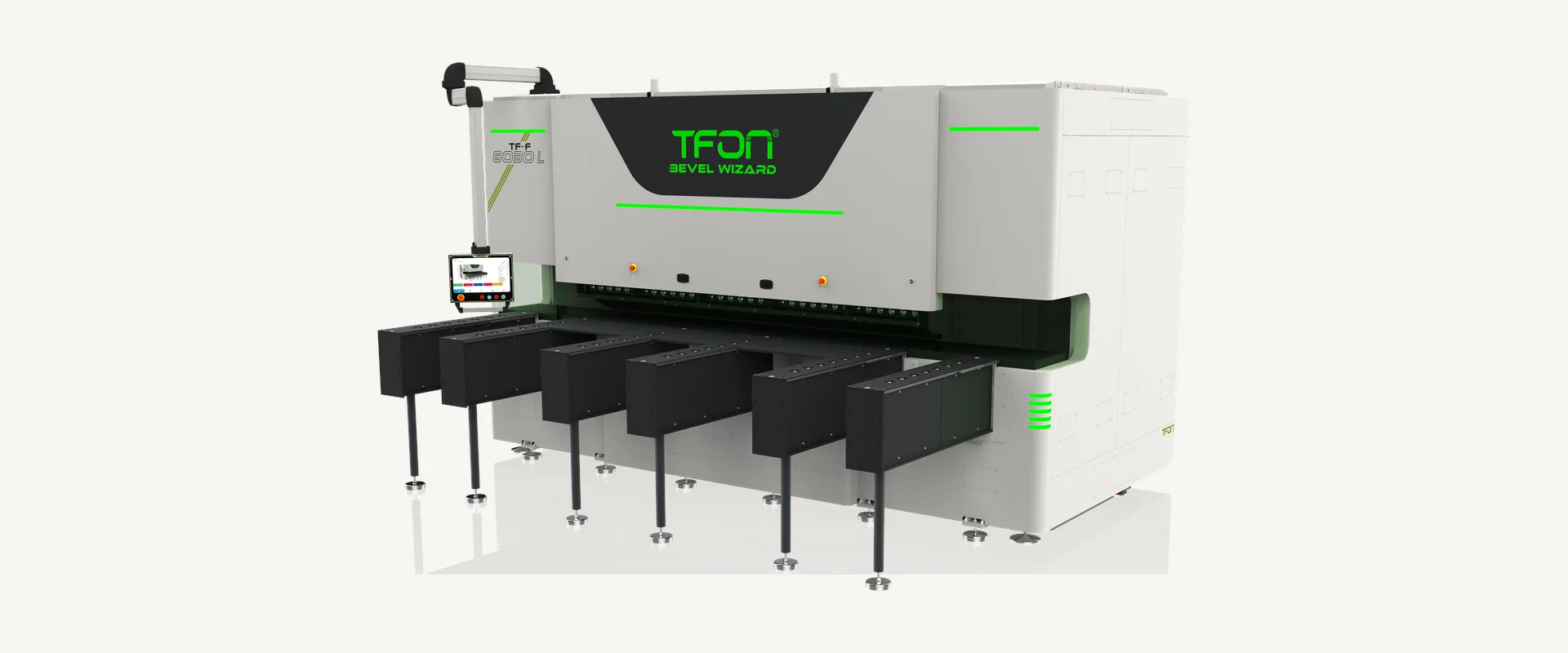
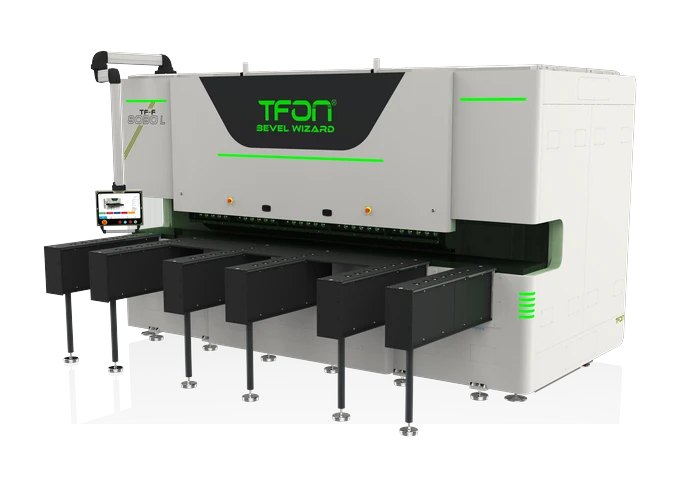
- TFON Bevel Wizard® TF-F 8030 L Plate beveling machine for small and mid-size parts, 60 to 3,000 mm long, 4 to 100 mm thick Specifications Request a Quote
CJP vs PJP at a Glance
The difference between CJP and PJP welds is how deep the weld metal goes: a complete joint penetration weld fuses the joint through its full thickness, and a partial joint penetration weld is designed to stop at a stated depth. Both are groove welds, and both terms are defined in AWS A3.0 and used throughout the structural welding code AWS D1.1. In the shop, CJP is often called a full penetration weld and PJP a partial penetration weld.
The table below compares the two weld types on the points that matter for design, preparation and inspection. Each row is explained in the sections that follow.
| Feature | CJP weld | PJP weld |
|---|---|---|
| Penetration | Through the full joint thickness | Intentionally less than full thickness |
| Weld size for design | Thickness of the thinner part joined | Effective throat E, set by the depth of bevel S and the code |
| Root | Fully fused | Deliberate unfused land |
| Edge preparation | Bevel, root face and root opening sized for full fusion | Bevel to a defined depth; the rest stays square |
| Backing or back gouging | Needed, unless a qualified open-root technique is used | Not used |
| Typical use | Tension across the weld, fatigue, seismic and full-strength splices | Static, shear and bearing joints |
| Volumetric testing (UT, RT) | Common where specified | Of limited use |
| Weld metal and distortion | Higher | Lower |
Neither weld type is right for every joint. CJP belongs where the full section must carry load across the weld; elsewhere, PJP or fillet welds do the job with less metal and heat. How the joint itself is arranged is covered in the guide to types of welding joints.
What Is a CJP Weld?
A CJP weld is a groove weld in which weld metal extends through the entire thickness of the joint, fused to both members. AWS A3.0 describes complete joint penetration as a root condition: the weld reaches the far side of the joint. Under AWS D1.1, the weld size of a CJP groove weld is the thickness of the thinner part joined, and reinforcement adds nothing to it.
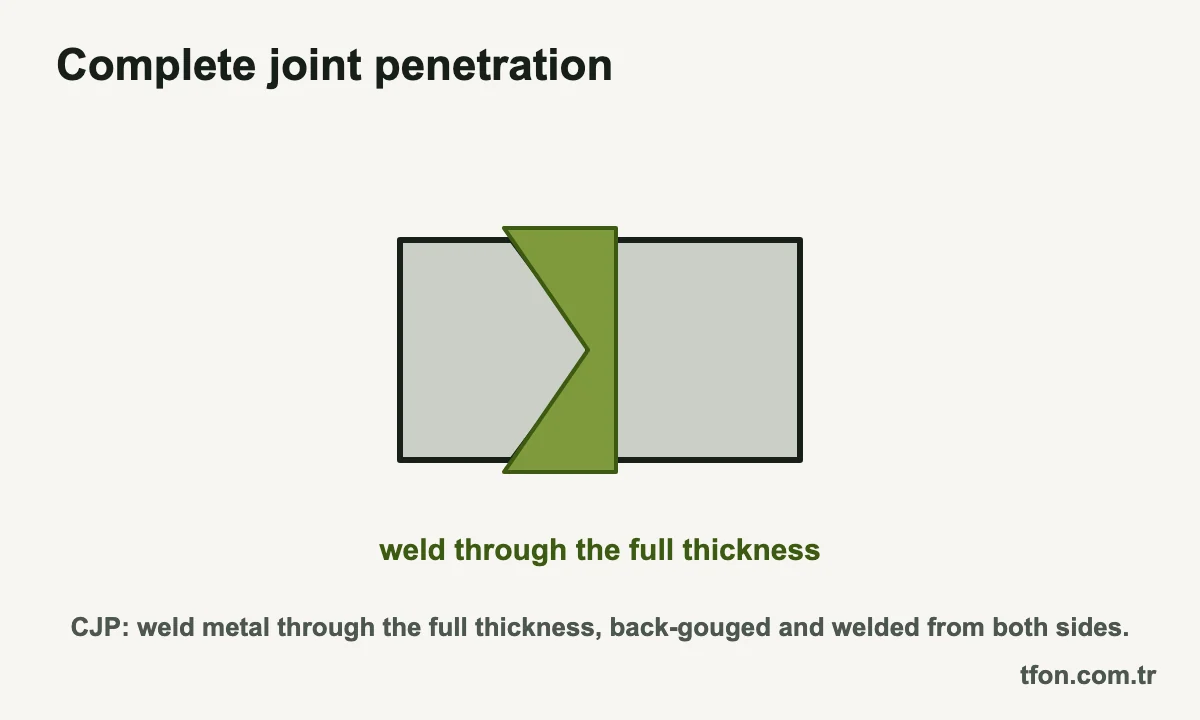
There are three common ways to reach complete penetration. The joint can be welded from both sides, with the first root back-gouged to sound metal before the second side is welded. It can be welded from one side onto a backing bar that fuses into the root. Or it can be welded from one side with an open root, using a technique and fit-up qualified to fuse through without backing.
Complete joint penetration and complete fusion are not the same thing. Fusion is the bond between weld metal and the groove faces, while penetration is how far the weld extends into the joint. A CJP weld needs both, and a lack of either at the root is a defect.
With filler metal that matches the base metal, a sound CJP weld develops the full strength of the thinner part. That is why designers use complete joint penetration welding for splices that must behave like uncut plate.
What Is a PJP Weld? Depth of Bevel S and Effective Throat E
A PJP weld is a groove weld whose joint penetration is intentionally less than the full thickness. The prepared depth is the depth of bevel, S, measured from the plate surface to the bottom of the bevel. The depth the design counts is the groove weld size or effective throat, E, and the section below it stays unfused.
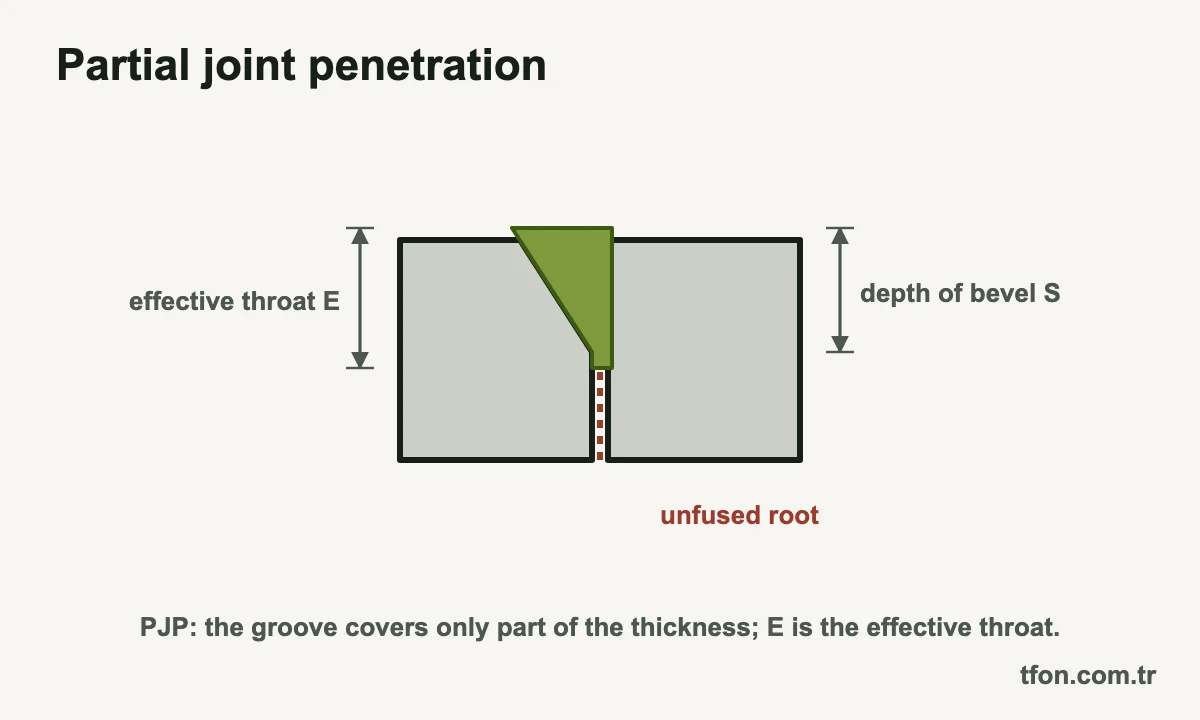
E is not always equal to S. In a narrow groove, the arc may not fuse the very bottom of the bevel, so AWS D1.1 credits some combinations of groove angle, process and position with an effective throat smaller than the depth of bevel. Wider grooves and favorable positions are credited with the full depth. The code tables for prequalified PJP joints, or the qualified WPS, give the relationship for each case.
A PJP weld can be single or double. A double-sided PJP joint leaves the unfused land in the middle of the section, and its effective throat is the sum of both sides. D1.1 also sets minimum PJP weld sizes that grow with the thickness of the parts, so thick plate cannot be joined with a token bevel even when the load is small.
The unfused land is the trade-off for that saving. It acts as a built-in notch at the root, which matters little in static compression or shear but becomes a crack starter under tension across the weld or cyclic loading.
How CJP and PJP Appear on Welding Symbols
On an AWS A2.4 welding symbol, a single or symmetrical double groove symbol with no size means a CJP weld, while a PJP weld carries its dimensions to the left of the groove symbol. The depth of bevel S comes first and the groove weld size E follows in parentheses. A single-bevel symbol marked 12 (9), for example, calls for a bevel 12 mm deep that is credited with a 9 mm weld.
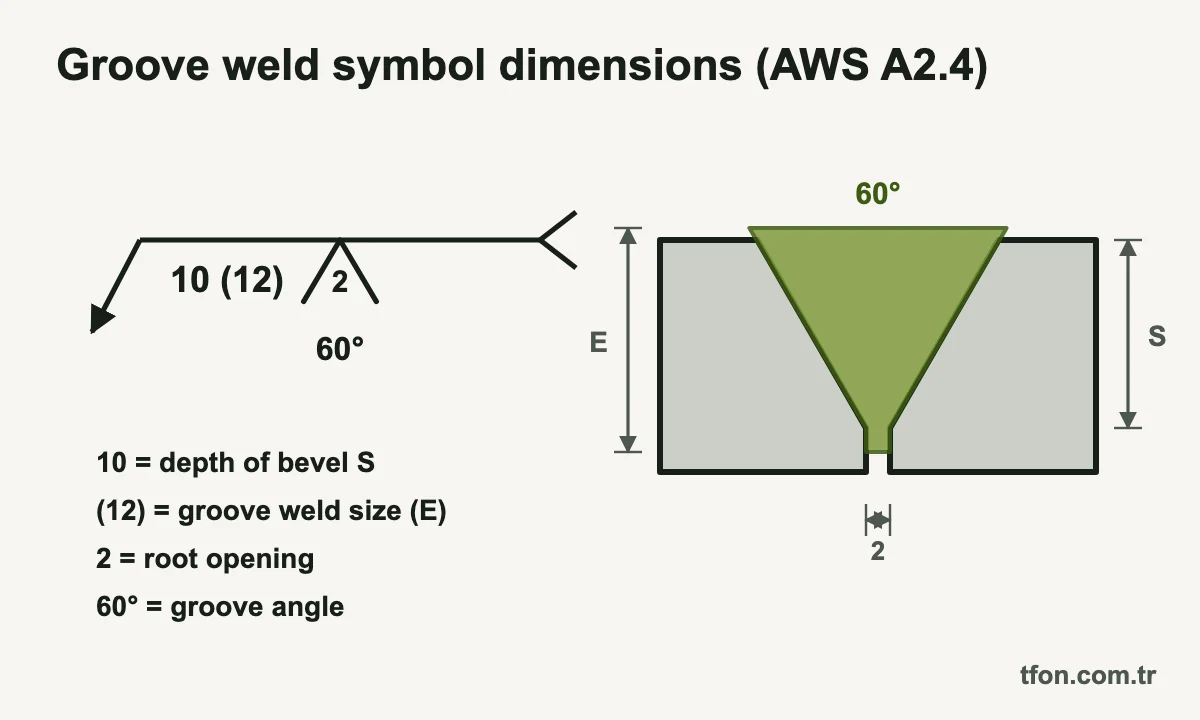
Many drawings also write CJP in the tail of the symbol, and a referenced joint detail or WPS supplies the bevel angle, root face and root opening. Back gouging is called out with a back weld symbol or a note in the tail, and a backing bar with the backing symbol on the other side of the reference line. Asymmetrical double grooves always need dimensions, because the depth on each side cannot be assumed.
ISO 2553 states the penetration of a partial penetration butt weld as the weld thickness s, written to the left of the symbol. The welding symbols chart explains reference lines, arrow side and groove dimensions in both systems.
When Codes Require a Full Penetration Weld
A full penetration weld is required where the weld must carry the full strength of the connected part across its axis, above all in tension, under cyclic loading and in seismic connections. PJP welds are accepted for many statically loaded joints, joints in shear and joints where the parts bear on each other in compression. The engineer of record makes that choice on the drawing, and the shop does not upgrade or downgrade it.
AWS D1.1 separates statically loaded from cyclically loaded connections, and that split drives most CJP requirements. In tension normal to its axis, a PJP weld carries only what its effective throat can carry, and its unfused root acts as a notch. Under cyclic loading that notch controls fatigue life, so codes either restrict PJP welds in transverse tension or rate them low in fatigue design.
The table below shows where CJP and PJP are typically specified in structural steel. It reflects common practice, and the applicable code and the design govern each joint.
| Situation | Typical choice | Reason |
|---|---|---|
| Butt splice of a plate or flange in tension | CJP | The weld must develop the full section |
| Transverse weld under cyclic loading | CJP, often ground flush, backing removed | An unfused root or backing interface is a notch |
| Beam flange to column in a seismic moment frame | CJP | Demand-critical weld under AISC 341 and AWS D1.8 |
| Column splice with ends finished to bear | PJP | Compression passes by bearing; the weld holds alignment and shear |
| Web to flange of a built-up member, static load | PJP or fillet | Longitudinal shear, carried by the throat |
Other codes follow the same logic with their own rules. Bridges in the US are welded to AWS D1.5, and pressure equipment codes such as ASME Section VIII generally call for full penetration butt welds in the main shell seams.
Joint Preparation for CJP Welds
CJP joint preparation has one job: let the weld metal reach and fuse the whole thickness. That depends on the bevel angle, the root face, the root opening and the root treatment, all set before the arc starts. The groove shapes and typical ISO 9692-1 ranges are covered in the guide to weld bevel and groove types.
- One side with steel backing: a wider root opening and a small or zero root face let the root pass fuse into the backing bar. The backing must fit tight and run continuously along the joint.
- Both sides with back gouging: a double-V, double-bevel or single groove with a root face is welded from the first side. The root is then gouged or ground to sound metal and welded from the second side.
- One side, open root: the root pass fuses through without permanent backing, often by TIG or a controlled short-arc process, sometimes on removable ceramic backing. Fit-up is tight and the technique must be qualified.
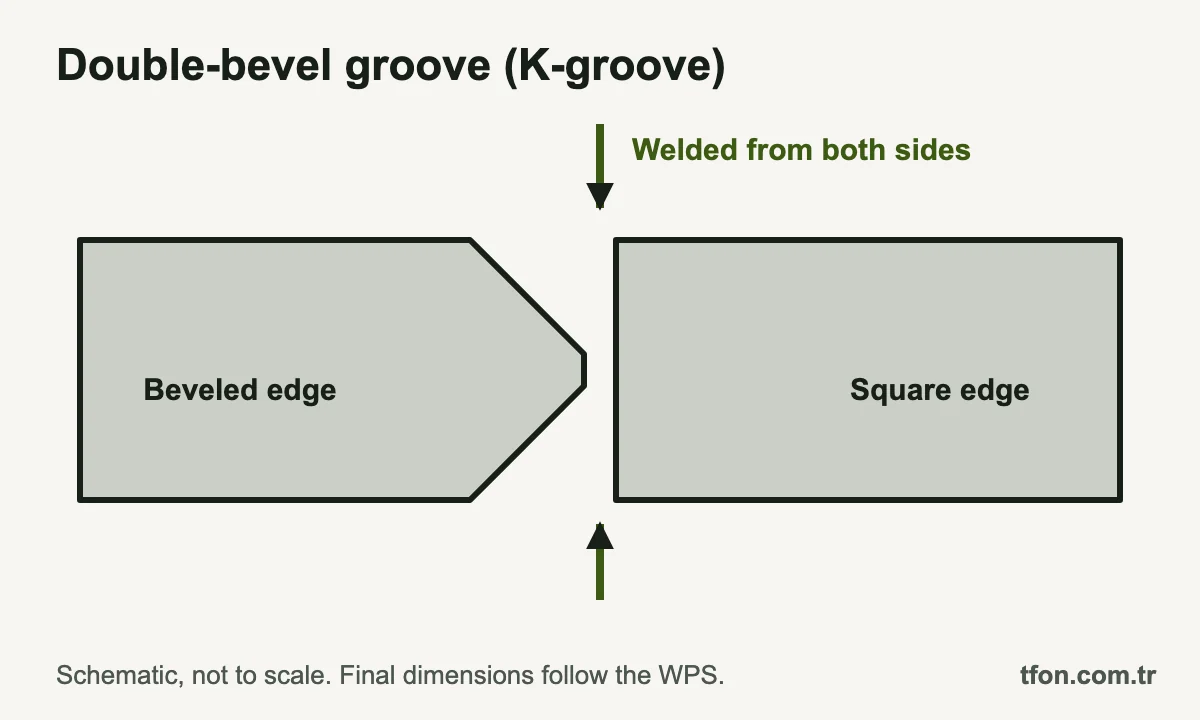
For thick T-joints, a double-bevel groove on the stem, welded from both sides with back gouging, is the standard CJP detail. It halves the groove depth on each side and balances shrinkage. AWS D1.1 publishes prequalified CJP joint details with tolerances for the joint as detailed and as fit up.
The root face is the dimension to watch. Too large a root face, or too small a root opening, leaves unfused metal in the middle of the joint, which is exactly the defect a CJP weld must exclude.
Joint Preparation for PJP Welds
PJP preparation is a bevel cut to a defined depth S, with the rest of the section left square as a deliberate root land. There is no backing and no back gouging, and PJP details are usually fitted with little or no root opening. That makes the preparation simpler than CJP, but it moves the critical tolerance from the root to the depth of bevel.
Because E follows from S, an error in bevel depth is an error in weld size. A bevel 2 mm too shallow on a 10 mm PJP weld removes a fifth of its throat, and nobody can see that once the groove is filled. The depth of bevel is therefore measured on the prepared edge, before fit-up, at both ends and along the length.
Single-bevel and V grooves are the usual PJP preparations on plate, and J and U grooves appear on heavy sections. A narrower groove angle saves weld metal but may cost credited throat, so the angle in the WPS and the throat in the design must agree. In T-joints, a PJP bevel groove is often covered by a reinforcing fillet, and the design credits the combined throat as the code allows.
All of this is set during weld bevel preparation, not at the welding station. A wrong bevel depth cannot be corrected by the welder afterward.
Inspecting CJP and PJP Welds
CJP welds are inspected visually and, where the contract or code requires it, by ultrasonic (UT) or radiographic testing (RT) to prove fusion through the thickness. PJP welds are checked visually, by magnetic particle (MT) or penetrant testing (PT) where specified, and by checking the preparation before welding. Volumetric methods see the intended unfused root of a PJP weld as an indication, which makes their results hard to interpret.
The table below summarizes the usual inspection approach for each weld type. Contract documents set the actual extent of testing.
| Check | CJP weld | PJP weld |
|---|---|---|
| Before welding | Bevel angle, root face, root opening, backing fit | Bevel angle and depth of bevel S |
| Visual inspection | Required | Required |
| MT or PT | As specified, often on the back-gouged root | As specified |
| UT | Common for proving full fusion | Limited, because the unfused root reflects |
| RT | Used on butt joints; limited on T-joints | Rarely useful |
| Procedure qualification | Test plate with bend and tensile tests | Macro-etch sections that show the effective throat |
The consequence for PJP is simple: the weld size is verified on the edge before welding, not on the finished weld. A documented check of bevel angle and depth on the first part, repeated at intervals, is the main production evidence of the effective throat.
Cost, Distortion and Weld Metal Volume
A CJP weld costs more than a PJP weld on the same joint, mainly because it needs more weld metal, a root treatment and more testing. Groove volume grows with the square of the groove depth, so a groove twice as deep holds about four times the metal. More weld metal means more passes, more heat input and more shrinkage.
The table below compares the groove cross-section of three preparations on a 25 mm (1 in) steel butt joint. The geometry is illustrative: a 60° groove angle for all three, a 2 mm root face and 2 mm root opening for the CJP options, and no reinforcement or back gouging.
| Preparation | Penetration | Groove area | Weld metal (steel) | Relative |
|---|---|---|---|---|
| Single-V, welded from one side | CJP | about 355 mm² (0.55 in²) | about 2.8 kg/m (1.9 lb/ft) | 100% |
| Double-V, welded from both sides | CJP | about 203 mm² (0.31 in²) | about 1.6 kg/m (1.1 lb/ft) | 57% |
| Double-V, S = 8 mm per side, no gap | PJP | about 74 mm² (0.11 in²) | about 0.6 kg/m (0.4 lb/ft) | 21% |
The comparison shows two levers. Moving from a single-V to a double-V cuts weld metal by more than 40% when both faces can be reached, and the two sides shrink against each other. Moving from CJP to PJP cuts it much further, but only where the design accepts the smaller throat and the unfused root.
Distortion follows the same pattern. Single-sided CJP welds on thick plate pull the joint out of flat, while balanced double-sided welds in alternating sequence keep it closer to straight. Residual stress remains either way, and the guide on stress relief after welding covers how it is reduced where the part requires it. Specifying CJP just to be safe is therefore not free.
Preparing CJP and PJP Bevels by Machine
Both weld types depend on bevel geometry that stays the same along the whole edge: CJP on the bevel angle and root face, PJP on the depth of bevel that defines the effective throat. Hand grinding can drift over a long plate, and thermal cutting leaves slag and oxide on the faces. A plate beveling machine set to the WPS values repeats the same angle and root face along the full edge.
TFON Bevel Wizard machines bevel plate and sheet from 4 to 100 mm thick at a working angle of -30° to +80°, which covers the straight single-V, single-bevel, double-V and double-bevel preparations used for CJP and PJP welds. The Bevel Wizard TF-C 8010 L handles parts up to 12,000 mm long on a sliding table. The TF-F 8030 L handles parts 60 to 3,000 mm long on a fixed table.
Whatever the method, check the first part: bevel angle, root face and, for PJP, depth of bevel near both ends and along the edge. On plasma and oxy-fuel cut parts, remove slag and dross from the fusion faces before welding. The article on how bevel angle affects weld quality explains what happens when the angle drifts.
TFON Machines for This Job
-
TFON Bevel Wizard® TF-C 8010 L
Plate beveling machine for 4 to 100 mm plate, parts up to 12,000 mm long, working angle -30° to +80°
Specifications Request a Quote -
TFON Bevel Wizard® TF-F 8030 L
Plate beveling machine for small and mid-size parts, 60 to 3,000 mm long, 4 to 100 mm thick
Specifications Request a Quote
Frequently Asked Questions
What is the difference between CJP and PJP welds?
A CJP weld fuses the joint through its full thickness, while a PJP weld penetrates only part of it by design and leaves an unfused root land. The CJP weld size equals the thickness of the thinner part. The PJP weld size is its effective throat E, which depends on the depth of bevel S.
Is a full penetration weld the same as a CJP weld?
Yes, in practice. Full penetration weld is the common shop term, and complete joint penetration (CJP) is the AWS A3.0 term used in AWS D1.1 and on AWS drawings. A partial penetration weld likewise corresponds to PJP.
Is a PJP weld weaker than a CJP weld?
A PJP weld carries less load across its axis, because its throat is smaller than the plate thickness. In shear along the weld, or in compression where the parts bear, a correctly sized PJP weld does the job with far less weld metal. Under tension across the weld or cyclic loading, its unfused root makes it a poor substitute for CJP.
When is a CJP weld required?
A CJP weld is typically required when the weld must develop the full strength of the part in tension across the weld, under fatigue loading, or in seismic demand-critical connections. The design engineer specifies it under the applicable code, such as AWS D1.1. The fabricator should not change CJP to PJP, or the reverse, without approval.
Does a CJP weld always need back gouging?
No. Back gouging is used when a CJP joint is welded from both sides, so the second side starts on sound metal. CJP welds made from one side use a backing bar or a qualified open-root technique instead.
What do S and E mean on a groove weld symbol?
S is the depth of bevel, the prepared depth measured from the plate surface. E, shown in parentheses, is the groove weld size or effective throat credited in design. For a PJP weld, E can equal S or be smaller, depending on groove angle, process and position.
Can a fillet weld be a CJP weld?
No. A fillet weld sits in the corner between two surfaces and does not penetrate the joint thickness by design. A T-joint that needs complete joint penetration gets a bevel or J groove on the stem, often finished with a reinforcing fillet.
Let Us Review Your Part
Share the material, cutting method, part dimensions and the next operation, with photos of both faces. We will recommend the machine and station sequence that fits the part.