

Knowledge Base
Stress Relief After Welding: Heat Treatment, Vibration and Leveling
Stress relief after welding is any treatment that lowers the residual stresses a weld leaves in a part. The method welding codes recognize is a stress-relief heat treatment. Vibratory stress relief and roller leveling work differently and have narrower uses. Roller leveling improves the flatness of plate parts but does not replace a heat treatment.
TFON Machines for This Job
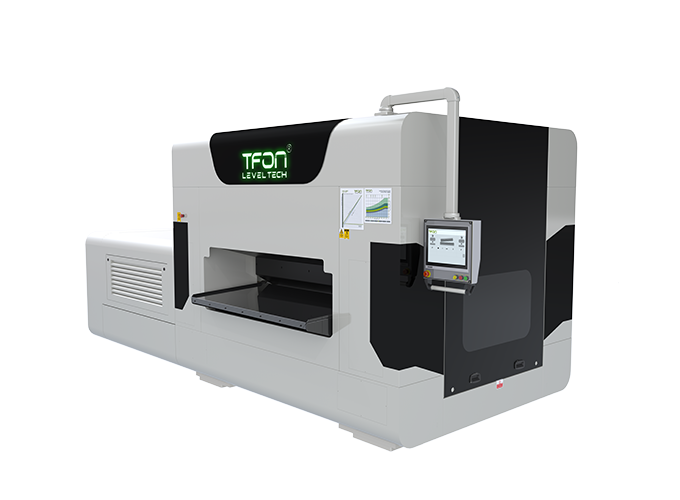
- TFON Leveltech® TF-M 5513 Leveling machine; 0.5-15 mm material thickness; 1,300 mm maximum width; servo hydraulic / PC gap control Specifications Request a Quote
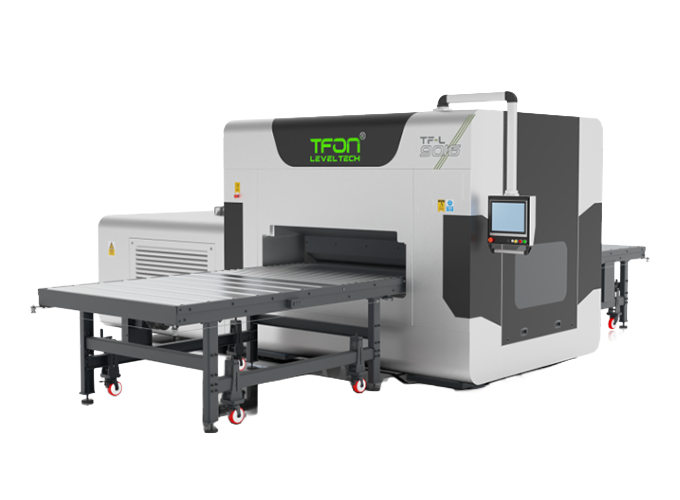
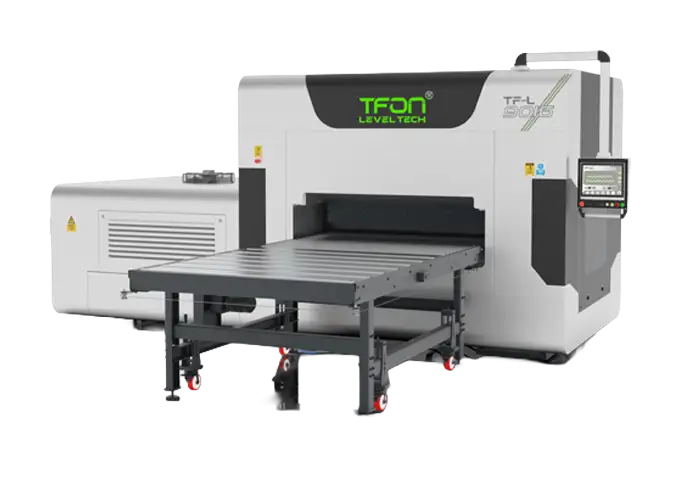
- TFON Leveltech® TF-L 9016 Sheet metal leveler; 1-30 mm material thickness; 1,600 mm maximum width; 160 mm minimum part length Specifications Request a Quote
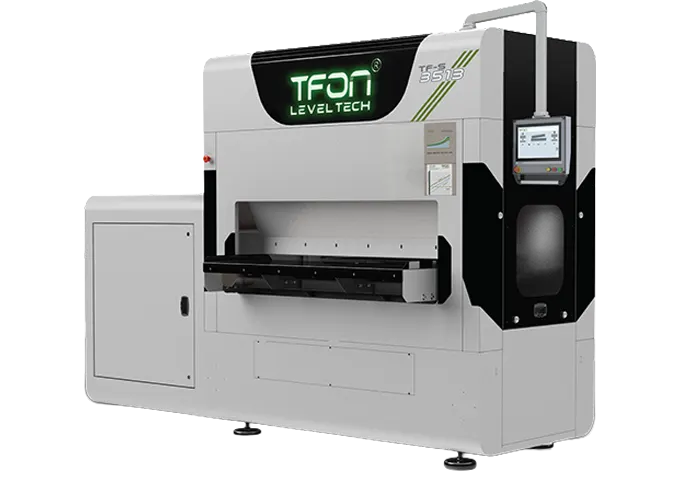
- TFON Leveltech® TF-S 3513 Thin sheet leveler; 0.3-5 mm material thickness; 1,300 mm maximum width; 35 mm minimum part length Specifications Request a Quote
What Is Residual Stress After Welding?
Residual stress is stress that stays locked in a part when no outside load acts on it. Welding creates it in a predictable way. The weld metal and the heat-affected zone (HAZ) expand as they heat, but the cold metal around them holds them back. As the joint cools, the weld tries to shrink and is restrained again. The result is tension in and next to the weld, balanced by compression further away. In a heavily restrained joint these stresses can approach the yield strength of the material.
Part of that stress turns into distortion you can see:
- Angular distortion: the plates on each side of a fillet or groove weld rotate toward the weld.
- Longitudinal and transverse shrinkage: the part gets shorter along and across the weld.
- Bowing and buckling: long welds bend a member, and thin plate buckles into waves.
The rest stays locked in. It shows up later, when the part is machined and material that held the stresses in balance is cut away, when the part is loaded in fatigue, or when a corrosive medium attacks a stressed zone.
Cut parts carry residual stress too
Welding is not the only source. Sheet and plate arrive with stresses from hot rolling, coiling and leveling at the mill. Laser, plasma and oxy-fuel cutting release part of those stresses unevenly and add heat along every edge. That is why a narrow or heavily cut part can bow or twist the moment it leaves the table. TFON's article on what causes sheet metal warping looks at these causes in more detail.
The distinction matters because the fix is different. Stresses from welding a structure call for a stress relief method that treats the whole weldment. Flatness problems in cut sheet and plate parts are usually solved by leveling the parts themselves.
When Is Stress Relief After Welding Required?
Stress relief is required in two situations: when a code, contract or drawing says so, and when the part will not work reliably without it. The first is non-negotiable. The second is an engineering judgment.
Code and specification requirements
Pressure vessel and piping codes, such as ASME Section VIII and ASME B31.3, require postweld heat treatment (PWHT) based on material group and thickness. AWS D1.1, the structural welding code for steel, does not require stress relief by default, but when contract documents call for it, the code sets how the heat treatment is done. In these cases the required method is thermal, and no other method replaces it.
Engineering reasons
- Dimensional stability before machining. Machine bases, frames and fixtures that are welded and then machined can move as material is cut away.
- Service conditions. Environments that cause stress corrosion cracking, and some hydrogen or caustic services, are sensitive to residual tension.
- Thick, highly restrained joints. Heavy sections with high restraint carry higher residual stress and a higher risk of brittle fracture.
- Hardenable steels. Some alloy steels form a hard HAZ that needs tempering, which only heat treatment provides.
When stress relief is not the real issue
Many sheet metal fabrications never need stress relief. The actual problem is often flatness: a laser-cut part that is not flat, a panel with waves, a blank that springs after cutting. Those are form problems. They are solved by leveling or straightening the parts, and by controlling heat input and weld sequence, not by a furnace cycle.
Start by writing down what the part must achieve: a code requirement, a flatness tolerance, a machining tolerance or a service condition. The method follows from that.
Stress-Relief Heat Treatment
How it works
A stress-relief heat treatment heats the welded part to a temperature below the lower transformation temperature of the steel, holds it there, and cools it slowly. At that temperature the yield strength of the steel drops. Locked-in stresses that exceed the reduced yield strength relax through local plastic flow and creep. In hardenable steels the same cycle also tempers the HAZ and lowers its hardness.
Typical parameters
The governing code and the welding procedure specification (WPS) set the exact cycle. Typical values for carbon steel look like this:
- AWS D1.1: for most steels, a holding temperature between 1100°F and 1200°F (600°C and 650°C); for quenched and tempered steels, no higher than 1100°F (600°C). Holding time comes from a table based on weld thickness, and heating and cooling rates above 600°F (315°C) are controlled.
- ASME Section VIII, Division 1: for P-No. 1 carbon steel, a minimum holding temperature of 1100°F (595°C), with holding time based on thickness, about one hour per inch in the common range.
Furnace and local heat treatment
Parts that fit are treated in a furnace, which heats the whole weldment evenly. Large structures and piping are often treated locally with induction or electrical resistance heating bands placed around the joint. In both cases thermocouples record the cycle, and the chart becomes part of the quality record.
Limits
Heat treatment adds cost and lead time and scales the surface unless done in a protective atmosphere. An unsupported part can sag or distort in the furnace. Some materials, such as quenched and tempered steels and many stainless grades, need special care or a different approach entirely. And a stress-relief cycle is not a flatness process: a part can come out of the furnace no flatter than it went in, and may still need straightening afterward.
Vibratory Stress Relief
Vibratory stress relief (VSR) treats a weldment with mechanical vibration instead of heat. A vibrator is clamped to the part, and the part sits on isolating supports. The operator scans for the resonant frequencies of the structure and then holds the part at or near resonance for a set time. The idea is that the cyclic stress, added to the locked-in residual stress, pushes the highest stress peaks past local yield so they relax.
Where it is used
VSR is popular for large weldments such as machine frames, bases and fabricated housings that must hold dimensions through machining. It is portable, fast compared with a furnace cycle, needs no heating, leaves no scale and has no size limit set by a furnace door. Some shops apply it between rough and finish machining.
Limits
- Effect on stress. Published research on VSR is mixed. It tends to lower peak stresses more than the average stress level, and results depend on geometry and procedure.
- No metallurgical change. Without heat there is no tempering of a hardened HAZ and no change in microstructure.
- Code status. Where AWS D1.1, the ASME codes or a contract require stress relief, they specify thermal treatment. Vibratory stress relief is not listed as an alternative.
- Verification. The process record shows vibration data, not a measured stress state. Residual stress measurement is a separate, specialized test.
In short, VSR can be a practical tool for dimensional stability on large structures where no code requirement applies. It is not a substitute for PWHT, and it does nothing for flatness on its own. A frame that is out of flat after welding needs straightening, whatever stress relief method follows.
Roller Leveling: What It Does and What It Does Not Do
A roller leveler passes flat parts between two staggered banks of work rolls. The rolls bend the part up and down in alternating directions, with deeper bends at the entry and lighter bends toward the exit. At the entry, the outer fibers yield in tension and compression, again and again. As the bends decay, the part leaves flat. Because much of the cross-section has been plastically deformed, the uneven stress pattern from rolling, cutting and handling is evened out. The part is flatter, and it stays flatter when it is cut, bent or machined later. TFON's sheet metal leveling page describes the process and how flatness is inspected.
What leveling does not do
Roller leveling does not replace a stress-relief heat treatment. It does not heat the metal. It does not change the microstructure or temper a hardened HAZ. It does not satisfy a code or contract requirement for postweld heat treatment. And a good flatness result does not certify that a part is free of residual stress; flatness and stress state are measured by different methods.
Which parts fit
A leveler treats flat parts that fit between the rolls: sheets, plates, laser and plasma cut blanks, punched parts. It cannot process a three-dimensional welded frame. Each machine has a thickness range, a maximum width and a minimum part length. TFON Leveltech machines, for example, cover 0.3-5 mm (XS and TF-S series), 0.5-15 mm (TF-M series) and 1-30 mm (TF-L series), with minimum part lengths of 35 mm, 110 mm and 160 mm respectively. Welded flat panels with a raised bead, or parts with welded attachments, need an application review before they go near the rolls.
Where it fits in the process
In a welding shop, leveling pays off before welding. Flat, stable cut parts fit up with consistent gaps and less clamping force, which helps the welder control distortion. Leveling after cutting does not treat the stresses that welding adds later. If the finished weldment needs stress relief, that is a separate step.
Stress Relief Methods Compared
The methods below act on residual stress in very different ways. Match the method to the requirement, not the other way around.
| Method | How it acts | Effect | Metallurgical change | Parts it suits | Accepted where a code requires PWHT |
|---|---|---|---|---|---|
| Stress-relief heat treatment (furnace or local) | Heating below the transformation range, holding, slow cooling | Relaxes residual stress throughout the heated zone | Yes; tempers a hardened HAZ | Any weldment that fits the furnace or can be heated locally | Yes; it is the specified method |
| Vibratory stress relief | Cyclic vibration at or near resonance | Mainly lowers peak stresses; results vary | No | Large frames and bases before machining | No |
| Roller leveling | Alternating plastic bending with decreasing amplitude | Improves flatness and evens out stresses in flat parts | No (cold working) | Sheet, plate and cut parts within the machine range | No |
| Peening (hammer, needle, ultrasonic) | Local plastic deformation of the weld surface or toe | Puts the surface into compression; helps fatigue at weld toes | Local cold working | Weld toes and local areas | No; used only within code limits |
| Flame (heat) straightening | Local heating and restrained shrinkage | Corrects distortion; adds new local stresses | Possible, if temperature limits are exceeded | Weldments and members too large for a leveler | No; a correction method, not stress relief |
Two patterns stand out. Only heat treatment changes the metallurgy, which is why codes rely on it. And only the mechanical methods (leveling and straightening) actually make a part flat. Many real jobs need one of each: level the cut parts, weld them, heat treat the weldment if required, and straighten or machine afterward.
Controlling Distortion Before It Needs Correcting
Every stress relief or straightening step costs time. The cheaper route is to create less distortion in the first place. The levers are well known in fabrication shops:
- Heat input. Use the smallest weld that meets the design. An oversized fillet adds metal, heat and shrinkage without adding useful strength.
- Weld sequence. Balance welds around the neutral axis, weld from the center outward, and use backstep or skip welding on long seams.
- Joint design. A double-sided groove, such as an X-groove welded alternately from both sides, shrinks more evenly than a single-sided V on thick plate.
- Fixturing and presetting. Clamp parts in fixtures, or preset them at a small angle so that shrinkage pulls them into position.
- Intermittent welds. Where the design allows, stitch welds put less heat into thin plate than continuous seams.
- Flat, consistent parts. Parts that start flat fit up with even gaps. Uneven gaps mean uneven weld size and uneven shrinkage.
The last point is where leveling earns its place in a welding shop. TFON's article on how a sheet metal leveling machine improves production quality covers the effect on downstream bending and welding. None of these measures removes the need for PWHT where a code requires it, but together they shrink the straightening work that follows.
How to Choose a Method for Sheet and Plate Parts
Work through these questions in order. The first one that applies usually decides the method.
- Does a code, contract or drawing require stress relief or PWHT? Use the thermal treatment it specifies. Nothing else substitutes.
- Is the real problem flatness? For flat cut parts, level them. For weldments too large or too complex for a leveler, straighten them with a press or with controlled heat.
- Will the weldment be machined to tight tolerances? Stress relieve before final machining, thermally or, where no code applies, by vibration, and check dimensions between steps.
- Do laser or plasma cut parts bow after cutting? Level the parts after cutting, or buy leveled stock, before they go to bending or welding.
- Is the material quenched and tempered, stainless or aluminum? Check heat treatment limits with the material supplier before choosing any thermal method.
| Situation | Typical approach |
|---|---|
| Pressure vessel shell, thickness over the code limit | PWHT as specified by the code and WPS |
| Laser-cut brackets bow after cutting and do not fit the fixture | Roller leveling of the cut parts |
| Welded machine base, machined afterward | Thermal stress relief before final machining; VSR where no code applies |
| Thin panels buckle along long welds | Lower heat input, weld sequence, fixturing; straighten afterward |
| Plate blanks for beveling and welding | Level first so the bevel and fit-up are consistent |
For beveled plate, flatness affects how evenly the bevel runs along the edge. Our guide to weld bevel and groove types covers the joint side, and the plate beveling page covers the machine side. For leveling equipment, see the Leveltech leveling machines and our sheet metal leveler buying guide. Models such as the TF-M 5513 leveling machine (0.5-15 mm, up to 1,300 mm wide) and the TF-L 9016 sheet metal leveler (1-30 mm, up to 1,600 mm wide) cover typical plate work.
TFON Machines for This Job
-
TFON Leveltech® TF-M 5513
Leveling machine; 0.5-15 mm material thickness; 1,300 mm maximum width; servo hydraulic / PC gap control
Specifications Request a Quote -
TFON Leveltech® TF-L 9016
Sheet metal leveler; 1-30 mm material thickness; 1,600 mm maximum width; 160 mm minimum part length
Specifications Request a Quote -
TFON Leveltech® TF-S 3513
Thin sheet leveler; 0.3-5 mm material thickness; 1,300 mm maximum width; 35 mm minimum part length
Specifications Request a Quote
Frequently Asked Questions
Does roller leveling relieve stress?
Roller leveling evens out and reduces residual stresses in flat parts by bending them past yield in alternating directions, which makes them flatter and more stable when cut or machined later. It is not a stress-relief heat treatment. It does not heat the metal, does not change the microstructure and does not satisfy a code requirement for postweld heat treatment.
What temperature is used for stress relieving carbon steel?
Codes typically hold carbon steel at about 1100-1200°F (595-650°C). AWS D1.1 limits quenched and tempered steels to 1100°F (600°C), and ASME Section VIII sets a 1100°F (595°C) minimum for P-No. 1 carbon steel. Holding time depends on thickness. The governing code and the WPS define the exact cycle.
Is vibratory stress relief as good as heat treatment?
Not as a substitute. Vibratory stress relief can lower peak residual stresses and is used on machine frames before machining, but it does not change the microstructure or temper a hardened HAZ. Where AWS D1.1, the ASME codes or a contract require stress relief, the specified method is thermal treatment.
Should you stress relieve before or after machining?
Before final machining. Machining removes material that holds residual stresses in balance, so a stressed weldment can move as it is cut. Stress relieving first and machining afterward keeps dimensions stable. If the part is also leveled or straightened, do that before final machining as well, and check flatness after each step.
Why does a laser cut part bow after cutting?
Sheet and plate carry residual stresses from rolling, coiling and leveling at the mill. Cutting releases part of those stresses unevenly, and the heat of the cut adds more along every edge. A narrow or heavily cut part can therefore bow or twist. Leveling the parts after cutting, or cutting from leveled stock, reduces the problem.
Let Us Review Your Part
Share the material, cutting method, part dimensions and the next operation, with photos of both faces. We will recommend the machine and station sequence that fits the part.