

Knowledge Base
How Much Does a Deburring Machine Cost?
Deburring machine cost depends on what the machine has to do: the working width, the number and type of stations, how parts are held, the thickness range and the level of automation. Running costs for belts, brushes, energy and labor then decide the cost per part over the machine life.
TFON Machines for This Job
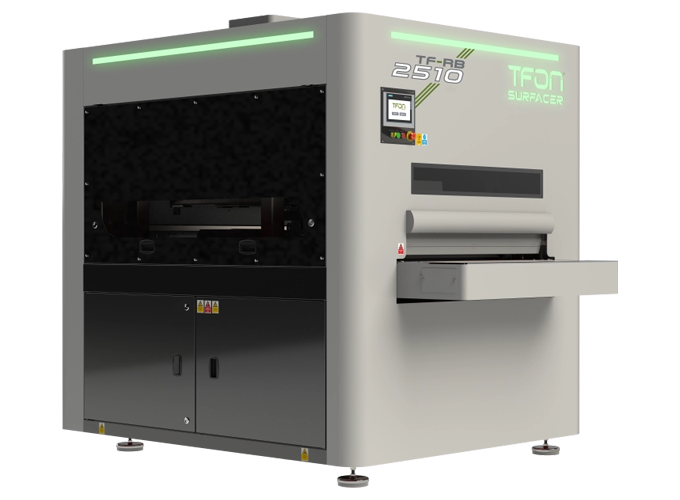
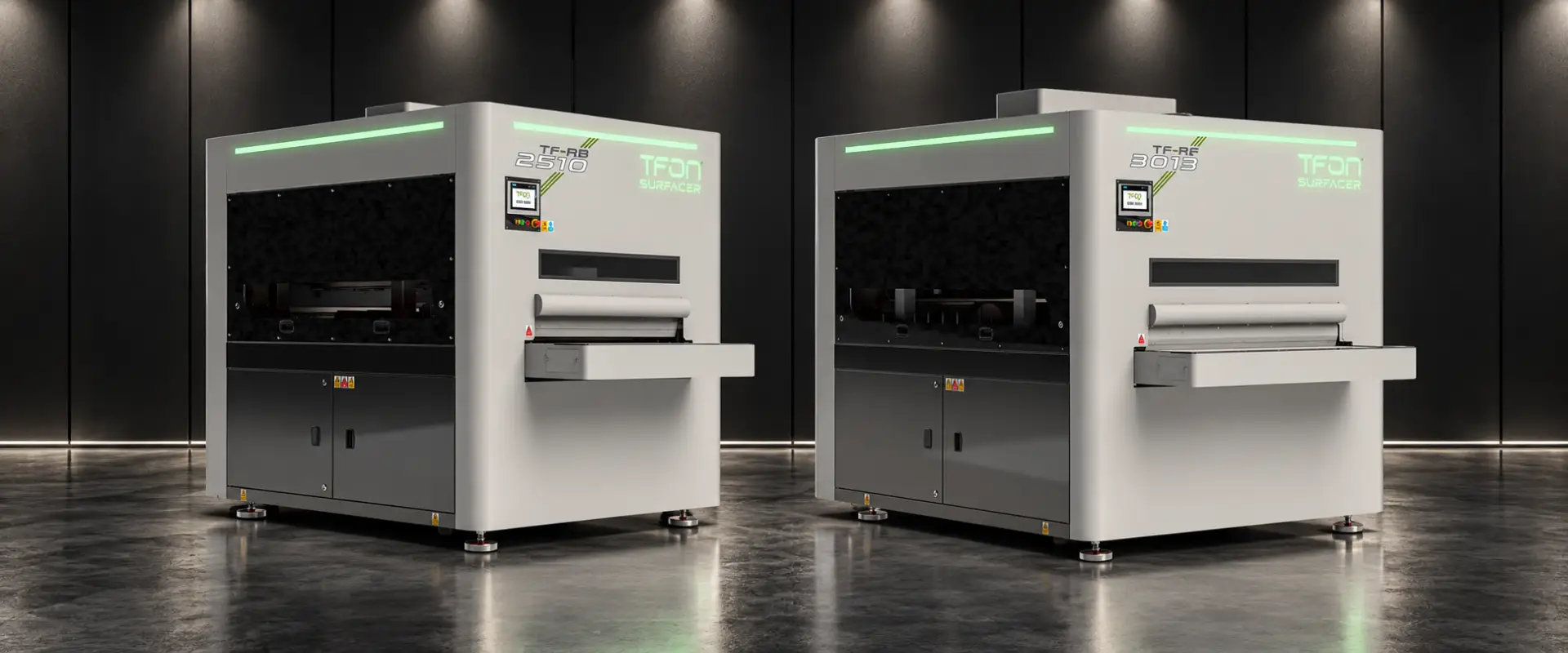
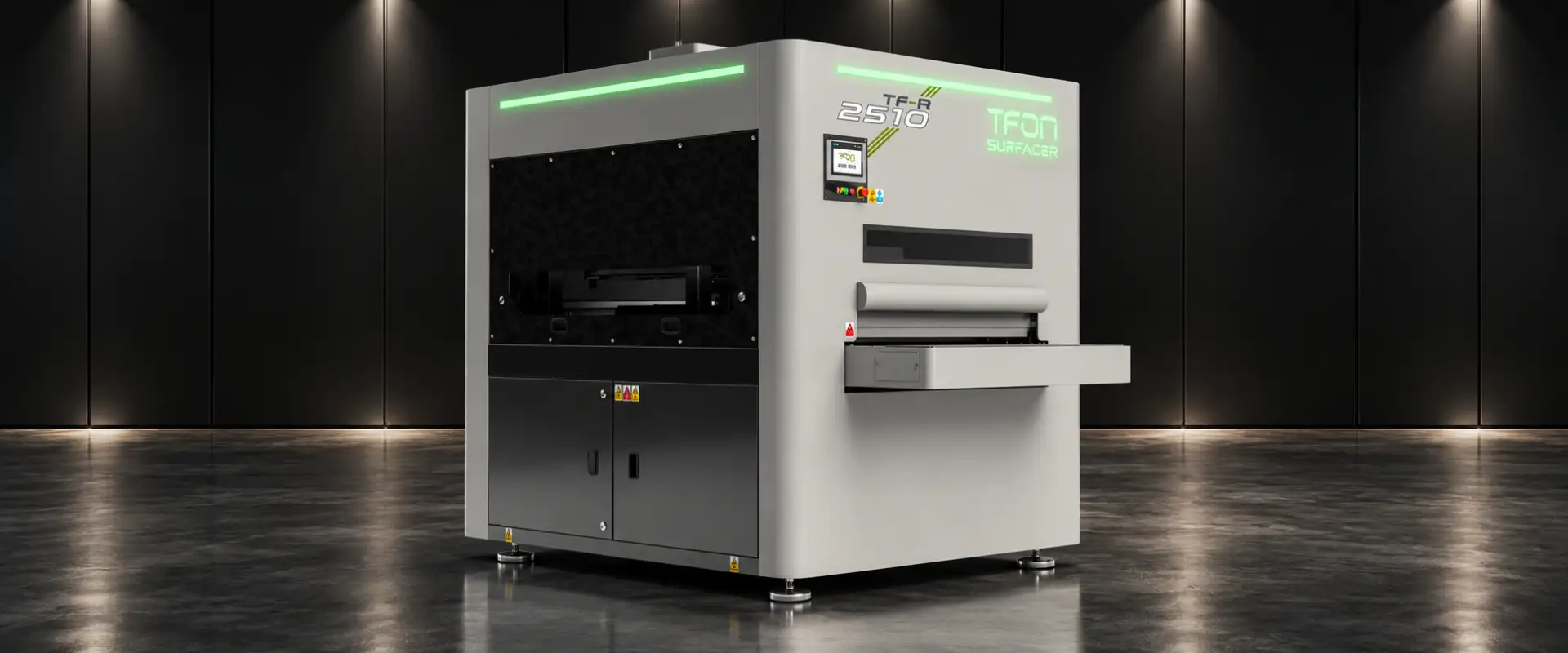
- TFON Surfacer® TF-RB-2510 1,000 mm working width, parts up to 500 kg; belt deburring and edge rounding in one pass Specifications Request a Quote
- TFON Surfacer® TF-RB-3013 1,300 mm working width, parts up to 600 kg; belt deburring and edge rounding in one pass Specifications Request a Quote
- TFON Surfacer® TF-RBC-3013 1,300 mm working width; heavy slag removal, deburring and edge rounding for thermally cut plate Specifications Request a Quote
What Is a Deburring Machine?
A deburring machine removes burrs and treats edges on cut, punched or machined parts without an operator working each edge by hand. For flat sheet metal and plate, it is usually a through-feed machine: a conveyor carries the part under one or more stations, such as an abrasive belt that cuts the burr, rotating brushes or flap wheels that round the edges, and discs that break off slag or oxide.
The phrase covers very different equipment, which is why the question "how much does a deburring machine cost?" has no single answer. Search results for the term list bench-top belt grinders, vibratory tubs, portable edge tools, wide through-feed lines and robotic cells side by side. They solve different problems:
- Bench and portable machines help one operator work one part at a time.
- Vibratory and tumble machines finish batches of small loose parts; the guide on how to deburr sheet metal compares them with other methods.
- Manual deburring machines give the operator a dedicated working platform with holding and changeable discs.
- Through-feed deburring machines process flat parts continuously, with repeatable settings.
- Robotic cells handle three-dimensional parts or deburr at a fixed position in a line.
This guide covers through-feed machines for flat cut parts, the category TFON builds as the Surfacer range, and the manual Lite Surfacer that sits one step below it. The cost of these machines is set by a short list of technical decisions, and each decision should come from the parts you run, not from a catalog. Start with the edge result: the sheet metal deburring page explains why burr removal and edge rounding are specified and inspected as separate results.
What Drives Deburring Machine Cost? 7 Factors
Two machines with the same name can differ widely in price because they are built for different parts. The seven factors below account for most of that difference. The first four define the machine; the last three decide what it costs to run it over its working life.
| Factor | What you decide | How it changes the machine |
|---|---|---|
| 1. Working width | Widest part, or how many parts side by side | Wider belts, drums, brushes and frame; wider consumables |
| 2. Stations | Which edge conditions to treat: burr, sharp edge, slag, oxide, finish | Each station adds drives, tooling and length |
| 3. Part holding | Magnetic, vacuum or both | Vacuum pump and zoning, or magnetic table; holding sets the smallest part |
| 4. Thickness and part weight | Thinnest and thickest part, heaviest plate | Station travel, drive power, conveyor and frame rating |
| 5. Automation and recipes | Manual settings or stored programs, sensors, conveyors | Servo positioning, thickness measurement, barcode recall, handling |
| 6. Consumables | Abrasive types, grits, brush sets, stainless-only sets | Running cost more than purchase cost |
| 7. Service and support | Installation, training, spare parts, remote support | Scope of the offer and uptime over the machine life |
Price questions become easier once each factor has an answer written down. A supplier can then quote the machine you need instead of a generic configuration, and two offers can be compared line by line. The next two sections explain each factor in more detail.
Working Width, Stations and Part Holding
1. Working width
Working width is the widest part the machine accepts. TFON builds Surfacer machines in two widths: the 2510 series for parts up to 1,000 mm wide (about 39 in) and the 3013 series for parts up to 1,300 mm wide (about 51 in). A wider machine costs more to build and uses wider belts and longer brushes. Size it from your widest regular part plus the way you load small parts, several abreast or one at a time. Buying width for a part that appears twice a year rarely pays back.
2. Stations
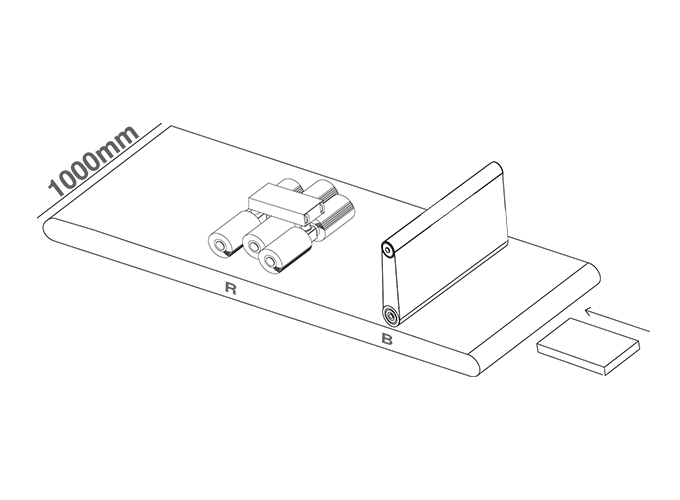
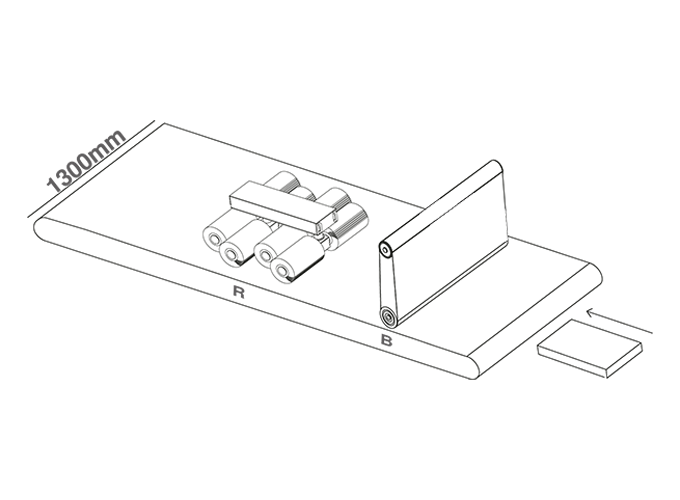
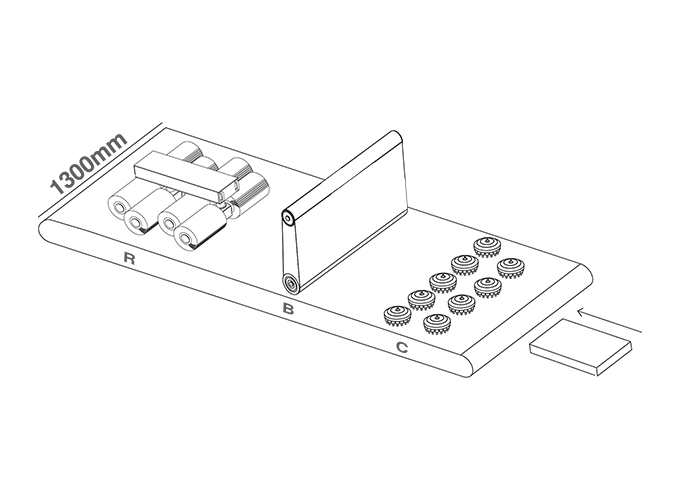
Each station treats one edge condition. On TFON Surfacer machines, B is the abrasive belt for burr removal, R the flap wheel stations for edge rounding and oxide removal, C the heavy deburring station for slag on thermally cut parts, and F a satin finishing station. A two-station machine for punched parts costs less than a three-station machine that also removes heavy slag. Choose stations from the incoming edge and the result the next operation needs: welding, powder coating, assembly or a visible finish.
3. Part holding
Holding keeps parts in place while belts and brushes work on them. A magnetic table holds ferromagnetic steel. Vacuum holding also holds aluminum and non-magnetic stainless steel and depends on the contact area of the part. Surfacer machines offer vacuum and/or magnetic holding, and the published minimum part size of 50 x 50 mm depends on holding method and part geometry. If you run small parts in non-magnetic material, holding is the factor to test first, because it decides whether those parts can go through the machine at all.
These three decisions should come from a part list, not a brochure. List the ten part numbers that make up most of your volume, with material, size and incoming edge, and let that list define width, stations and holding.
Thickness, Automation, Consumables and Service
4. Thickness range and part weight
The machine has to open far enough for the thickest plate and control pressure on the thinnest sheet. Heavy plate also needs a conveyor and frame rated for its weight. TFON Surfacer machines have a published thickness capacity of up to 120 mm, subject to application review, and a maximum part weight of 500 kg (2510 series) or 600 kg (3013 series).
5. Automation and recipes
Automation reduces setup time and operator influence. Options include servo positioning of the stations, recipe storage so the settings for a part number are called up instead of re-entered, automatic thickness measurement, barcode recall of part settings, and infeed and return conveyors that bring parts back to the operator. Each option adds cost. It pays when part numbers change often during a shift or when several operators run the machine.
6. Consumables
Belts and brushes are the running cost that buyers most often underestimate. Their life depends on material, incoming burr, contact settings and duty cycle. As a reference, TFON lists service lives of up to 32 hours for aluminum oxide and zirconium belts, up to 64 hours for ceramic and Scotch belts, up to 80 hours for Cubitron belts and up to 1,500 hours for edge rounding brushes, depending on use. Stainless steel needs its own consumables, separate from those used on carbon steel.
7. Service and support
Downtime can cost more than the difference between two purchase prices. Check who installs and commissions the machine, how operators are trained, where spare parts come from and how quickly remote support responds. TFON describes its installation, operator training and spare parts services separately.
Total Cost of Ownership: Consumables, Energy, Labor and Scrap
The purchase price is only the first line of a deburring machine's cost. Over its life, consumables, labor and the parts it saves or spoils usually matter more. A useful total cost of ownership comparison counts every item below for each offer.
| Cost element | What drives it | What to ask the supplier |
|---|---|---|
| Machine and installation | Width, stations, holding, automation, freight, foundation | What is included: conveyors, dust extraction interface, installation, training |
| Abrasive belts | Burr size, material, grit, belt type, hours per shift | Belt types and grit range; expected life under your conditions |
| Brushes and flap wheels | Edge radius required, contact pressure, material | Brush life, change time, separate sets for stainless |
| Energy and compressed air | Installed power, run hours, vacuum or magnetic holding | Connected load and compressed air requirement |
| Operator time | Loading, unloading, turning parts, setup changes | Setup time per part number; recipe storage |
| Maintenance and spare parts | Duty cycle, dust exposure, wear parts | Wear part list, lead times, remote diagnostics |
| Scrap and rework | Scratched faces, missed holes, inconsistent edges | Trial with your worst parts, documented results |
Cost per part
The number that decides the investment is cost per good part. Add the yearly share of the machine investment, consumables, energy, operator time and maintenance, then divide by the number of good parts per year. Do the same for your current method: hand deburring minutes per part times the loaded labor rate, plus rework and rejects caused by missed burrs.
Three details change the result more than buyers expect:
- Second passes. Surfacer machines process one face per pass. If both faces need treatment, count the turning and the second pass.
- Setup changes. A machine that needs manual adjustment for every part number loses time on mixed batches; recipe storage recovers part of it.
- Upstream quality. Heavy dross from a poorly tuned plasma table shortens belt life. Fixing the cut can lower deburring cost more than any machine option.
Criteria for a Deburring Machine: How to Compare Offers
Buyers often ask which deburring machine is the right one to buy. No machine fits every shop. The right choice is the one that meets your edge requirement on your parts at an acceptable cost per part, and the following criteria decide that, roughly in order of importance:
- Result on your parts. Does a trial on your worst parts meet the drawing: burr removed, edge radius, oxide, face finish? Ask for the trial report with settings and passes.
- Part range. Width, thickness, weight and smallest part, in all the materials you cut.
- Holding. Magnetic, vacuum or both, tested on your smallest and non-magnetic parts.
- Stations. Burr, edge, slag, oxide and finish treated in one pass, or with a second machine or hand step.
- Throughput in finished parts. Include loading, turning and second passes, not conveyor speed alone.
- Setup and repeatability. Recipe storage, thickness measurement and how settings are recalled.
- Consumable cost and availability. Belt and brush sizes, life, supply and change time.
- Service. Installation, training, spare parts, remote support and response time in your country.
- Safety and environment. Guarding, dust extraction interface, noise and the separation of stainless and carbon steel dust and consumables.
Rank each offer against these criteria rather than against brochure claims. The machine comparison table lists published data for all TFON models side by side, and the automatic deburring machine page explains when a fully automated line is justified.
What to Send for a Deburring Machine Quote
A quote is only as good as the information behind it. Sending the following with your inquiry shortens the back-and-forth and gives you an offer for the machine you actually need:
- Material grades and thickness range, including the thinnest and thickest parts.
- Smallest and largest part size, and the heaviest part.
- Cutting method: punching, laser with oxygen or nitrogen, plasma, oxy-fuel or waterjet.
- Photos of both faces of typical parts, with a scale, showing burr, dross and oxide.
- The required result per edge: burr-free, a radius value, oxide-free, a satin finish.
- The next operation: welding, bending, painting, powder coating, assembly.
- Volumes: parts per shift, number of part numbers, batch sizes and how often jobs change.
- Site data: power supply, available compressed air (Surfacer machines need at least 4 bar) and dust extraction.
- Layout: available floor space, whether parts should return to the operator, and any line integration.
- Sample parts for a trial, including the most difficult one.
You can send this directly through the contact form. Keep the same list for every supplier so that offers are comparable.
How to Read TFON Surfacer Model Codes
TFON Surfacer model names encode two of the main cost factors: the stations and the working width. The letters after "TF-" list the stations, and the four digits give the machine body.
- R: edge rounding (flap wheel stations, which also remove oxide)
- B: deburring with an abrasive belt
- C: heavy deburring for slag on thermally cut parts
- F: satin finishing
- 2510: 1,000 mm working width; 3013: 1,300 mm working width
| Model | Stations | What the machine is set up to do |
|---|---|---|
| TF-R-2510 / TF-R-3013 | R | Edge rounding and oxide removal |
| TF-RB-2510 / TF-RB-3013 | R + B | Deburring and edge rounding |
| TF-RBC-2510 / TF-RBC-3013 | R + B + C | Heavy slag removal, deburring and edge rounding |
| TF-RBF-2510 / TF-RBF-3013 | R + B + F | Deburring, edge rounding and satin finishing |
| TF-RF-2510 / TF-RF-3013 | R + F | Edge rounding and satin finishing |
So the TF-RB-2510 is a 1,000 mm machine with a belt and edge rounding stations for punched and laser cut parts, and the TF-RBC-3013 is a 1,300 mm machine that adds a heavy slag station for plasma and oxy-fuel cut plate. The full range, including custom station combinations, is on the deburring and edge rounding machines page.
New, Used or Outsourced Deburring?
A new machine is not the only way to get parts deburred. Two alternatives come up in most investment discussions.
A used machine lowers the purchase cost but shifts risk to you. Before buying, check that the control system is still supported, that spare parts and consumables in the machine's belt and brush sizes are still available, that guarding meets current safety rules, and that the conveyor, holding system and belt oscillation work under load. Ask for service records and run your own parts on it.
Outsourcing to a finishing job shop avoids the investment but adds freight, lead time and handling damage, and it takes the deburring result out of your direct control. It suits irregular or low volumes and peaks.
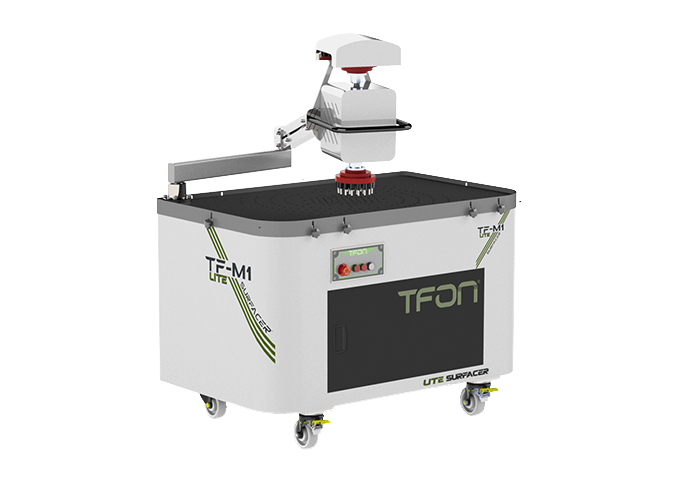
Once volumes are steady, the cost per part calculation above shows where the break-even lies. For low volumes and mixed jobs, a manual machine such as the Lite Surfacer TF-M1 LITE H1 is often the step in between; the guide on deburring tool vs deburring machine explains where it fits.
TFON Machines for This Job
-
TFON Surfacer® TF-RB-2510
1,000 mm working width, parts up to 500 kg; belt deburring and edge rounding in one pass
Specifications Request a Quote -
TFON Surfacer® TF-RB-3013
1,300 mm working width, parts up to 600 kg; belt deburring and edge rounding in one pass
Specifications Request a Quote -
TFON Surfacer® TF-RBC-3013
1,300 mm working width; heavy slag removal, deburring and edge rounding for thermally cut plate
Specifications Request a Quote
Frequently Asked Questions
Which deburring machine is best for sheet metal?
There is no single answer, because the right machine depends on your parts. Compare offers by the result on your worst parts, the width, thickness and material range, part holding for small and non-magnetic parts, the stations needed, finished parts per hour, consumable cost and local service. A documented trial settles most comparisons.
Why do deburring machine prices vary so much?
Because the term covers everything from bench grinders to automated lines. Within through-feed machines, price follows working width, the number and type of stations, part holding, thickness and weight capacity, automation options and the service scope included in the offer.
Can one deburring machine process steel, stainless steel and aluminum?
Yes, if the holding and consumables suit each material. TFON Surfacer machines are specified for steel, aluminum and stainless steel. Non-magnetic parts need vacuum holding, and stainless steel should be processed with its own consumables, separate from those used on carbon steel.
How long do deburring machine consumables last?
It depends on material, burr size, settings and duty cycle. For TFON Surfacer consumables, published service lives are up to 32 hours for aluminum oxide and zirconium belts, up to 64 hours for ceramic and Scotch belts, up to 80 hours for Cubitron belts and up to 1,500 hours for edge rounding brushes.
Is a manual deburring machine cheaper to run than an automatic one?
Not necessarily. A manual machine costs less to buy but needs an operator on every part, and the result depends on that operator. For repeat batches an automatic through-feed machine often has the lower cost per part. Compare both on the same parts and volumes.
Let Us Review Your Part
Share the material, cutting method, part dimensions and the next operation, with photos of both faces. We will recommend the machine and station sequence that fits the part.