

Knowledge Base
Oxygen vs Nitrogen Laser Cutting: Why Cut Edges Oxidize
Oxygen vs nitrogen laser cutting is the choice between a reactive assist gas that burns through carbon steel and an inert gas that simply blows molten metal out of the kerf. Oxygen cuts steel plate fast with little gas but leaves a thin oxide layer on the cut face. Nitrogen leaves a bright, oxide-free edge at a higher gas cost.
TFON Machines for This Job
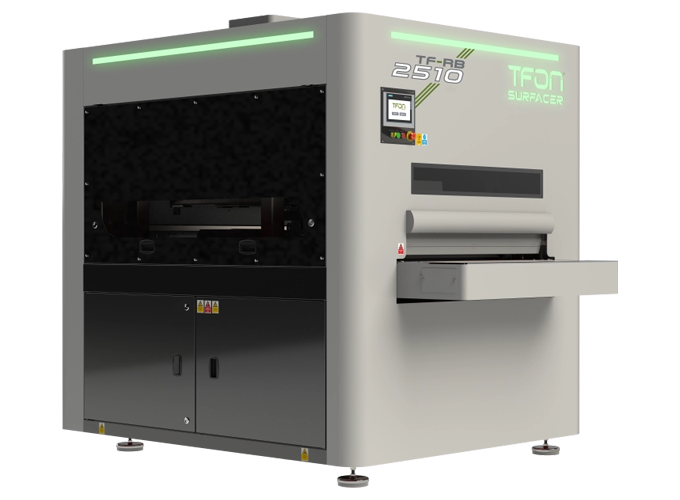
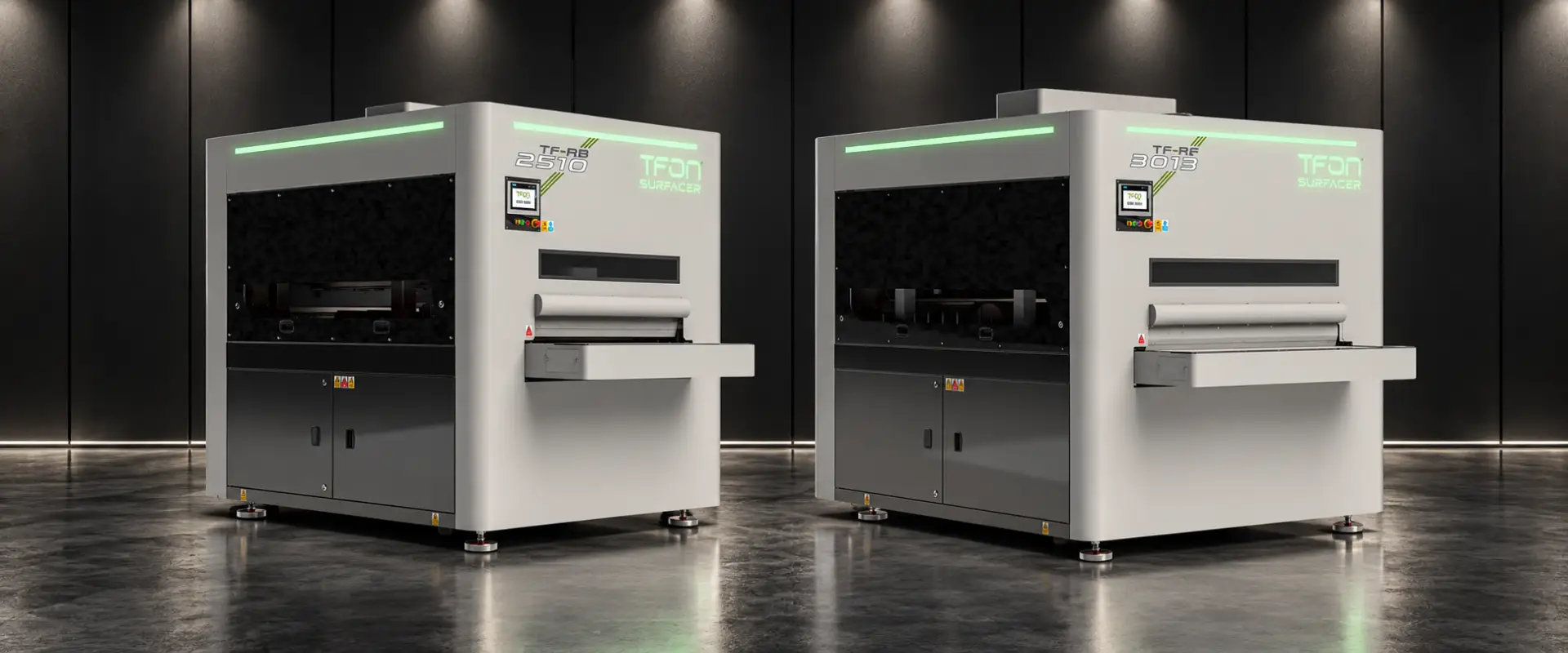
- TFON Surfacer® TF-RB-3013 1,300 mm working width; abrasive belt plus 8 flap wheels (Ø350 mm); takes the oxide removal brush; conveyor 0.6-4.0 m/min Specifications Request a Quote
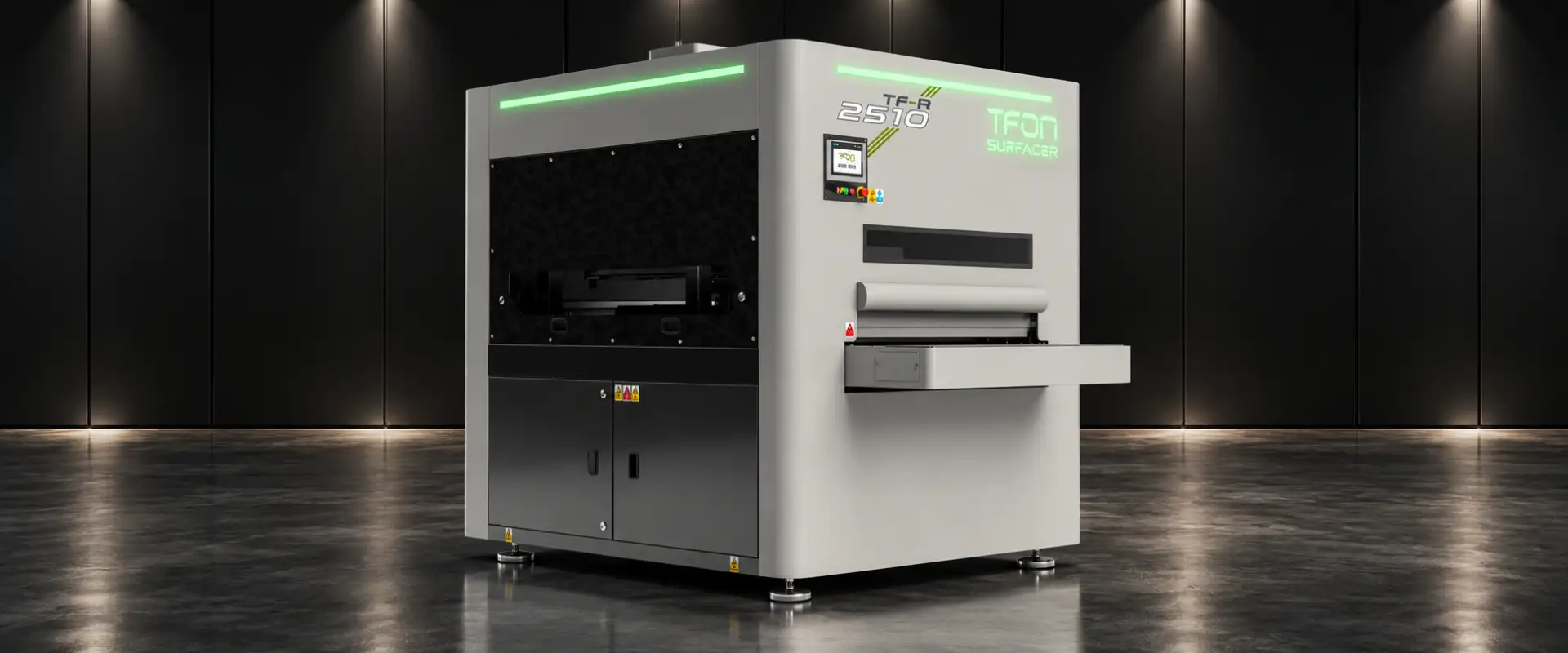
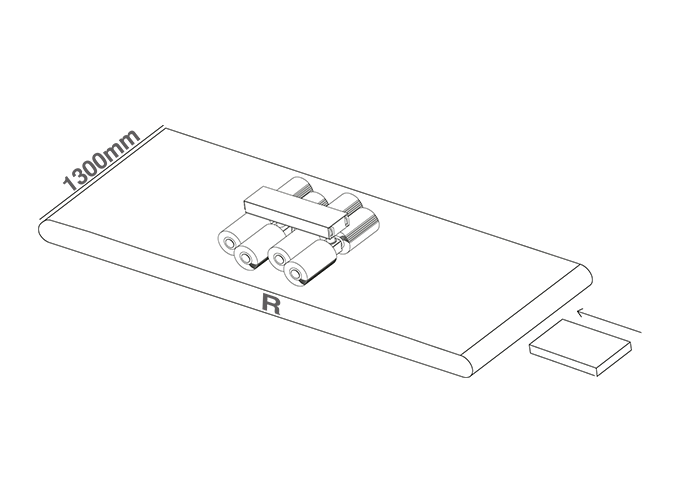
- TFON Surfacer® TF-R-3013 1,300 mm working width; 8 flap wheels (Ø350 mm, 300/960 rpm) for edge rounding and oxide brushing; vacuum and/or magnetic holding Specifications Request a Quote
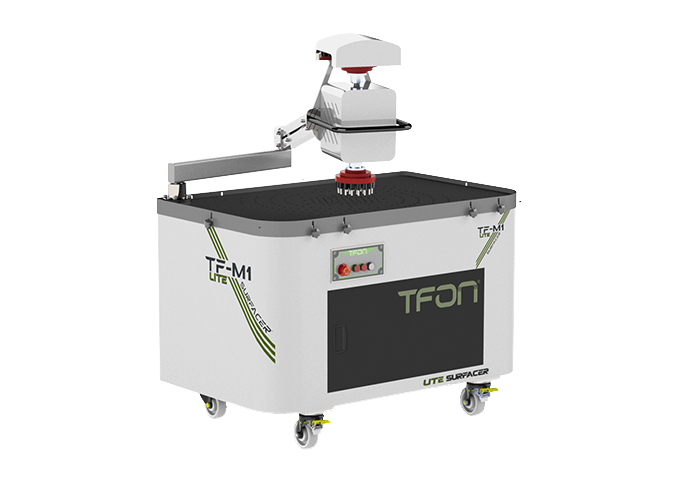
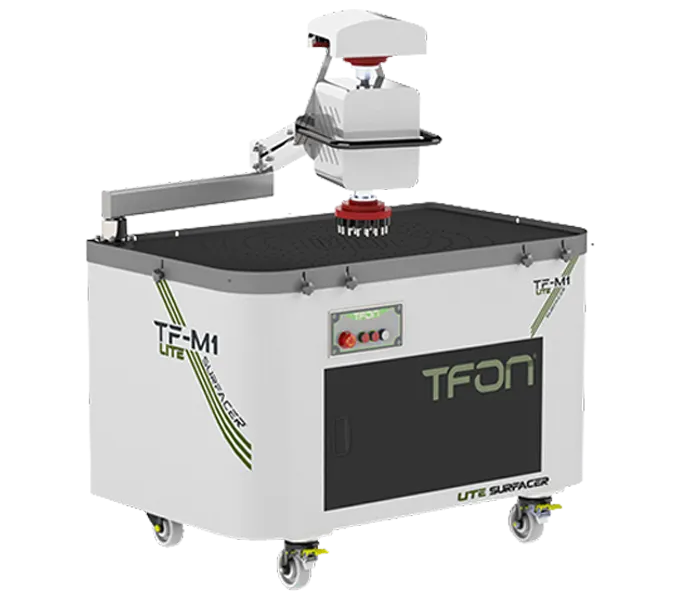
- TFON Lite Surfacer® TF-M1 LITE H2 Manual machine with 2 heads; 800 mm table width; 3-200 mm part thickness; oxide removal disc available Specifications Request a Quote
Which Gases Are Used in Laser Cutting?
A laser cutter blows an assist gas through the nozzle, coaxial with the beam. The gas has three jobs. It drives molten metal out of the kerf, it keeps spatter away from the focusing optics, and it either reacts with the hot metal or shields it from the surrounding air. Which of the last two happens depends on the gas, and that choice decides what the cut edge looks like when the part comes off the table.
Three assist gases cover nearly all sheet and plate work:
- Oxygen (O2) reacts with carbon steel and adds heat to the cut. It is the traditional gas for mild steel, especially thicker plate.
- Nitrogen (N2) is inert. It removes the melt without reacting with it and leaves a bright edge on stainless steel, aluminum and mild steel.
- Compressed air is roughly 78 percent nitrogen and 21 percent oxygen. It is a lower-cost option for thin and medium sheet when the edge condition is not critical.
The gases also run at very different settings. Oxygen cutting works at low pressure and low flow, because the chemical reaction does much of the work. Nitrogen cutting needs high pressure and high flow to push the melt out mechanically, so gas supply (bulk tank, cylinder packs or an on-site generator) becomes a real part of the cost per part. Some fiber laser systems also run nitrogen-oxygen mixtures to balance edge condition against speed.
| Assist gas | What it does in the kerf | Typical materials | Cut edge | Main cost driver |
|---|---|---|---|---|
| Oxygen | Burns iron in an exothermic reaction; adds heat to the laser energy | Carbon steel, especially thicker plate | Dark gray to black oxide layer on the cut face | Low gas use; slower than nitrogen on thin sheet with high-power fiber lasers |
| Nitrogen | Inert; shears the melt out and keeps air away from the hot edge | Stainless steel, aluminum, mild steel where the edge must be oxide-free | Bright, metallic, no oxide film | High pressure and high flow |
| Compressed air | Mostly nitrogen, with enough oxygen to oxidize the edge partly | Thin to medium sheet with non-critical edges | Gray, partially oxidized | Compressor, dryer and filtration |
Gas purity matters as much as gas type. Nitrogen that picks up oxygen or moisture in the supply line leaves a yellow or blue tint on stainless steel. Compressed air has to be dry, clean and oil-free before it reaches the nozzle.
Oxygen Laser Cutting and the Oxide Layer
Why oxygen cuts carbon steel fast
With oxygen as the assist gas, the laser heats the steel to its ignition temperature and the oxygen stream burns the iron. The reaction is exothermic: it releases heat that adds to the energy of the beam. That is why a laser of modest power can cut thick carbon steel plate with oxygen, and why oxygen cutting uses so little gas. The product of the reaction is molten iron oxide, which the gas jet drives down and out of the kerf.
What the oxide layer is
Not all of that oxide leaves the kerf. A thin film solidifies on the cut face and stays fused to it. On mild steel it shows as a dark gray to black, slightly glossy edge, very different from the bright metal of a nitrogen cut. The film is iron oxide, not rust, and when fresh it looks tight and hard. The trouble is that it is a separate layer with properties of its own. Under impact or bending it can crack and let go of the steel underneath, and anything bonded to it goes with it.
Where to look for it
Laser oxide sits on the vertical cut face, not on the top or bottom surface of the sheet. That includes every hole wall, slot and inner contour. A heavily perforated panel can carry more oxidized edge area than a plain blank several times its size. You may also see heat tint on the top surface right next to the kerf, but that is not where the adhesion problem starts. When you inspect for oxide, look at the edge itself and inside the holes.
Oxygen on stainless steel and aluminum
Shops rarely cut stainless steel or aluminum with oxygen. On stainless, oxygen leaves a dark, oxidized edge that no longer has the corrosion resistance of the parent metal, so the edge needs cleaning before the part is welded or goes into service. Aluminum is normally cut with nitrogen or air.
Nitrogen and Compressed Air Cutting
Nitrogen: an oxide-free edge
Nitrogen does not react with the melt. The beam supplies all the energy, and the high-pressure gas jet shears molten metal out of the kerf while keeping air away from the hot edge. The result is a bright, metallic cut face with no oxide film. On stainless steel the edge keeps its corrosion resistance. On aluminum, nitrogen or air are the usual choices. On mild steel, shops switch to nitrogen when parts go straight to powder coating or robotic welding.
The trade-offs are gas cost and thickness. Nitrogen consumption is high, and because there is no reaction heat, thicker sections need more laser power and cut slower. On thicker plate, nitrogen cuts are also more prone to dross hanging on the bottom edge. On thin sheet with a high-power fiber laser, the picture reverses: nitrogen often cuts faster than oxygen, which is one reason nitrogen has spread into mild steel work.
Compressed air: the middle option
Air is mostly nitrogen but carries about 21 percent oxygen. That share is enough to leave a thin, partial oxide and a grayer edge, less than a full oxygen cut but more than a clean nitrogen cut. Air is attractive because the shop makes it on site with a compressor, dryer and filters. It works well on thin to medium sheet where the edge is not visible and is not welded to a strict specification.
Two cautions apply. The air must be dry, clean and free of oil, because moisture and oil mist reach the optics and the cut. And an air-cut edge on mild steel is still an oxidized edge. If the part goes to powder coating, check it the same way you would check an oxygen-cut part.
What changes on the shop floor
The gas choice moves work around the shop, not just cost. Oxygen keeps gas cost low but can add an oxide removal step before coating or welding. Nitrogen raises gas cost but can take that step out. Air sits between the two. The right answer depends on what happens to the part next, which is covered at the end of this guide.
Why Does the Oxide Layer Cause Paint and Weld Problems?
Powder coat and paint adhesion
Coating lines prepare steel with cleaning and a conversion coating such as iron or zinc phosphate. That chemistry is designed to react with bare steel. Typical cleaners do not remove the hard oxide on a laser-cut edge, so the conversion coating does not form there, and the powder or paint ends up bonded to the oxide instead of to the steel.
The part usually looks fine coming off the line. The failure appears later. A part is knocked during assembly or shipping, the oxide separates from the steel, and a chip of coating comes away with it. The bare edge is now exposed, moisture works under the surrounding film, and rust creeps in from the edge. By then the part is often at the customer.
A second, separate edge problem is film thickness. Powder and liquid coatings pull away from a sharp corner as they flow and cure, leaving a thin film exactly where the part gets handled and hit. Rounding the edge improves coverage, which is why edge rounding is often specified together with oxide removal. Neither step guarantees coating performance on its own. Confirm it with the coating system's own tests, for example tape adhesion to ASTM D3359 or impact testing, run on cut edges and not only on flat faces.
Welding
AWS D1.1 requires surfaces to be welded to be free of loose or thick scale, slag, rust, moisture, grease and other material that would prevent proper welding. A thin, tight laser oxide on mild steel is often welded over without trouble in manual MIG work. It becomes a concern when the process is less forgiving: root passes, TIG and laser welding, robotic cells that depend on consistent wetting, and joints with strict porosity or inclusion limits. Oxide that flakes into the weld pool can cause porosity, inclusions and an irregular bead.
On stainless steel the concern is corrosion as well as weld quality, because an oxidized edge welded as cut carries the damaged surface into the joint area. For beveled plate joints, the edge preparation itself is covered in our guide to weld bevel and groove types.
How Is Laser Oxide Removed?
There are two routes. You can prevent the oxide by cutting with nitrogen, or remove it after cutting. Removal is mechanical or chemical, and the right method depends on part size, volume, whether inner contours carry oxide, and what the rest of the surface can tolerate.
| Method | Reaches the cut face and inner contours | Consistency | Effect on the rest of the part | Typical fit |
|---|---|---|---|---|
| Hand grinding or flap disc | Outer edges; small contours only with small tools | Depends on the operator | Can change edge geometry and mark the face | Low volumes, repairs |
| Hand wire brushing | Outer edges | Depends on the operator; slow | Little effect on faces | Occasional parts |
| Abrasive blasting | All exposed surfaces | Good once parameters are set | Changes the texture of every surface | Parts that are blasted anyway |
| Chemical pickling or oxide remover | All wetted surfaces, including holes | Depends on bath control | Needs rinsing, handling and waste treatment | Coating lines with chemical pretreatment |
| Through-feed machine with oxide removal brushes | Cut faces and inner contours within brush reach | Repeatable at set parameters | Works on edges; faces see light brushing | Batches of flat laser-cut parts |
| Cutting with nitrogen instead | Prevents oxide on every edge | High | None; higher gas cost | New jobs where the edge must be oxide-free |
Machine brushing with oxide removal brushes
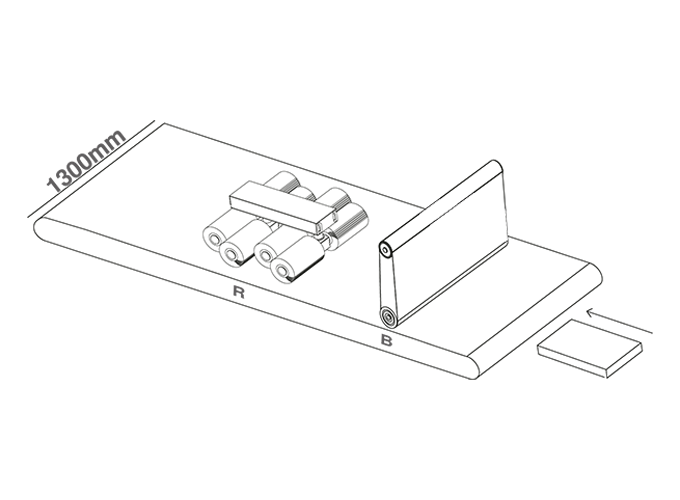
For batches of flat parts, a through-feed machine carries parts on a conveyor under rotating wire brushes. The flexible filaments wipe over the edge and down the cut face instead of touching only the top surface. Contact along the depth of the cut face is what removes the oxide, so small holes and thick plate need checking after the first trial. TFON's process page on laser oxide removal covers that inspection work in detail.
The TFON Oxide Removal Brush has a flexible wire structure built to clean oxidation from edge surfaces. It comes in Ø300 mm and Ø350 mm sizes with a Ø74.5 mm bore and has a service life of up to 250 hours. It runs on every TFON Surfacer model, for example the TF-RB-3013 deburring machine, which pairs an abrasive belt with 8 flap wheels on a 1,300 mm working width. For manual work, the TF-M1 LITE H2 manual deburring machine uses an Oxide Removal Disc with a special wire structure. The full range is listed under deburring discs and brushes.
Surfacer machines work on the top face of the part in one pass. If the edge must be cleaned from both sides, the part is turned over and run a second time.
Oxide, Burr and Dross: Three Separate Checks
A laser-cut part can leave the machine with several edge conditions at once. They often get lumped together as edge cleanup, but each one has its own cause and its own check.
- Oxide is a layer on the cut face, left by oxygen or air in the kerf.
- Burr is material projecting from the edge, usually on the bottom side of a laser cut. Our guide explains what a burr is and how it forms.
- Dross is resolidified molten metal clinging to the bottom edge. It is heavier on thick plate and on plasma and oxy-fuel cut parts; see slag vs dross for the difference between the two terms.
One pass through a machine can deal with more than one condition. An abrasive belt takes the burr down, flap wheels break or round the edge, and oxide brushes clean the cut face. But running a part through the machine is not proof that every condition is gone. TFON recommends recording four items separately: projecting burr, cut-edge oxide including hole walls, oil or surface contamination, and the cosmetic finish the customer expects.
Oil and residue matter because they hide oxide during inspection and interfere with coating. Parts cut from oiled sheet may need cleaning in the pretreatment line whatever gas was used. On visible stainless parts, the cosmetic finish on the faces is a requirement of its own. A directional satin pattern is a surface finishing question, covered in our guide to types of metal finishes.
If you run carbon steel and stainless steel through the same machine, keep the consumables separate. Brushes and belts that have worked on carbon steel carry iron particles, and those particles leave rust spots on stainless surfaces later.
A practical inspection sequence
- Confirm the assist gas from the cutting program.
- Inspect the cut face and hole walls on a few parts under good light.
- Check burr height separately; oxide removal and deburring are different results.
- Run trial parts at a set conveyor speed and brush setting, then inspect the same spots again.
- Release production only after the coating or welding test passes on cut edges.
Oxygen or Nitrogen: How to Decide for Your Parts
Start from the next operation, not from the laser. The question is what the edge has to do after cutting, and what it costs to get it there.
| Next operation | Oxygen-cut mild steel edge | Nitrogen-cut edge |
|---|---|---|
| Powder coating or wet paint | Remove the oxide, or prove adhesion on cut edges with the coating system's tests | Normal pretreatment; still check coverage on sharp edges |
| Manual MIG welding of mild steel | Often welded as cut if the oxide is thin and tight; clean where the WPS requires it | No oxide; standard joint cleaning |
| TIG, laser or robotic welding | Clean the joint area before welding | Oxide-free; standard joint cleaning |
| Visible stainless steel parts | Not used; the edge turns dark | Bright edge; watch for tint from impure gas |
| Internal parts left bare or oiled | Oxide is usually acceptable | No oxide concern; higher gas cost |
Four more factors round out the decision:
- Material and thickness. Oxygen still makes sense on thick carbon steel plate. On thin sheet, nitrogen may be faster as well as cleaner.
- Volume and gas cost. High nitrogen use adds up across shifts. Compare it with the labor and consumable cost of an oxide removal step.
- Equipment you already have. A shop with a brushing line can keep cutting with oxygen and clean the edges in the same pass that removes burrs.
- Cost of a failure. A coating that flakes at the customer costs far more than cleaning the edge in-house.
A common pattern is a split: nitrogen for stainless, aluminum and thin mild steel going to coating; oxygen for thick plate; and an oxide removal step for oxygen-cut parts that get coated. The laser-cut and punched parts page shows how TFON machines handle this edge work, and the deburring and edge rounding machines range lists working widths and stations for each model.
TFON Machines for This Job
-
TFON Surfacer® TF-RB-3013
1,300 mm working width; abrasive belt plus 8 flap wheels (Ø350 mm); takes the oxide removal brush; conveyor 0.6-4.0 m/min
Specifications Request a Quote -
TFON Surfacer® TF-R-3013
1,300 mm working width; 8 flap wheels (Ø350 mm, 300/960 rpm) for edge rounding and oxide brushing; vacuum and/or magnetic holding
Specifications Request a Quote -
TFON Lite Surfacer® TF-M1 LITE H2
Manual machine with 2 heads; 800 mm table width; 3-200 mm part thickness; oxide removal disc available
Specifications Request a Quote
Frequently Asked Questions
Is nitrogen or oxygen better for laser cutting?
Neither gas suits every job. Oxygen cuts carbon steel, especially thicker plate, with less laser power and low gas use, but it leaves an oxide layer on the cut face. Nitrogen gives bright, oxide-free edges on stainless steel, aluminum and mild steel at a higher gas cost. The next operation, such as powder coating or welding, usually decides.
Why is my laser cut edge black?
A black or dark gray cut face on carbon steel usually means the part was cut with oxygen as the assist gas. The oxygen burns iron in the kerf and leaves a thin iron oxide film fused to the edge. On stainless steel, a dark edge points to oxygen or air in the kerf, or to nitrogen contaminated with oxygen or moisture.
Can you powder coat laser cut steel without removing the oxide?
Sometimes, but it is a risk. Standard pretreatment does not reliably remove laser oxide, so the powder bonds to the oxide instead of the steel. If the oxide separates, the coating chips off with it. Remove the oxide, or confirm adhesion on cut edges with the coating system's own tests before releasing production.
Does compressed air cutting leave an oxide layer?
Yes, to a degree. Compressed air is about 21 percent oxygen, so air-cut edges usually show a thin, partial oxide and a grayer color than nitrogen-cut edges. On thin and medium sheet with non-critical edges this is often accepted. Check coated or welded parts the same way you would check oxygen-cut parts.
How do you remove oxide from laser cut edges?
Oxide is removed mechanically or chemically. Mechanical options are hand grinding, wire brushing, abrasive blasting and through-feed machines with wire oxide removal brushes. Chemical options are pickling or oxide removers in the pretreatment line. For batches of flat parts, machine brushing gives repeatable results on outer edges and on inner contours within brush reach.
Let Us Review Your Part
Share the material, cutting method, part dimensions and the next operation, with photos of both faces. We will recommend the machine and station sequence that fits the part.