


Knowledge Base
Types of Metal Finishes: A Guide for Sheet Metal Parts
Metal finishes are the final surface conditions of a metal part, produced either by working the surface itself (grinding, brushing, polishing, blasting, deburring) or by adding a coating such as paint, powder or plating. On sheet metal parts, the mechanical finish sets the appearance, the edge condition and how well a later coating holds.
TFON Machines for This Job
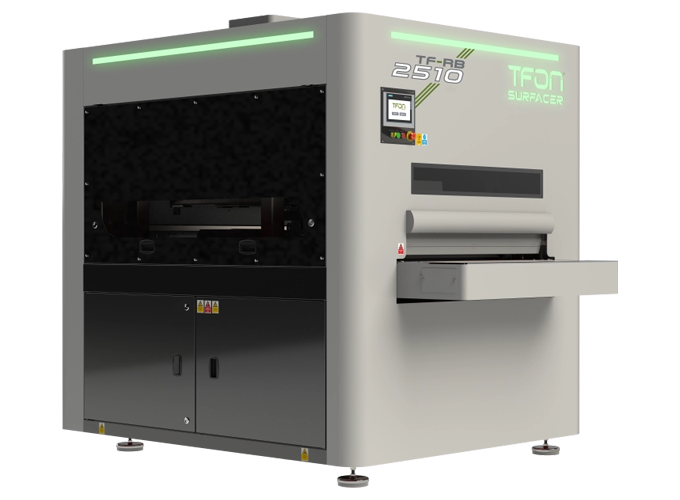
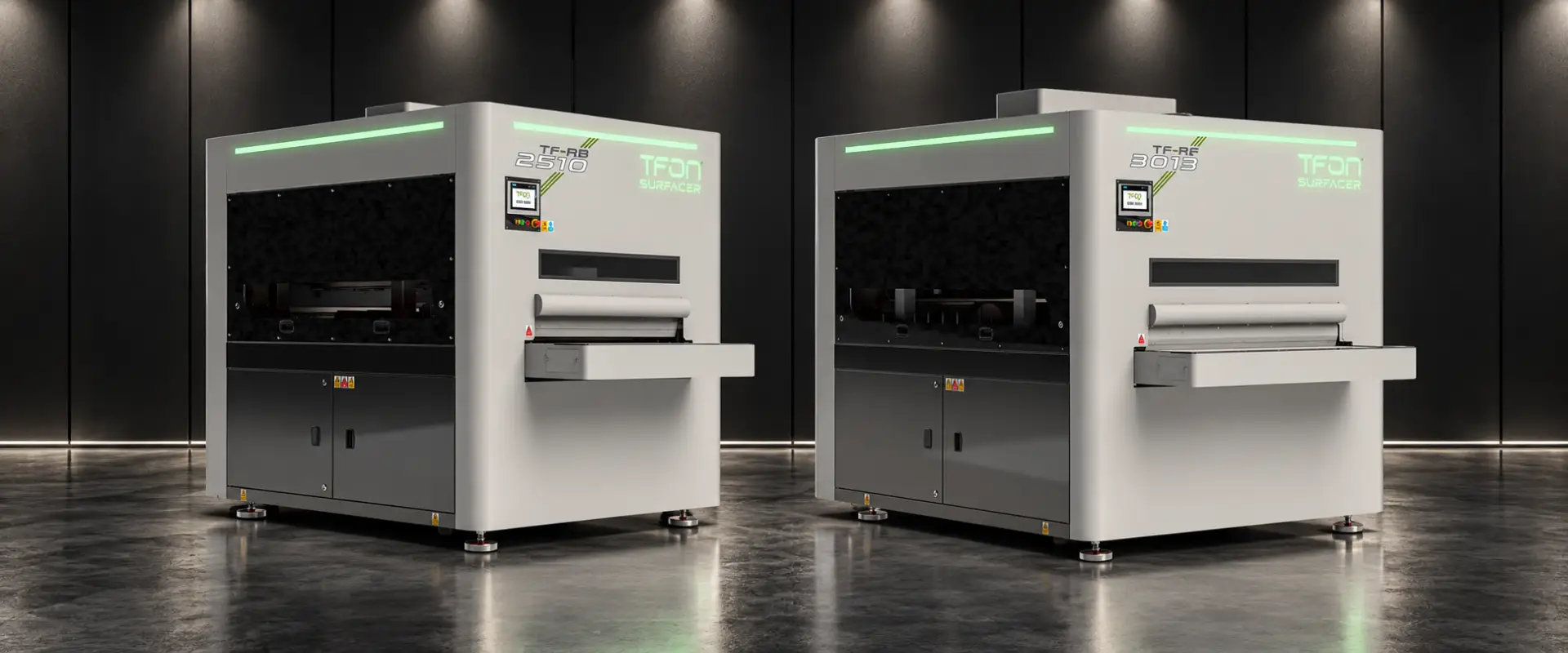
- TFON Surfacer® TF-RF-3013 Surface finishing machine; 1,300 mm working width; abrasive belt plus 8 flap wheels (Ø350 mm); conveyor 0.6-4.0 m/min Specifications Request a Quote
- TFON Surfacer® TF-RBF-3013 Deburring and finishing machine; 1,300 mm working width; deburring and satin finish in one pass Specifications Request a Quote
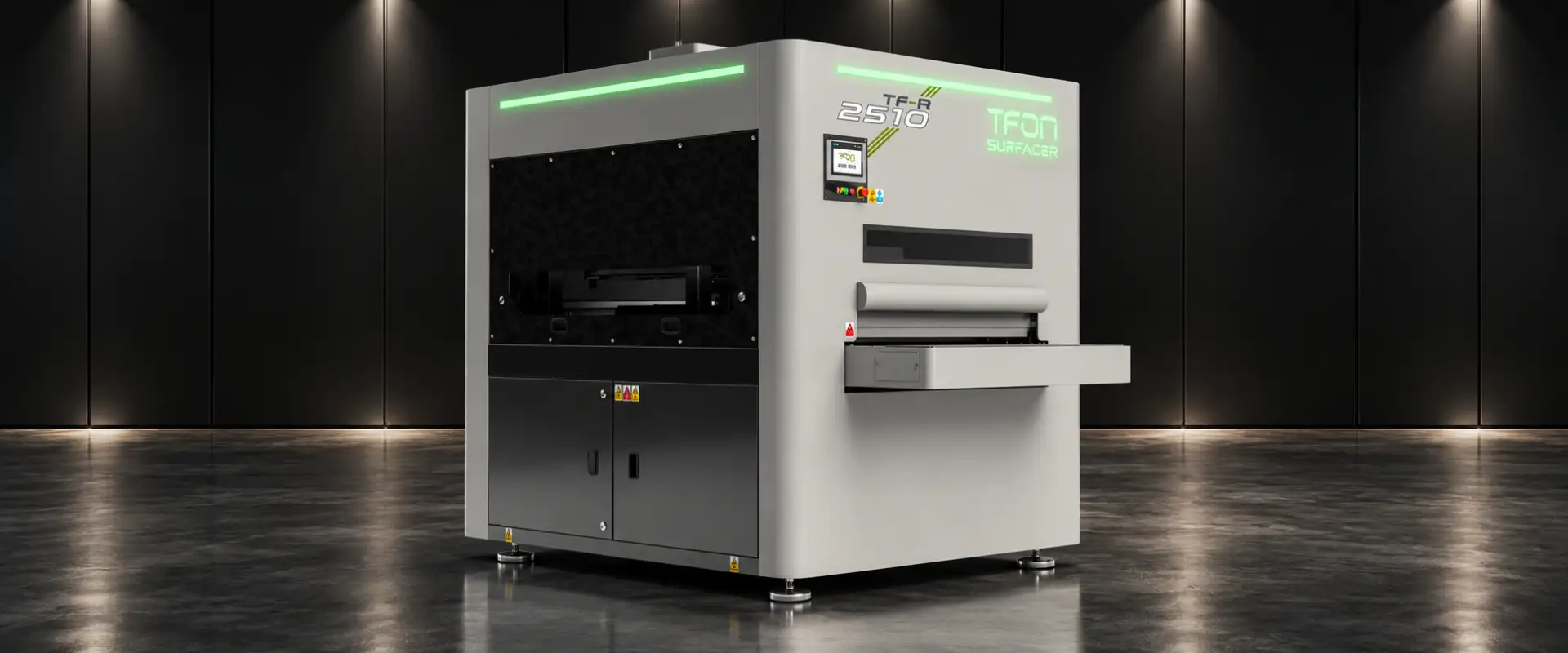
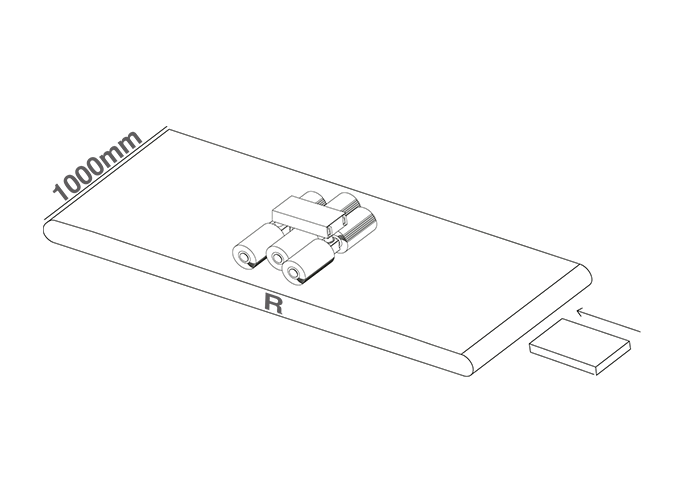
- TFON Surfacer® TF-R-2510 Edge rounding machine; 1,000 mm working width; 6 flap wheels (Ø300 mm, 300/960 rpm) Specifications Request a Quote
What Are Metal Finishes?
A metal finish is the final surface condition of a part: what it looks like, how it feels, how rough it measures and what state its edges are in. Finishes fall into two families. Mechanical finishes change the metal surface itself by removing or moving material with abrasives, brushes or media. Coatings add a separate layer on top of the metal.
The main types of metal finishes on sheet metal parts are:
- Mill finish: the surface as it comes from the rolling mill.
- Ground finish: a coarse, directional abrasive finish that removes scale, defects or weld reinforcement.
- Brushed or satin finish: a finer directional finish with a uniform grain and soft sheen.
- Polished and mirror finish: reflective finishes built up through progressively finer abrasives and buffing.
- Blasted finish: a non-directional matte surface from bead, shot or grit blasting.
- Tumbled or vibratory finish: small parts finished in a media bath, edges rounded all around.
- Deburred finish: burrs removed and sharp edges broken.
- Edge-rounded finish: edges given a defined radius, usually before coating.
Coating finishes include paint, powder coating, hot-dip galvanizing, zinc and chrome plating, anodizing on aluminum, and chemical treatments such as passivation and conversion coatings. These processes are outside TFON's scope, and this guide does not cover them in depth. They do share one dependency with everything below: a coating only performs as well as the surface under it. Burrs, sharp edges and laser oxide under a coating are where adhesion and coverage problems start.
This guide concentrates on the mechanical finishes produced on flat sheet metal parts: how each one is made, how it is specified and where it is used. For the roughness side of the subject, see our guide to surface roughness Ra and Rz.
Metal Finish Types Compared
The table sets the mechanical finishes side by side. Directional finishes have a visible grain, so their appearance changes with viewing angle and with the orientation of the part.
| Finish | How it is produced | Appearance | Directional? | Typical uses |
|---|---|---|---|---|
| Mill finish | Hot or cold rolling at the mill; stainless often annealed and pickled | From dull gray with scale (hot rolled) to smooth and moderately reflective (cold rolled) | Varies | Parts that are painted, coated or hidden |
| Ground | Coarse abrasive belts or wheels | Visible, coarse scratch pattern; low reflectivity | Yes | Scale and defect removal, weld blending, preparation for finer finishes |
| Brushed / satin | Finer abrasive belts, then non-woven abrasives | Uniform fine grain, soft sheen | Yes | Visible stainless panels, enclosures, food and kitchen equipment, architectural parts |
| Polished / mirror | Successively finer abrasives, then buffing | Reflective to mirror-like | Faint lines to none | Decorative and architectural parts |
| Blasted | Glass bead, shot or grit propelled at the surface | Uniform matte | No | Cosmetic matte parts, coating preparation, scale removal |
| Tumbled / vibratory | Parts and media in a vibrating or rotating bowl | Uniform, low sheen; edges rounded all around | No | Small parts in bulk |
| Deburred | Abrasive belts, discs or brushes on the edge | Burr removed, sharp edge broken | Depends on the tool | Parts handled by people; parts going to bending, welding or assembly |
| Edge-rounded | Rotating flap brushes or edge rounding discs | Defined radius on the edges | Not applicable | Parts going to powder coating or paint; safety-critical edges |
Real parts often combine several of these. A stainless enclosure panel, for example, might be deburred and edge-rounded, then given a satin finish on its visible face, all in the same pass through a through-feed machine.
Mill Finish: The Starting Surface
Every finish starts from what the mill delivered, and the starting surface decides how much work the finish takes.
- Hot-rolled steel carries mill scale, a dark oxide from rolling at high temperature. Pickled and oiled material has the scale removed chemically.
- Cold-rolled steel is smoother and more uniform, ready for painting or coating after cleaning.
- Stainless steel mill finishes are defined in ASTM A480 and EN 10088-2. In ASTM A480, No. 1 is hot-rolled, annealed and descaled; 2D is a smooth, nonreflective cold-rolled finish; 2B is a smooth, moderately reflective cold-rolled finish made with a final light pass on polished rolls; and bright annealed (BA) is a bright, reflective cold-rolled finish annealed in a protective atmosphere.
- Aluminum mill finish is the as-rolled surface, often with visible rolling lines.
Before choosing a finishing sequence, look at the incoming sheet as well as the drawing. Handling scratches, roll marks, protective film residue and scale all have to be taken out by the first abrasive stage. A 2B stainless sheet can go straight to a satin finish with a fine sequence. A scratched sheet needs a coarser first stage, and every later stage has to remove the marks of the one before. As TFON's finishing guidance puts it, a fine finishing stage does not automatically remove deeper scratches left earlier in production.
Ground Finish
A ground finish is the coarsest of the directional mechanical finishes. Coarse abrasive belts or wheels cut a visible scratch pattern into the surface while they remove scale, rolling defects, weld reinforcement or deep scratches. The result has low reflectivity and an obvious grain.
EN 10088-2, the European standard for stainless sheet and strip, lists ground finishes under the codes 1G (hot rolled) and 2G (cold rolled). The standard describes them as unidirectional in texture and not very reflective, and it allows the grade of grit or the surface roughness to be specified. Beyond that, the look of a ground finish is agreed between buyer and seller.
Where it is used
- As a functional surface on structural and industrial parts where appearance is secondary.
- To blend welds flush on visible parts before a finer finish.
- As the first stage of a sequence that ends in a brushed or satin finish.
- To remove scale or defects before coating.
How it is produced on sheet parts
On flat parts, grinding is done with wide abrasive belts in a through-feed machine or by hand with belt sanders and flap discs. Belt grain type sets how fast the belt cuts and how long it lasts. TFON supplies abrasive belts in aluminum oxide, zirconium and ceramic in grits 40-400, and Cubitron belts in grits 24-400, in widths from 680 mm to 1,630 mm. On stainless steel, keep the heat down to avoid discoloration, and never use belts that have run on carbon steel.
Brushed and Satin Finishes
Brushed and satin finishes are finer directional finishes with a uniform grain and a soft sheen. The names are used loosely. Brushed usually means a visible line pattern; satin usually means a finer, softer grain with less contrast; hairline is used for long, continuous, very uniform lines; and grained is a general shop term. In practice two suppliers can deliver different surfaces under the same name.
What the standards say
ASTM A480 describes No. 3 and No. 4 as linearly textured finishes that may be produced by mechanical polishing or rolling. It gives average surface roughness (Ra) of generally up to 40 µin for No. 3 and up to 25 µin (about 0.64 µm) for No. 4, and notes that measurements differ between instruments, laboratories and operators and that the two can overlap. No. 6 is a dull satin finish, typically made by Tampico brushing a No. 4 finish. EN 10088-2 lists 2J, brushed or dull polished, as smoother than ground and unidirectional, and 2K, satin polish, as a J-type finish with extra requirements for corrosion resistance, including a transverse Ra below 0.5 µm. Neither standard names a specific grit.
Grain direction
Because the grain is directional, the same finish looks different when a part is rotated. Parts that sit side by side in an assembly must have their grain running the same way, and the drawing should say which way that is, relative to a fixed edge or feature. Roughness also reads higher across the grain than along it.
How it is produced
A typical sequence is an abrasive belt to set a uniform scratch pattern, followed by non-woven abrasive belts to soften and even it out. TFON's Scotch non-woven belts come in coarse, medium, fine and very fine grades. The TF-RF-3013 surface finishing machine produces this kind of finish on parts up to 1,300 mm wide.
Stainless Steel Finish Designations: ASTM A480 and EN 10088-2
US buyers order stainless finishes by ASTM A480 number. European mills and buyers use the EN 10088-2 codes, where the first digit means hot rolled (1) or cold rolled (2). The two systems were written separately, and there is no official one-to-one equivalence, so match by description and sample rather than by assuming a cross-reference.
| Standard | Designation | Description in the standard |
|---|---|---|
| ASTM A480 | No. 1 | Hot-rolled, annealed and descaled; dull, nonreflective |
| ASTM A480 | No. 2D | Cold-rolled, dull finish; nondirectional |
| ASTM A480 | No. 2B | Cold-rolled, bright finish; moderately reflective |
| ASTM A480 | No. 3 | Intermediate polished finish; linear texture; Ra generally up to 40 µin |
| ASTM A480 | No. 4 | General purpose polished finish; linear texture; Ra generally up to 25 µin |
| ASTM A480 | No. 6 | Dull satin finish, Tampico brushed |
| ASTM A480 | No. 7 | High luster finish; grit lines not removed |
| ASTM A480 | No. 8 | Mirror finish; faint polish lines may remain |
| EN 10088-2 | 2G | Ground; grit or roughness can be specified; unidirectional, not very reflective |
| EN 10088-2 | 2J | Brushed or dull polished; smoother than ground; unidirectional |
| EN 10088-2 | 2K | Satin polish; transverse Ra below 0.5 µm |
| EN 10088-2 | 2P | Bright polished; non-directional, reflective, high image clarity |
Both standards say that within a finish description the surface can vary, and that details such as grit or roughness may need to be agreed between supplier and purchaser. ASTM A480 treats architectural finishes, sometimes called No. 5, as a separate category negotiated between buyer and seller. For a finish that must match across batches or suppliers, the designation alone is not enough: add a roughness limit, a direction and a reference sample.
Polished and Mirror Finishes
Polished finishes continue where satin stops. ASTM A480 describes No. 7 as a high luster finish produced by buffing a finely ground surface without removing the grit lines, and No. 8 as a highly reflective, smooth finish typically produced by polishing with successively finer abrasives and then buffing, with very faint polish lines sometimes still visible. EN 10088-2 lists 2P, bright polished, as non-directional and reflective with a high degree of image clarity.
Mirror finishes are built in many stages, and each one must remove the scratches of the last. The final stages use buffing compounds on cloth wheels rather than coated abrasives. The work is usually done on sheet before fabrication or on finished parts by specialist polishers, and it is separate from deburring and satin finishing on a through-feed line.
Two practical points for fabricators:
- A mirror surface shows every handling mark, weld and fingerprint. Order mirror sheet with protective film and plan fabrication so the film stays on as long as possible.
- Deburring and edge rounding of mirror-finished parts must not touch the visible face. Protect it, or finish the edges before the final polish.
Blasted and Tumbled Finishes
Blasted and tumbled finishes are non-directional. They look the same from every angle, which makes them easy to match across parts.
Blasted finish
Blasting propels media at the surface: glass bead for a fine satin matte, steel shot or grit for a rougher texture and scale removal, and other media for special effects. The finish is uniform and hides small scratches well. Blasting also serves as coating preparation, because it removes scale and gives the surface an anchor profile. It treats every exposed surface of the part, which is useful for coating preparation and less useful when only the edges need work. On thin sheet, aggressive blasting can distort the part.
Tumbled and vibratory finish
Tumbling and vibratory finishing put parts and abrasive media together in a rotating barrel or vibrating bowl. The media works on every surface and every edge at once, rounding edges all around and producing a uniform, low-sheen finish. The method suits small parts in bulk. It is slow for large flat parts, parts can mark each other, and thin parts can nest or bend.
TFON does not build vibratory or tumbling machines. For the trade-offs between vibratory finishing and through-feed belt and brush machines for sheet parts, see vibratory vs belt and brush deburring.
Deburred and Edge-Rounded Finishes
Edges are part of the finish. On cut sheet metal parts they are often the part of the finish that matters for function, because they are where people get cut, where coatings fail and where parts fail to fit.
Deburred
A deburred edge has had the burr from punching, laser or plasma cutting removed and the sharp corner broken. The requirement on a drawing is usually a maximum burr height or a note such as break sharp edges. Sheet metal deburring on a through-feed machine is done with abrasive belts that take the burr off the top edge, followed by brushes that break the edge.
Edge-rounded
An edge-rounded finish goes further: the edge gets a defined radius. The main reason is coating. Powder and paint pull away from a sharp edge as they cure, leaving a thin film on the corner; a radius lets the coating wrap the edge. Rounded edges are also safer to handle and less likely to cut gaskets or cables. TFON's page on edge rounding covers how radius is specified and measured. There is no universal radius; use the value the drawing or coating specification requires.
Edge rounding is done with rotating flap brushes that reach the edge from several directions as the part passes under them. TFON's edge rounding flap brushes come in grits 60-400 and last up to 1,500 hours depending on use. On TFON Surfacer machines the part is worked from the top face in one pass. When the edge must be rounded on both sides, the part is turned over and run a second time.
Oxide-free edges
On laser parts cut with oxygen, the edge finish also includes removing the oxide layer before coating. Our guide to oxygen vs nitrogen laser cutting explains why.
How Mechanical Finishes Are Produced on Sheet Metal Parts
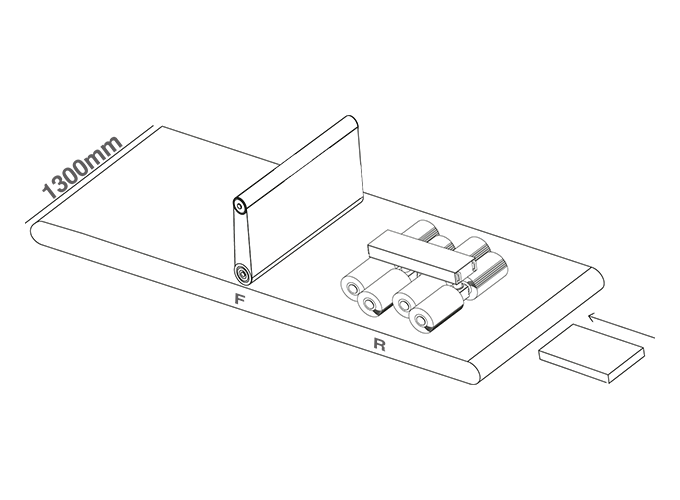
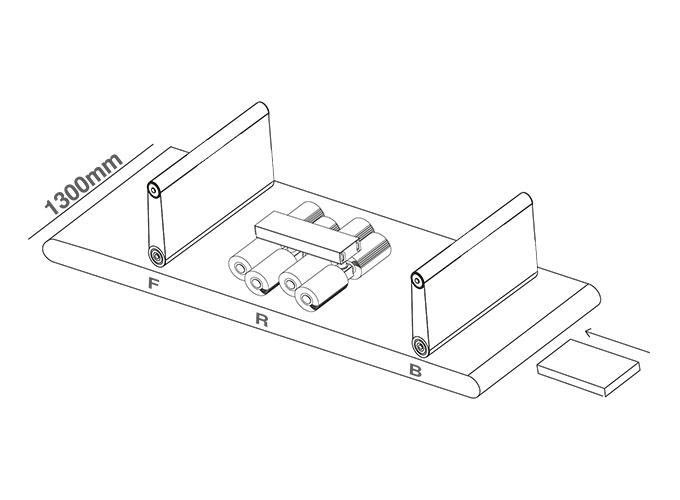
For batches of flat parts, most mechanical finishes are produced on through-feed machines. A conveyor carries parts, held by vacuum or magnetic tables, under a series of processing stations. Each station does one job:
- Abrasive belt station: removes burrs and sets a directional scratch pattern; the basis of ground and brushed finishes.
- Rotating flap brush station: breaks and rounds edges, outer contours and, within reach, inner contours.
- Non-woven station: refines the belt pattern into a satin finish.
- Wire brush station: removes laser oxide from cut edges.
- Heavy slag station: knocks dross and slag off plasma and oxy-fuel cut parts.
What controls the result
- Abrasive type and grit, coarse to fine through the sequence.
- Belt or brush speed and contact pressure.
- Conveyor speed: slower feed means more contact time.
- The incoming surface and the marks left by earlier stages.
- Material: stainless, carbon steel and aluminum each need their own consumables.
TFON Surfacer machines combine these stations in one frame, on working widths of 1,000 mm (2510 series) and 1,300 mm (3013 series), with conveyor speeds of 0.6-4.0 m/min and vacuum and/or magnetic part holding. The TF-RBF-3013 deburring and finishing machine deburrs and satin-finishes in one pass. The TF-R-2510 edge rounding machine uses 6 flap wheels for edge work on parts up to 1,000 mm wide. The full range is on the deburring and edge rounding machines page. For smaller volumes, manual deburring and edge rounding machines use discs for deburring, edge rounding, oxide removal and finishing.
If one machine runs both carbon steel and stainless steel, keep separate consumables for each. Iron particles carried over from carbon steel cause rust spots on stainless surfaces.
How to Specify a Metal Finish on a Drawing
A finish name on its own leaves too much open. A complete finish requirement for a sheet metal part covers:
- Designation or description: for example ASTM A480 No. 4, EN 10088-2 2K, or a written description.
- Roughness limit: Ra or Rz, with the measurement direction (along or across the grain).
- Grain direction: relative to a named edge or feature of the part.
- Faces: which faces get the finish; most parts need it on one visible face only.
- Edge condition: maximum burr height, break sharp edges, or a defined edge radius.
- Reference sample: a signed sample kept by both supplier and customer.
- Protection: protective film, interleaving and packing for visible surfaces.
- Coating: if the part is coated afterward, the coating system and its preparation requirements.
A reference sample settles most disputes. Roughness numbers vary with instrument and direction, and two satin finishes with the same Ra can look different. Measure what you can, and agree the rest by sample.
TFON Machines for This Job
-
TFON Surfacer® TF-RF-3013
Surface finishing machine; 1,300 mm working width; abrasive belt plus 8 flap wheels (Ø350 mm); conveyor 0.6-4.0 m/min
Specifications Request a Quote -
TFON Surfacer® TF-RBF-3013
Deburring and finishing machine; 1,300 mm working width; deburring and satin finish in one pass
Specifications Request a Quote -
TFON Surfacer® TF-R-2510
Edge rounding machine; 1,000 mm working width; 6 flap wheels (Ø300 mm, 300/960 rpm)
Specifications Request a Quote
Frequently Asked Questions
What are the most common types of metal finishes?
On sheet metal parts, the common mechanical finishes are mill finish, ground, brushed or satin, polished, blasted, tumbled, deburred and edge-rounded. The common coating finishes are paint, powder coating, galvanizing, plating and anodizing. Many parts combine both: a mechanical finish on the surface and edges, then a coating on top.
What is the difference between a brushed and a satin finish?
The terms overlap. Brushed usually means a visible, directional line pattern; satin usually means a finer grain with a softer sheen and less contrast. ASTM A480 calls No. 6 a dull satin finish made by Tampico brushing a No. 4 finish. Because suppliers use the words differently, specify by reference sample and roughness value, not by name alone.
What is a No. 4 finish on stainless steel?
No. 4 is the general purpose polished finish in ASTM A480: a linearly textured finish made by mechanical polishing or rolling, with Ra generally up to 25 µin (about 0.64 µm). Its look varies between suppliers and abrasive sequences, so parts that must match should be ordered against a reference sample and a stated grain direction.
Is powder coating a metal finish?
Yes. Powder coating is a coating finish: a layer of polymer powder applied electrostatically and cured with heat. It is outside TFON's scope. Its performance depends on the surface underneath, so mechanical preparation such as deburring, edge rounding and laser oxide removal often decides whether the coating holds at the edges.
Can a deburring machine produce a satin finish?
Yes, if it has the right stations. A through-feed machine with an abrasive belt followed by non-woven or flap brush stations can deburr and satin-finish the top face of a flat part in one pass. TFON TF-RF and TF-RBF models are built for this. Qualify the finish with a reference sample and a roughness measurement.
Let Us Review Your Part
Share the material, cutting method, part dimensions and the next operation, with photos of both faces. We will recommend the machine and station sequence that fits the part.