

Consumables
Flap Brushes for Deburring Machines
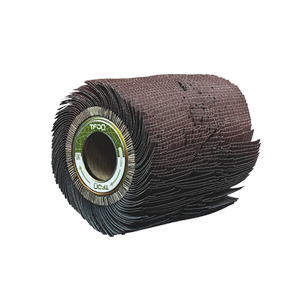
A flap brush is a rotating abrasive tool made of abrasive cloth flaps arranged around a core or shaft. The flexible flaps follow edges and contours, so the brush deburrs, rounds sharp edges and removes edge oxide without cutting into the face of the part. TFON Surfacer lines run Ø300 x 400 mm and Ø350 x 490 mm flap brushes.
Used on These TFON Machines
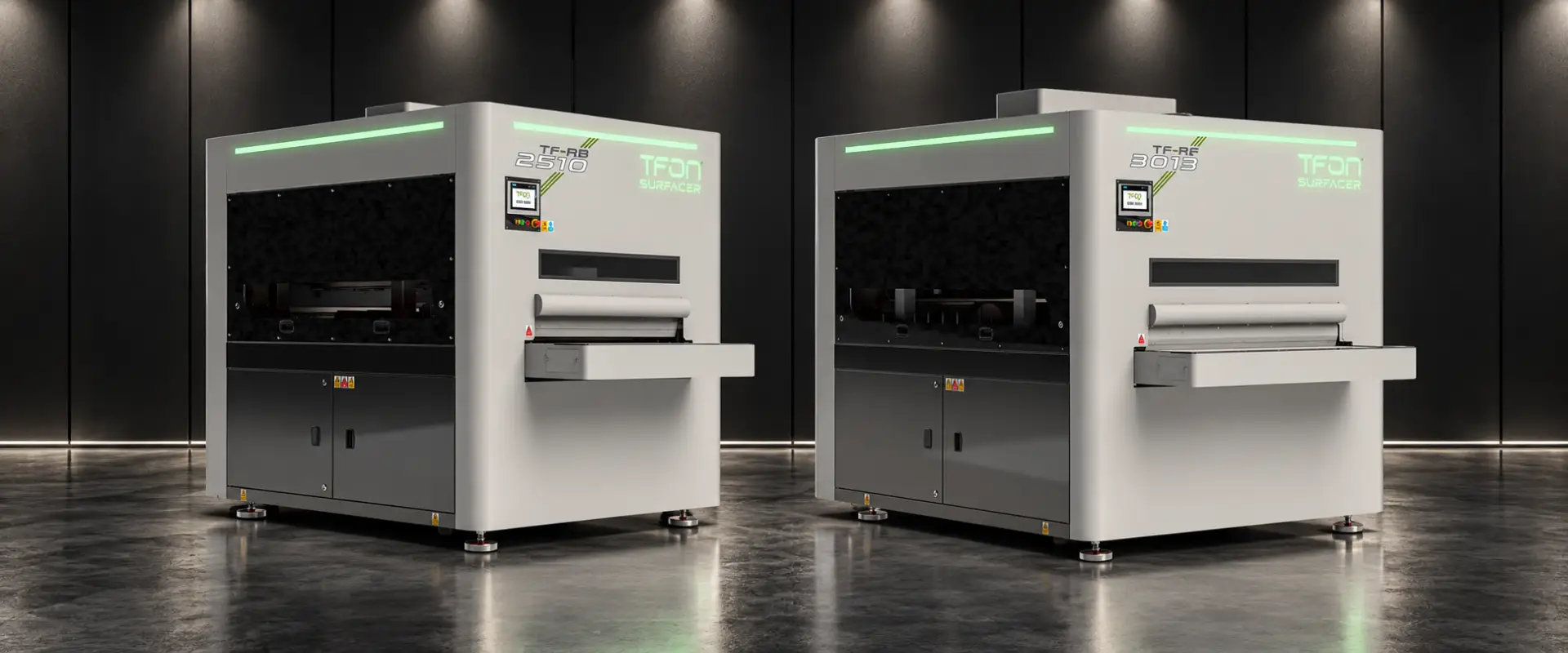
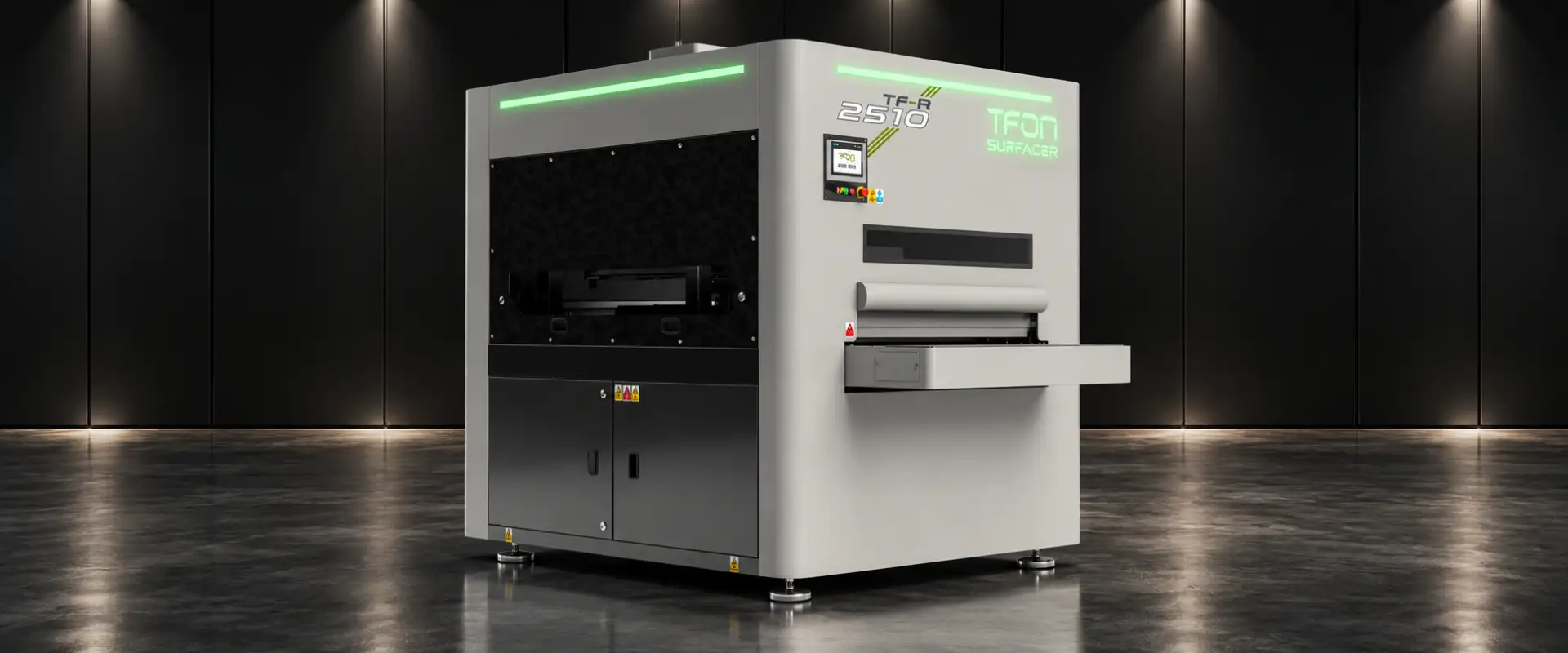
- TFON Surfacer® TF-R-2510Edge rounding machine
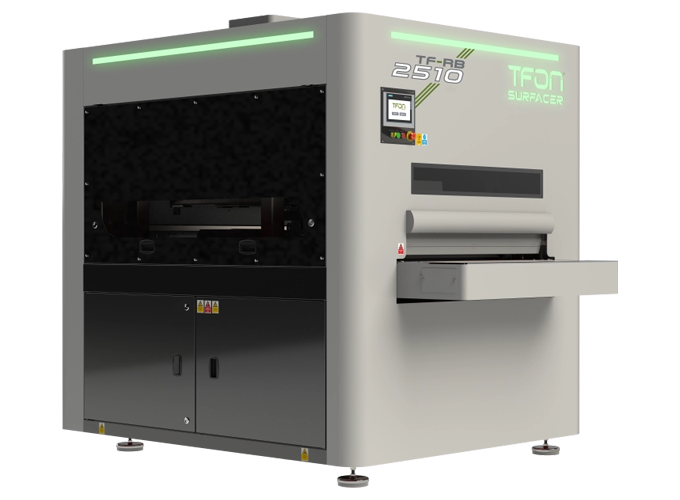
- TFON Surfacer® TF-RB-2510Deburring machine
- TFON Surfacer® TF-RBC-2510Slag removal and deburring machine
- TFON Surfacer® TF-RBF-2510Deburring and finishing machine
- TFON Surfacer® TF-RF-2510Surface finishing machine
- TFON Surfacer® TF-R-3013Edge rounding machine
- TFON Surfacer® TF-RB-3013Deburring machine
- TFON Surfacer® TF-RBC-3013Slag removal and deburring machine
- TFON Surfacer® TF-RBF-3013Deburring and finishing machine
- TFON Surfacer® TF-RF-3013Surface finishing machine
What Is a Flap Brush and What Does It Do?
A flap brush is built from strips of coated abrasive, called flaps, set radially around a hub or along a shaft. Shops also call it a flap roll or abrasive flap roll; the hand-held version is usually sold as a flap wheel. As the brush spins, the tips of the flaps strike the part. When the outer abrasive wears, fresh abrasive underneath takes over, so the brush keeps cutting in a similar way over its whole life.
What sets a flap brush apart from a grinding wheel is flexibility. The flaps bend over an edge and reach into hole openings, while the flat face of the part sees only light contact. That lets a flap brush handle four jobs on sheet metal:
- Deburring: removes the fine burr left by laser cutting and punching.
- Edge rounding: puts a radius on sharp cut edges, so paint and powder coat do not thin out at the edge and parts are safe to handle.
- Edge oxide removal: cleans the oxide layer off the cut face of oxygen-cut carbon steel.
- Finishing: fine grits leave a uniform, matte scratch pattern.
On TFON Surfacer machines the flap brushes work in the edge rounding (R) station. That station rounds the edge and removes oxide from the cut face in the same pass; on parts with heavier oxide it also carries an oxide removal brush. The process background is on our sheet metal edge rounding and laser oxide removal pages.
Types of Flap Brushes
Flap brushes differ in two ways: how they mount and what the flaps are made of. Most products on the market are built for hand tools. Through-feed deburring machines use wide, roll-type brushes instead.
By Mounting
| Type | Mounts on | Typical job |
|---|---|---|
| Flanged flap wheel | Angle grinder; flanged or threaded hub | Blending welds, hand finishing of large faces |
| Mounted flap wheel (shaft) | Drill or die grinder | Inside tubes, hole edges, tight corners |
| Flap roll with bore and keyway | Spindle of finishing and polishing machines | Continuous finishing of tube and profile |
| Machine flap brush (roll type) | Station spindle of a through-feed deburring machine | Automatic deburring, edge rounding and oxide removal on flat parts |
By Flap Material
- Coated abrasive flaps: cloth-backed abrasive. Grit sets stock removal and surface texture. Most deburring and edge rounding work runs on this type.
- Non-woven flaps: abrasive-filled nylon web. Light cut and a matte finish. For belt-type non-wovens see our non-woven abrasives page.
- Interleaf flaps: coated and non-woven flaps alternate, so the brush deburrs and blends in one pass.
- Felt and cloth buffs: run with polishing compound. They do not remove burrs.
We supply only the roll-type flap brushes that fit TFON Surfacer machines. Hand-tool flap wheels are not part of our range.
Flap Brush Sizes for TFON Machines
A flap brush size gives the outside diameter first and the length second. Ø300 x 400 mm means a brush 300 mm in diameter and 400 mm long. Our consumables list calls the same part an edge rounding brush, and the machine specifications list it as a flap wheel.
| Size (mm) | Grit | Service life | Fitted as standard on |
|---|---|---|---|
| Ø270 x 250 | 60-400 | Up to 1,500 hours depending on use | Confirm with your model |
| Ø300 x 400 | 60-400 | Up to 1,500 hours depending on use | 2510 series (1000 mm) |
| Ø350 x 490 | 60-400 | Up to 1,500 hours depending on use | 3013 series (1300 mm) |
Lower grit numbers mean coarser grain, more stock removal and a larger edge radius. As a rule of thumb:
- 60-80 grit: pronounced burrs, a larger radius and heavy edge oxide.
- 100-180 grit: general deburring and edge rounding of laser-cut parts.
- 220-400 grit: light edge breaking and fine finishes.
If a part needs both a large radius and a fine face, one grit will not cover it. In that case we choose the grit together with you, based on the part.
Which Machine and Model?
Every model in the TFON Surfacer range has an edge rounding (R) station, so all ten models use flap brushes. The 2510 frame has a 1000 mm working width; the 3013 frame has 1300 mm.
| Model | Working width | Brushes | Brush size (mm) | Brush speed (rpm) |
|---|---|---|---|---|
| TF-R-2510 | 1000 mm | 6 | Ø300 x 400 | 300 / 960 |
| TF-RB-2510 | 1000 mm | 6 | Ø300 x 400 | 300 / 960 |
| TF-RBC-2510 | 1000 mm | 6 | Ø300 x 400 | 300 / 960 |
| TF-RBF-2510 | 1000 mm | 6 | Ø300 x 400 | 300 / 960 |
| TF-RF-2510 | 1000 mm | 6 | Ø300 x 400 | 300 / 960 |
| TF-R-3013 | 1300 mm | 8 | Ø350 x 490 | 300 / 960 |
| TF-RB-3013 | 1300 mm | 8 | Ø350 x 490 | 300 / 960 |
| TF-RBC-3013 | 1300 mm | 8 | Ø350 x 490 | 300 / 960 |
| TF-RBF-3013 | 1300 mm | 8 | Ø350 x 490 | 300 / 960 |
| TF-RF-3013 | 1300 mm | 8 | Ø350 x 490 | 300 / 960 |
TF-R and TF-RF models have no separate deburring station, so parts need to arrive burr-free. For laser parts with burrs, choose a model with a B station such as the TF-RB-3013: 1300 mm deburring machine. To compare the full range, see our deburring and edge rounding machines page.
Flap Brush, Abrasive Belt or Wire Brush?
A flap brush rarely works alone in a deburring machine. Each tool has a job it does well, and knowing the split helps you order the right consumable.
- Abrasive belt: runs flat across the top face. It removes the cutting burr and leaves an even texture, but it does not round the edge.
- Flap brush: the flaps wrap over the edge. It rounds outer edges and also reaches hole and inner contour edges.
- Oxide removal brush: flexible wire reaches down the cut face and strips the oxide layer.
On laser-cut parts the belt and the flap brush usually work together: the belt takes the burr, the flap brush rounds the edge. Our guide on how to deburr sheet metal compares all methods, and what is a burr explains where burrs come from.
Choosing a Flap Brush by Material
The material a brush runs on matters as much as its grit. Moving one brush between materials can damage parts.
- Carbon steel: 100-180 grit covers most laser-cut work. If oxygen-cut edges still carry oxide, review grit and station setting together.
- Stainless steel: never move a brush from carbon steel to stainless. Iron particles trapped in the flaps transfer to the stainless surface and show up later as rust spots. Our article on deburring stainless steel without damaging the surface covers the rest.
- Aluminum: soft chips load the flaps and reduce the cut. Keep a separate set for aluminum too, and check the flaps often. See our aluminum deburring machine page for the machine side.
In mixed shops, a labeled brush set per material keeps mix-ups off the line. Store the sets apart on a rack or cart.
Replacement and Service Life
According to TFON data, a flap brush lasts up to 1,500 hours depending on use. Four factors decide where you land: the material, the condition of the incoming edge, how deep the brushes are set into the part and how many hours the line runs per day. Heavy oxide, tall burrs or continuous stainless work wear brushes faster.
Replace the brushes when you see these signs:
- At the same setting, the edge radius gets smaller or parts of the edge stay untouched.
- The diameter has dropped noticeably and the station has to move closer to the part.
- Flaps are torn, missing or glazed at the tips.
- The part face shows marks, burn discoloration or an uneven scratch pattern.
Replace all brushes in a station as a set. Brushes of different diameters meet the edge with different pressure, and the radius changes along the part. Log the running hours of each set and the parts it ran. That record tells you when to reorder. For routine machine care, see our maintenance service.
Common Mistakes
- Setting the brushes too deep: more pressure does not mean faster work. Flaps overheat, tips burn and the brush wears out early.
- One grit for every job: coarse grit spoils fine finishes; fine grit will not clear heavy oxide.
- Mixing worn and new brushes in one station: the edge radius will not be even.
- Using flap brushes on heavy slag: plasma and oxy-fuel dross destroys flaps quickly. That job belongs to the heavy slag removal disc and an abrasive belt.
- Feeding burred parts into TF-R or TF-RF: without a deburring station, the flap brush is forced to deburr and its life drops.
Ordering
Send your request with the form below; the flap brush (listed in the form as flap wheel) is already selected. To prepare the right brush, include:
- Machine model (for example TF-RB-2510) and serial number if available
- Brush size and grit
- Quantity: single brushes or a full station set (six or eight)
- Material and cutting method
A photo of the brush you are replacing, or its label, helps us confirm the size. You can add belts, brushes and discs to the same inquiry by ticking them in the form. All products are listed on our consumables page.
Request Consumables
Tell us your machine model, the size and the quantity. You can change the selection and add other consumables.
Frequently Asked Questions
How much do flap brushes for deburring machines cost?
Price depends on size, grit, flap material and quantity. A Ø350 x 490 mm brush carries more abrasive than a Ø300 x 400 mm brush, and replacing a full station takes six or eight brushes. For a current quote, send your machine model and requirements through the form below.
Can I use a hand-tool flap wheel on a deburring machine?
No. Flanged and mounted flap wheels are made for angle grinders and die grinders. TFON Surfacer machines use wide roll-type flap brushes on the station spindle: Ø300 x 400 mm on the 1000 mm frame and Ø350 x 490 mm on the 1300 mm frame. A hand-tool wheel will not fit and can damage the station.
What is the difference between a flap brush and a non-woven brush?
A coated flap brush cuts with abrasive cloth flaps; it removes burrs and rounds edges. A non-woven brush uses abrasive-filled nylon web, removes little material and leaves a matte finish. Use coated flaps for burrs and edges and non-woven for finishing. On TFON Surfacer lines, satin finishing is done with non-woven belts.
Do I need separate flap brushes for stainless steel?
Yes. A brush that has run on carbon steel carries iron particles in its flaps. Those particles transfer to stainless steel and cause rust spots later. Keep a brush set used only on stainless. The same rule applies to abrasive belts, non-woven belts and wire brushes.
Do flap brushes remove oxide from laser-cut edges?
Yes, from the cut face. The edge rounding station on TFON Surfacer machines rounds the edge and removes oxide from the cut face in the same pass. For heavier oxide, the station also carries an oxide removal brush with flexible wire. If you are unsure, send a photo of your part with the form.