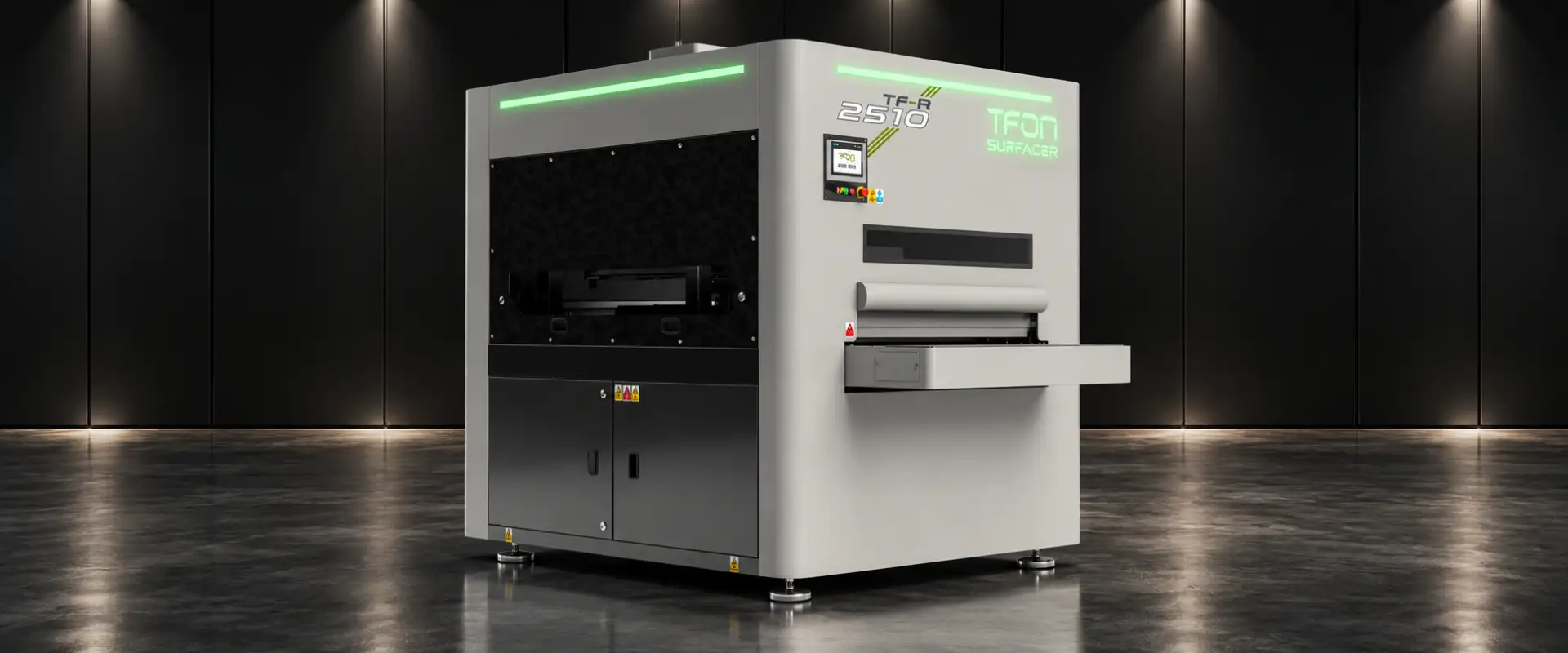


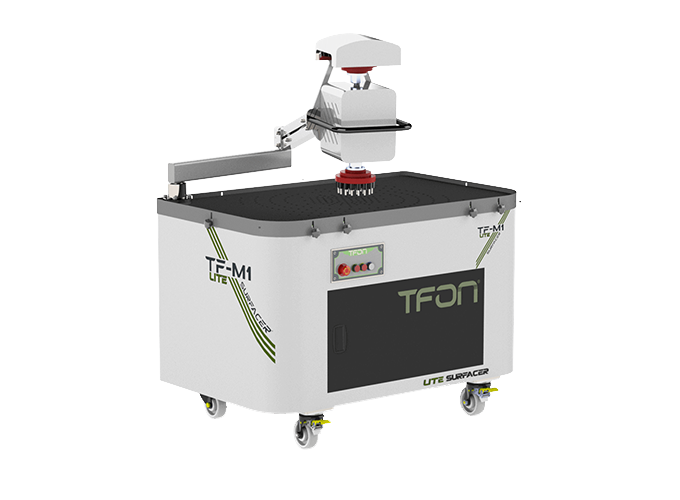
M1 Series
Number of Heads2
Minimum Material Size (mm)80 x 80
Maximum Material Length (mm)1500
Material Thickness Range (mm)3 – 200
Maximum Material Width (mm)800
Table Width (mm)800
Table Length (mm)1300
Flexible deburring and edge treatment for prototypes, mixed batches and rework.
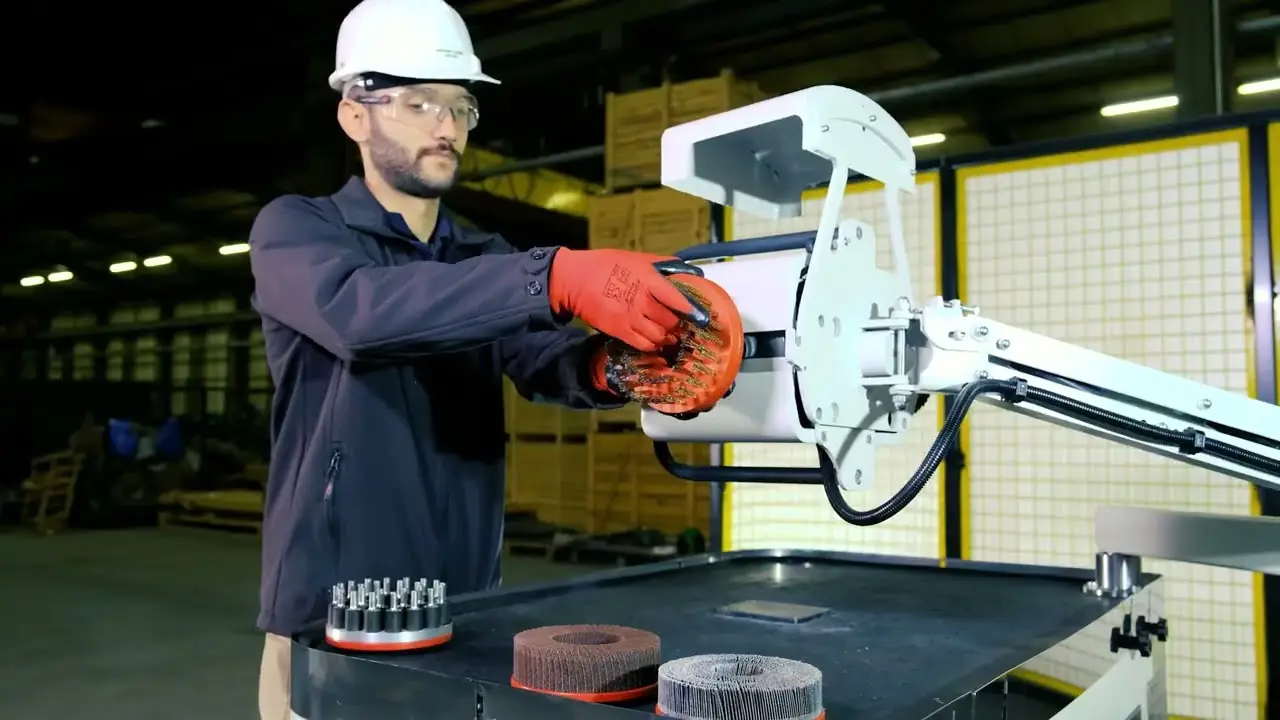
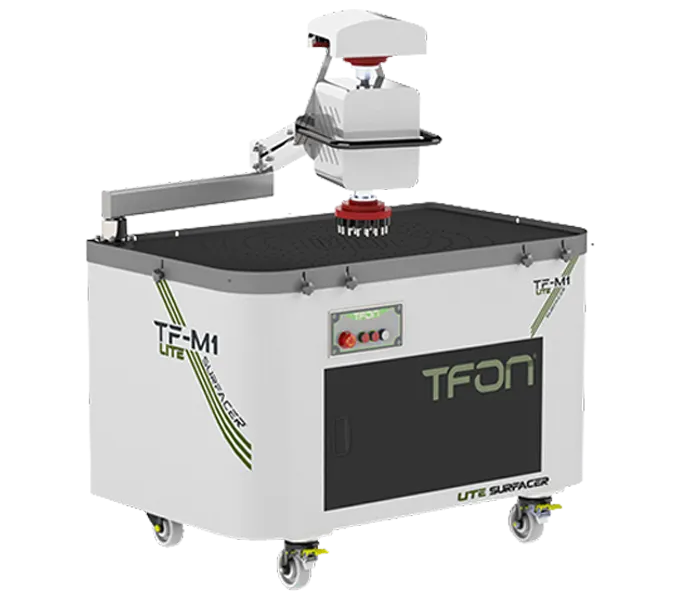
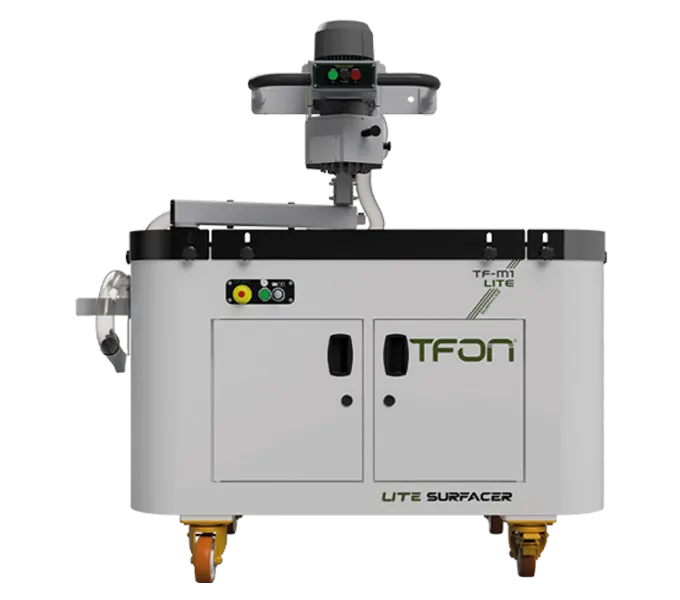
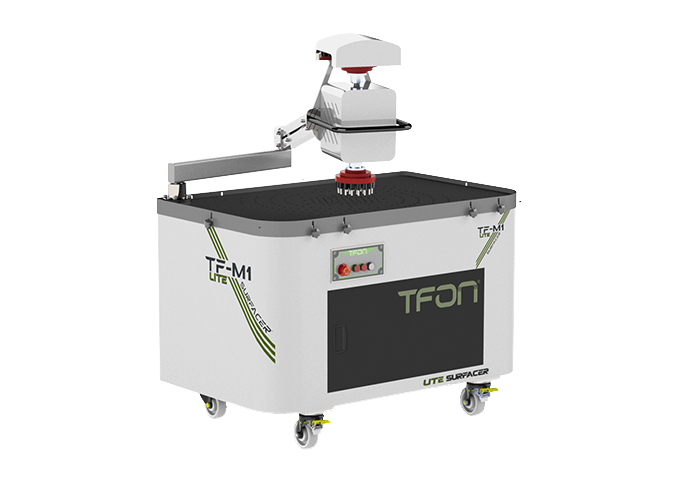
TFON is a manual deburring machine manufacturer in Konya, Türkiye. The TFON Lite Surfacer® TF-M1 LITE H1 and H2 are operator-guided machines for deburring and edge rounding parts from 3 to 200 mm thick on an 800 × 1300 mm vacuum table.
TFON Lite Surfacer® manual deburring and edge rounding machines are intended for workshops and production areas that process small quantities, prototypes, mixed components or parts that do not justify a fully automated line. The operator controls the part during processing while the machine provides a dedicated working platform for burr removal, edge treatment and surface preparation.
A manual machine is not simply a smaller automatic machine. It serves a different production need: fast access, flexible handling and direct operator control for varied work. For repeat batches, higher throughput or line integration, review automatic deburring machines.
The economics are what usually decide it. An automatic line earns its investment through repetition, so it makes sense when the same part comes back. For frequently changing jobs, compare setup effort, handling and operator time against the expected batch volume.
Manual processing depends on operator technique, tooling, contact time and workholding. Documented work instructions and sample checks help control the result. Compare these requirements with automatic processing when repeatability and batch volume become the main selection criteria.
Manual machines are also frequently used alongside automated lines rather than instead of them. Rework, awkward geometries, small brackets and parts that were missed during a production run all end up on a manual station, which is why many fabricators end up owning both.
Provide the part dimensions, material, burr condition, required edge result, batch size and handling method. TFON can use these details to assess the suitable tooling and machine configuration.
Define the required burr removal and edge treatment before selecting manual tooling and workholding.
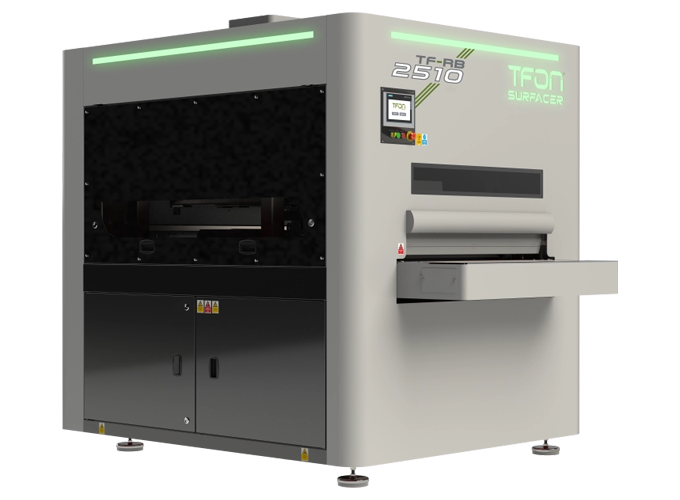
TFON builds the Lite Surfacer® at the same Konya plant as its automatic TFON Surfacer® lines, so one manufacturer covers both the manual station and the through-feed machine. The two models share one working range and differ in the number of heads:
| Model | Heads | Thickness | Max. part size | Min. part size | Holding |
|---|---|---|---|---|---|
| TF-M1 LITE H1: manual deburring machine with one head | 1 | 3 to 200 mm | 800 × 1500 mm | 80 × 80 mm | Vacuum table, 800 × 1300 mm |
| TF-M1 LITE H2: manual deburring machine with two heads | 2 | 3 to 200 mm | 800 × 1500 mm | 80 × 80 mm | Vacuum table, 800 × 1300 mm |
The machine works with discs that the operator changes for the job: heavy slag removal disc, deburring disc, oxide removal disc, edge rounding disc and finishing disc. TFON supplies them as deburring discs and brushes, together with installation, operator training and spare parts.
A hand deburring tool is enough for a few parts a day. A manual machine makes sense when parts vary too much for an automatic line, but volume or thickness has outgrown hand tools and grinders. When the same parts come back in batches and repeatability is a written acceptance criterion, an automatic deburring machine is the better route.
Deburring tool vs deburring machine walks through the decision by part volume, part size and labor time.
For prototype work, constantly changing low-volume batches, post-weld rework and corrections before assembly, a manual machine is often the better investment. Not every production needs an automatic through-feed line. Where repeatability is a written acceptance criterion, however, an automatic configuration is required.
The H1 has a single head and the H2 has two heads. Both have the same working range: 3 to 200 mm thickness, up to 800 mm width, up to 1500 mm length and an 800 × 1300 mm vacuum table.
TFON Lite Surfacer® machines use discs that are changed according to the job: Heavy Slag Removal Disc, Deburring Disc, Oxide Removal Disc, Edge Rounding Disc and Finishing Disc. If stainless steel is processed, consumables separate from those used for carbon steel are required.
On a manual machine, the result depends on the operator. If repeatability is a written acceptance criterion, an automatic configuration is required. Lite Surfacer® is designed for work where flexibility, not repeatability, is the priority.
Share the material, cutting method, part dimensions and the acceptance criterion of the next operation, and we will define the suitable machine family and station sequence together.
Related process: Deburring