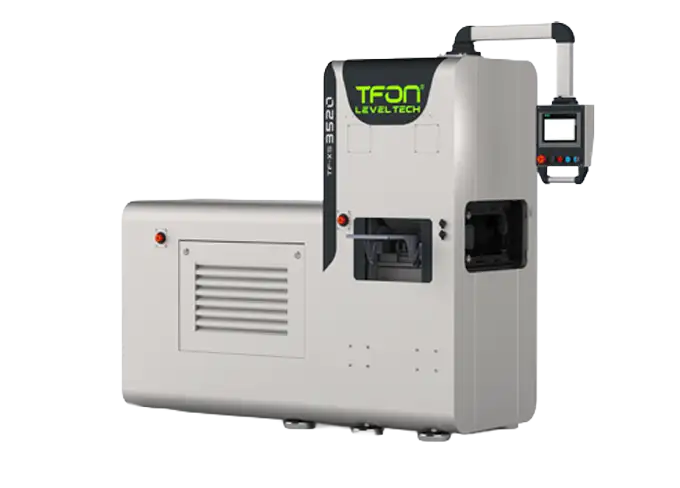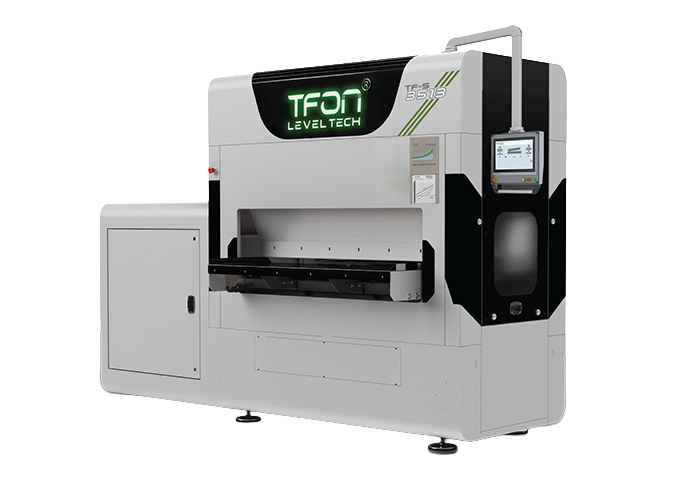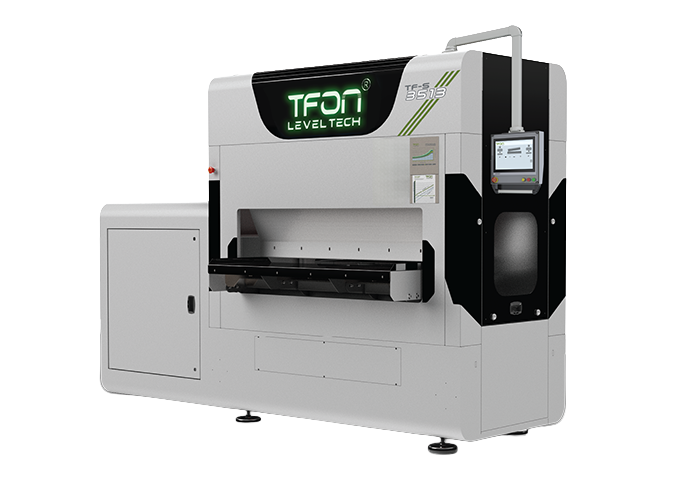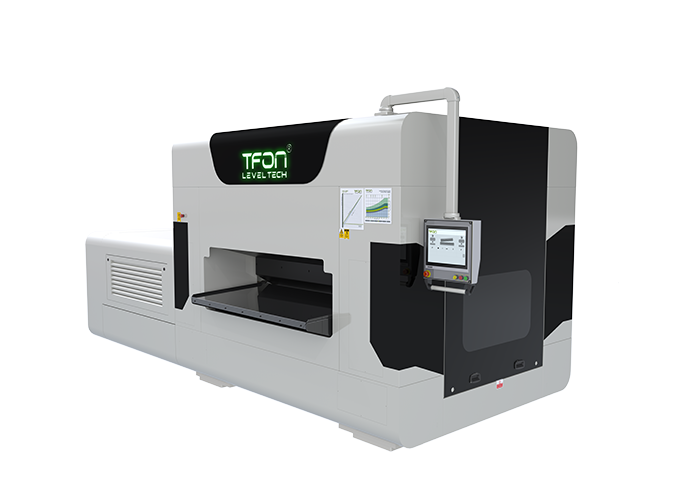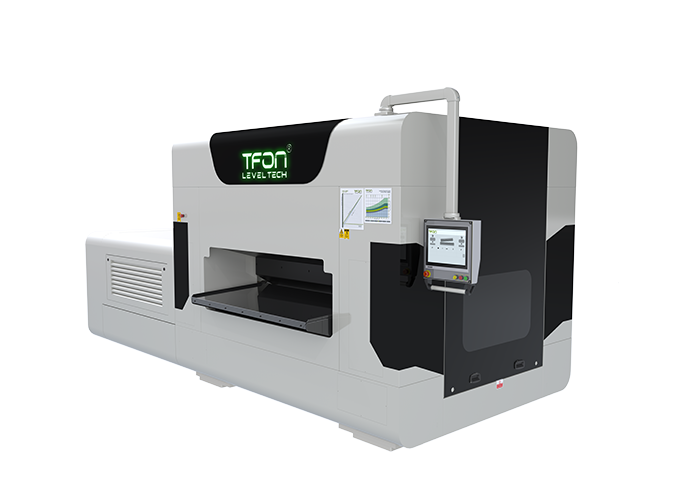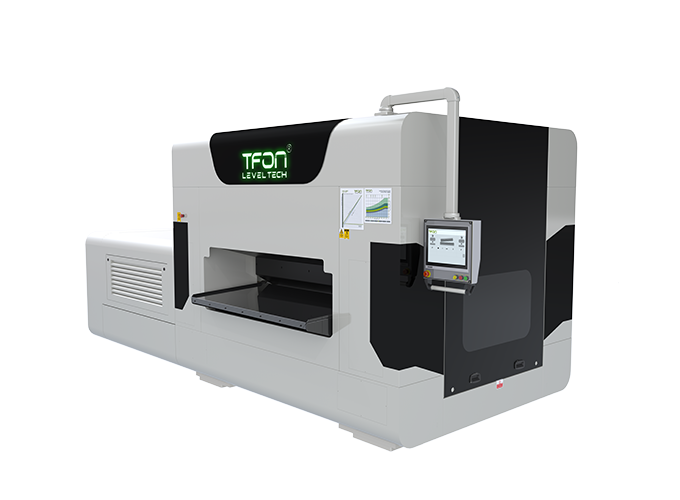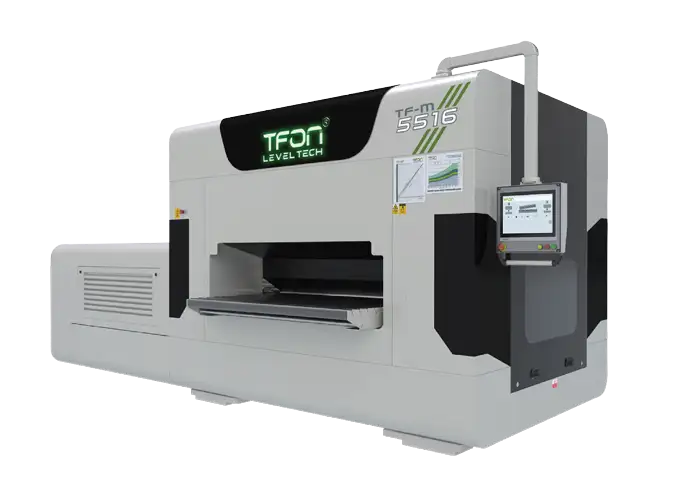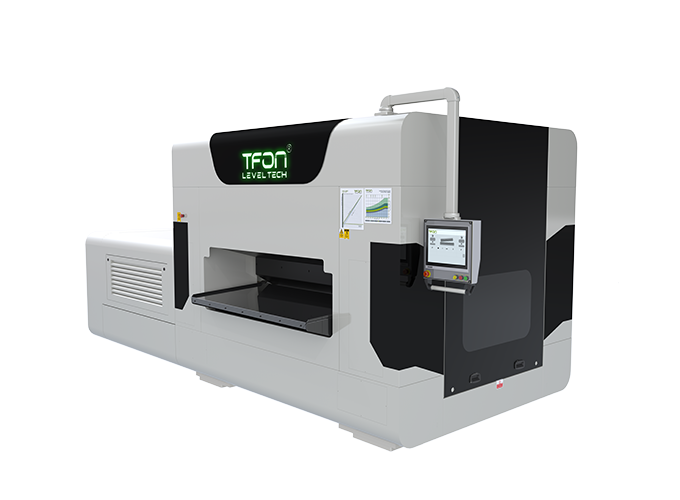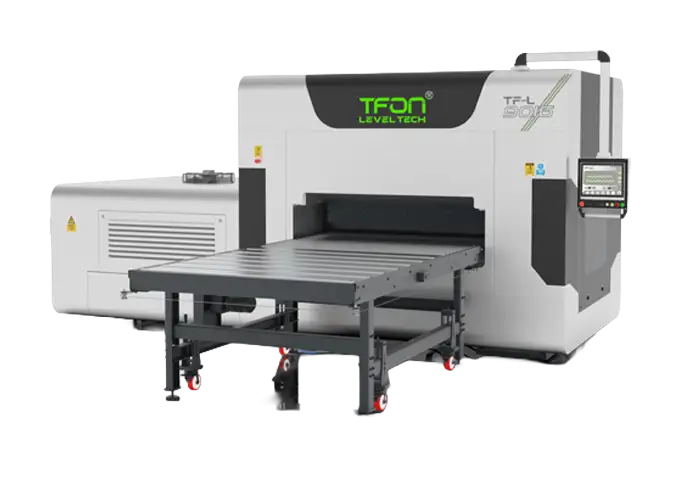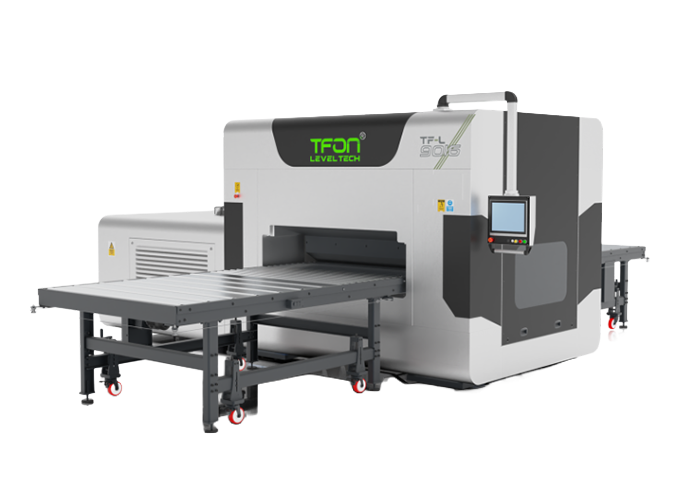
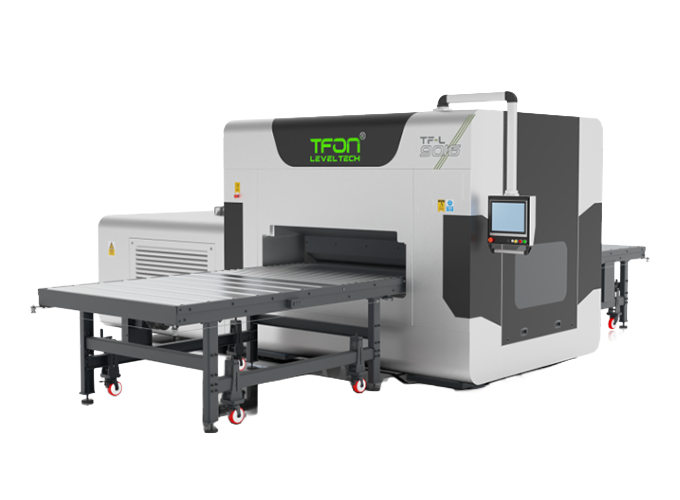


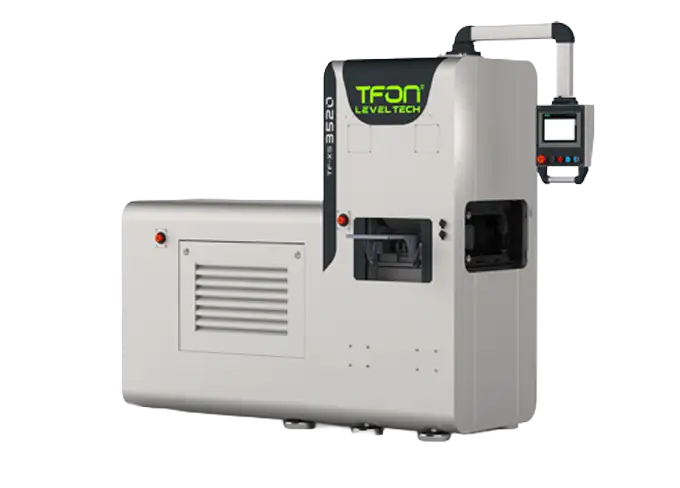
XS Series
Material thickness0.3–5
Min. material length35
Leveling gap controlServo Mechanic Control
ScreenTouch Screen
Roller count17
Roller diameter35 mm
Automatic roll extraction systemOptional
Mechanical leveling for sheet metal, plate and cut parts.
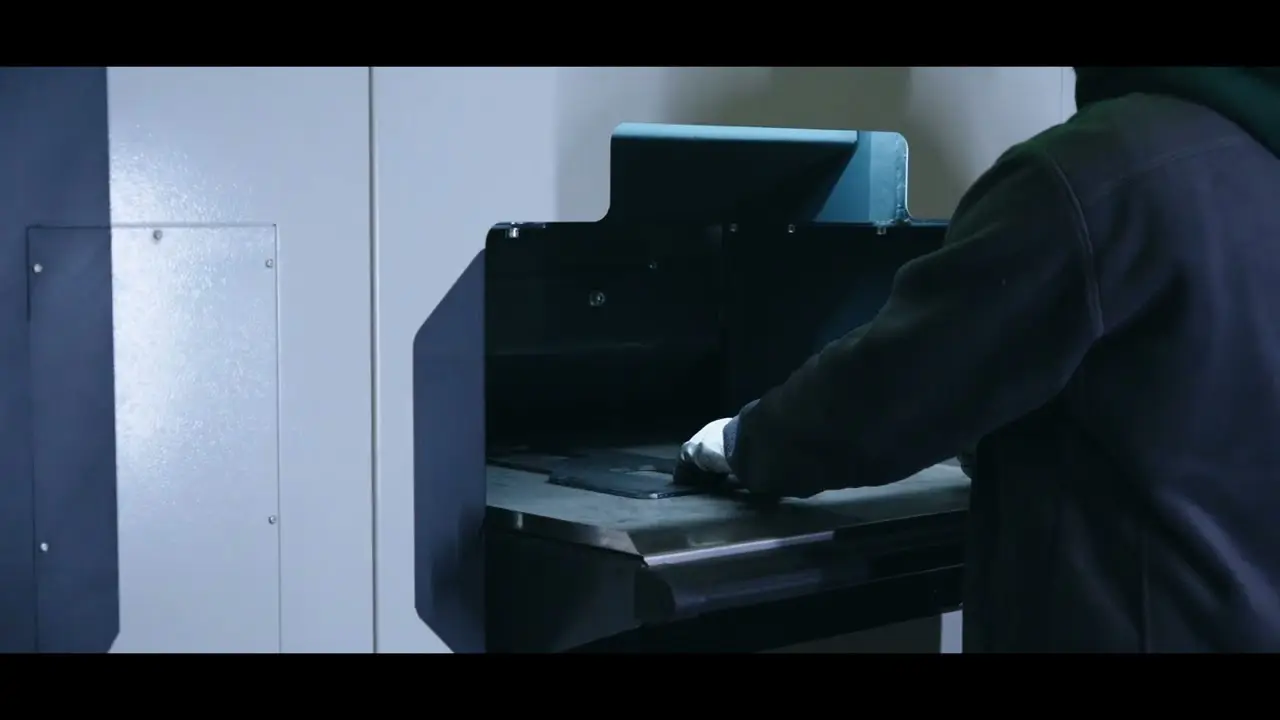
TFON Leveltech® leveling machines are designed to improve the flatness of sheet metal, plates and cut parts before the next production stage. Cutting, punching, heat input and residual stresses can leave components distorted or difficult to process. A correctly configured leveling system applies controlled alternating bending so the part leaves the machine flatter and more stable for welding, bending, machining, coating or assembly.
Mechanical leveling and thermal stress-relief treatment are different processes. TFON Leveltech is intended for mechanical leveling; the required flatness and process suitability should be assessed for the actual material, dimensions and incoming distortion.
Learn how roller leveling works and which measurements help define an acceptable flatness result.
Compare published working widths and thickness ranges. Final selection also depends on the material properties, part dimensions and required flatness.
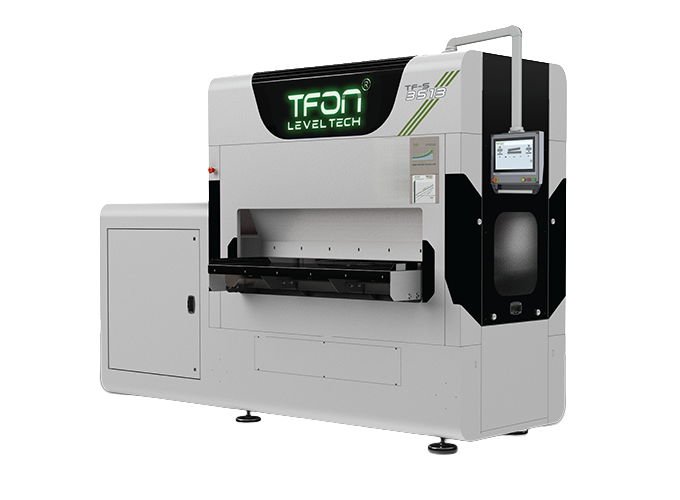
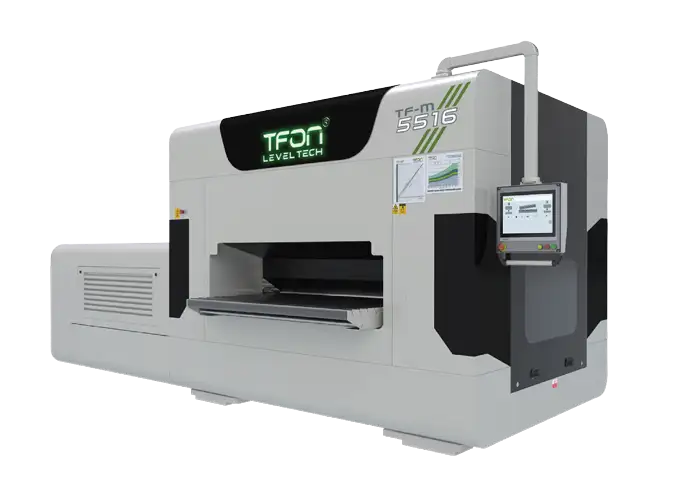
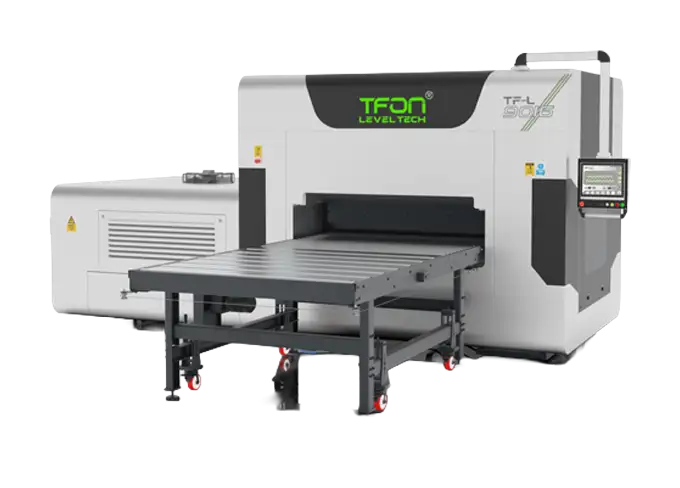
Tailor-made Machines According to Your Needs
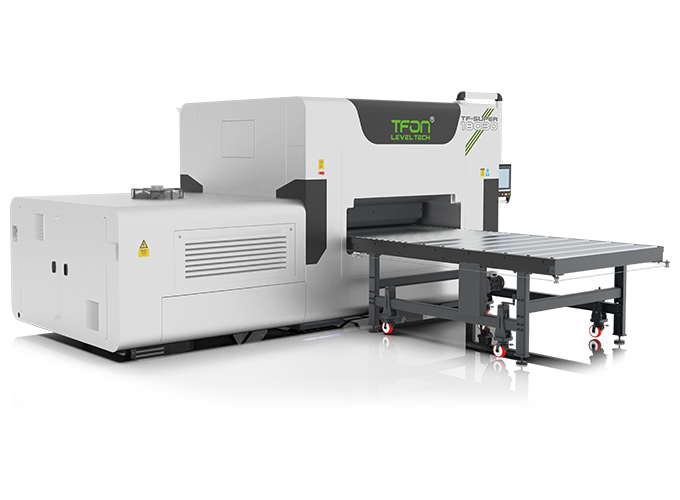
Precise Leveling up to 60mm

Precise Leveling up to 48mm
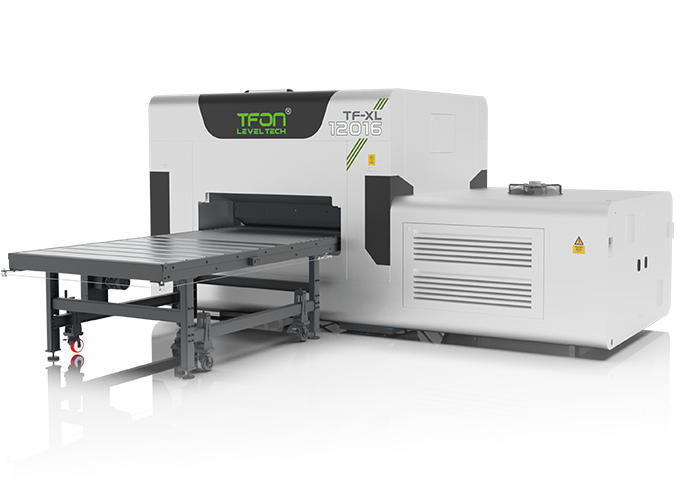
Precise Leveling up to 42mm
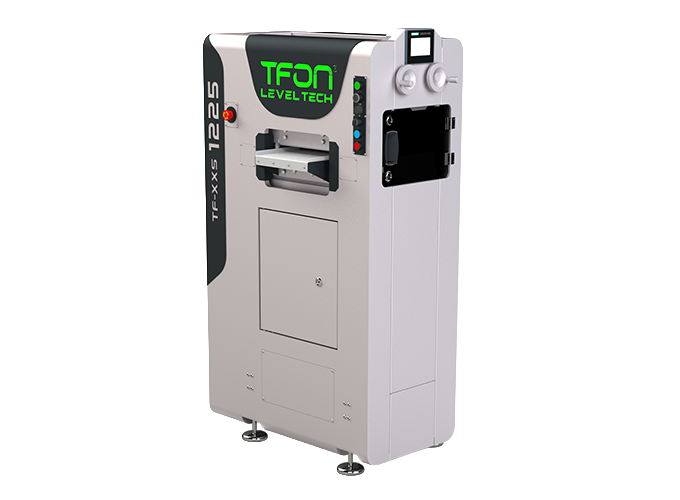
Precise Leveling up to 1.2mm
Positioning Via 4 Linear Guides
Four-point adjustment is used to control the leveling gap. Confirm the adjustment specification for the machine configuration; positioning accuracy and the flatness of a processed part are different requirements.
PC Control
Serving as the brain of the machine, our PC-controlled touch screen provides a complete overview of the entire leveling process. It tracks every critical detail in real-time, giving operators full control and instant visibility into the machine's performance at a single glance.
Servo-Hydraulic System
Servo-hydraulic control manages the leveling forces and adjustment. Evaluate the system for the expected material properties, dimensions and duty cycle, and follow the specified maintenance requirements.
Overload Protection
The protection system monitors the configured operating signals and can intervene when defined limits are exceeded. Confirm the protection functions and operating limits for the proposed machine.
Leveling Gap Control
Leveling-gap control manages the working gap during processing. Achievable part flatness depends on material properties, geometry, incoming distortion and the selected setup, and should be assessed by inspection.
Recipe System
Stored recipes allow approved processing settings to be recalled. Verify that the selected recipe matches the part and inspect the result when incoming material or machine conditions change.
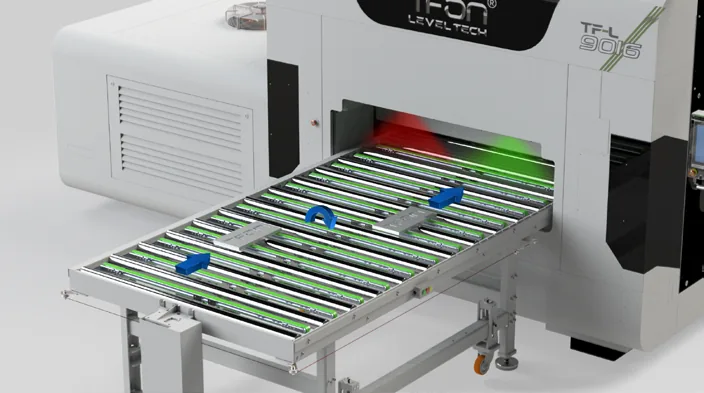
TFON Smart Feed. This mechanism is designed to ensure uniform use of the rollers across their entire width, allowing parts to be processed not just along a specific line, but distributed over the full width of the roller. As a result, load distribution on the rollers is balanced, wear occurs more evenly, and maintenance intervals are extended. Offered as an optional feature, this provides a significant advantage in terms of both consistent performance and extended equipment lifespan.
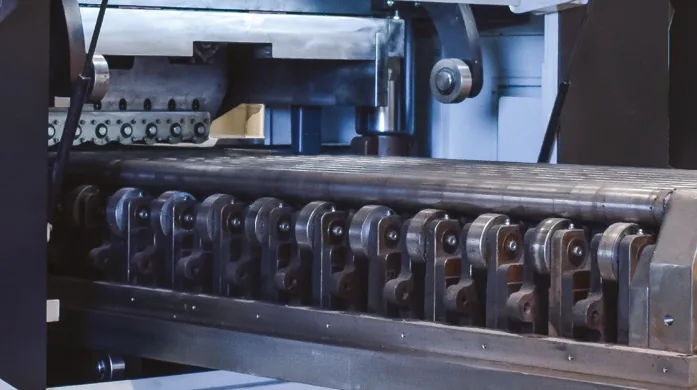
TFON Automatic Roll-Out System automatically moves the leveling rollers out of the machine, providing easy access for cleaning, maintenance, repair, and lubrication. This system improves occupational safety while reducing maintenance time and increasing operational efficiency.
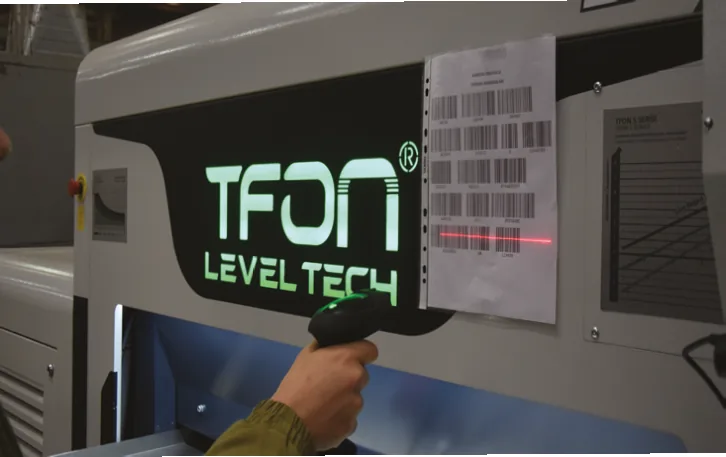
Barcode identification can load the settings associated with a defined part or order. Verify the code-to-recipe mapping and confirm that the identified part matches the material being processed.
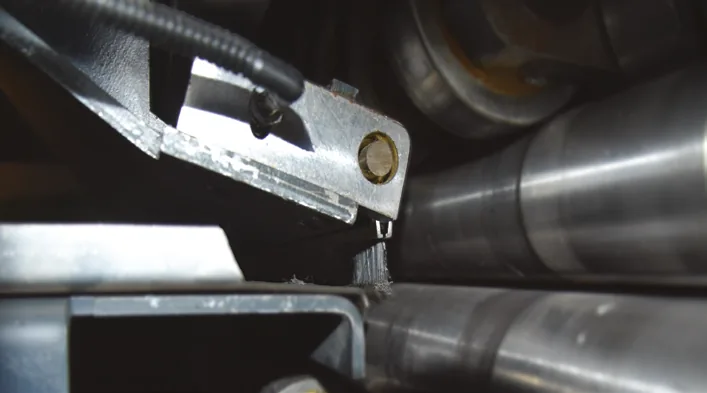
Assess the handling and contact arrangement for parts whose edges or surfaces may be marked. Confirm suitability on representative samples and inspect the part against its surface and flatness requirements.
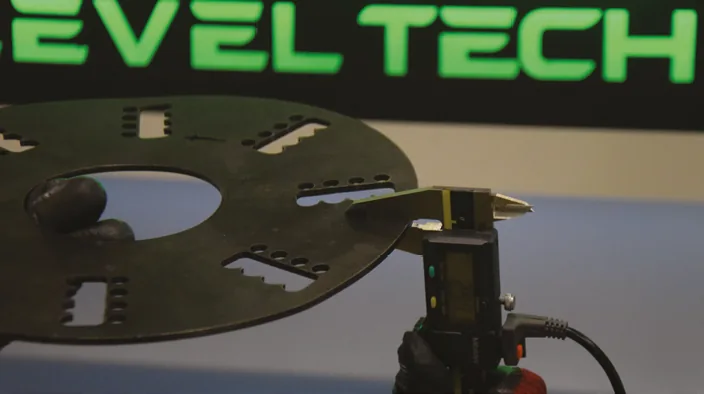
Measurement transfer can reduce manual transcription of thickness values. Verify the measuring instrument, the measured location and the selected part record before using the value for setup.
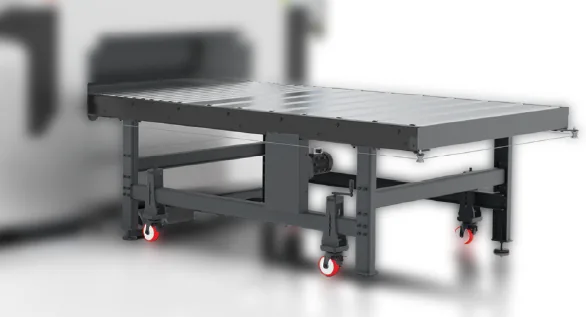
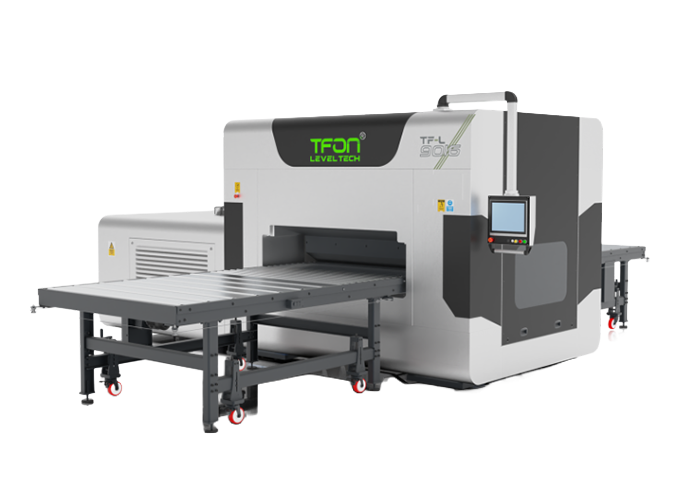
TFON Front and Rear Conveyor The optional front and rear conveyors with speed adjustable in synchronization with the machine, ensure fast and orderly feeding of parts and are also ideal for handling long components.
TFON Leveltech® machines perform mechanical roller leveling and correct shape deviation caused by cutting and heat input. This is not the same as thermal stress-relief heat treatment; a good flatness result does not certify that the material is stress-free.
No. Roller leveling is a mechanical process that corrects shape. Thermal stress relief is a separate process. A good flatness result does not certify that the material is stress-free; if your drawing specifies a heat treatment, it is planned as a separate process.
Alongside the tolerance value, the measuring condition (free or supported), the measuring area, and the instrument and method are specified. Without them, the same part can give two different results. Acceptance compares the drawing limit with the measured value; a visual impression is not an acceptance method.
Yes, it can. The heat input from welding can create new distortion. In that case, measure both after leveling and after welding to identify the step that causes the problem.
The series differ in thickness range, working width and leveling gap control. The XS and TF-S series handle 0.3 to 5 mm material thickness with servo-mechanical control; TF-S models offer a maximum material width of 600 to 1600 mm. The TF-M series handles 0.5 to 15 mm and the TF-L series 1 to 30 mm; in both, the maximum material width is 600 to 2000 mm depending on the model, with servo-hydraulic / PC control.
Yes, but parts with large cut-outs behave differently from a solid part of the same nominal thickness. A narrow solid strip and a wide part with large openings react differently at the same thickness. A sample test is recommended.
Share the material, cutting method, part dimensions and the acceptance criterion of the next operation, and we will define the suitable machine family and station sequence together.
Related process: Leveling